
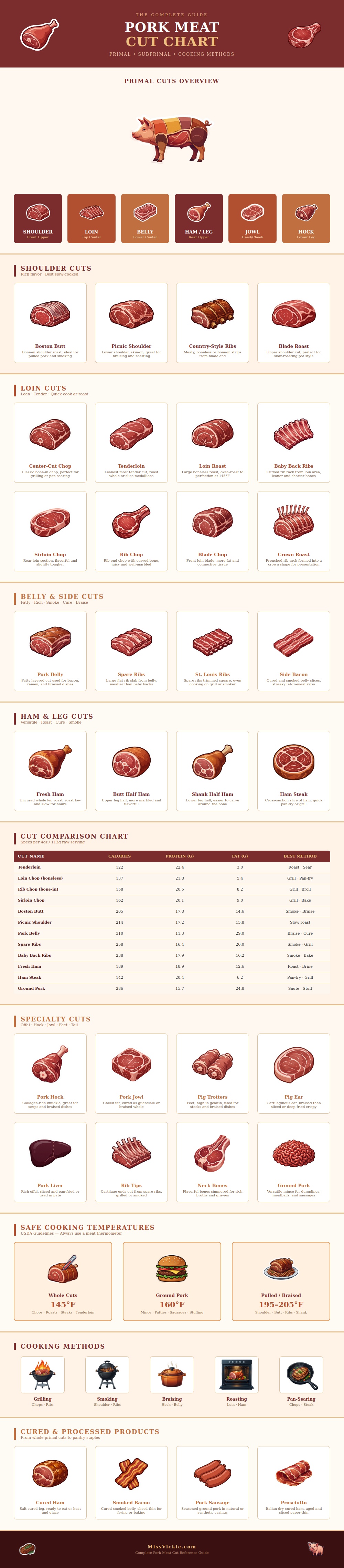
The first time I went in to buy meat at a butcher’s counter was daunting; everything looked vaguely familiar but behaved quite different. Pointing at some pink cut and hoping for the best is what one does, but that will yield tenderloins or chewy regret: it matter if you have a blade chop or a tenderloin. Most of us are confused because we haven’t learned where those cuts originate within animal.
Knowing which muscles did what allow you to see what kinds of cooking temperature each is suited for (some fast, some slow). It also shifts your selection and preparation of meat. To barbecue lover, this is known as the workhorse. The shoulder area, including cuts such as the picnic shoulder and Boston butt, contain connective tissue that will not soften until long exposure to gentle heat transforms it into gelatin. There’s no hurrying this protein. As the graphic above details, these fatty, rich portions requires slow cooking to get the most out of them.
How to Cook Different Cuts of Pork
Grilling up a Boston butt quickly? You’re going against nature here. Braising, roasting, or smoking low and slow; until the fibers gives in, is what’s needed here. Patience matters more then temperature control.
Switch up to the loin, however, and the rules flip entirely. Because this area lies next to spine, it didn’t have to do much work (if any) during animal’s lifetime. As such, it’s tender with plenty of lean meat, which makes it quick to cook but also means that overthinking it will cause it to dry out fast. Tenderloin and center-cut chops fare best under short-cook times and high-heat conditions; these cut take well to being cooked on the stovetop, making them an ideal choice for a weeknight meal.
One of the easiest kitchen victories is pan searing a chop till it forms a delicious crust without drying out inside. Remember: Pork continue to cook even after coming off the pan, so you want to stop just before you think you should of.
Finally, there’s the belly. There is bacon and spare ribs, which are basically pure, fatty, delicious pork encased in even more fat. These will be slow-cooked, patiently cured, or smoked with time on their hands to work their charm. For St. Louis style ribs, let the smoke work its magic on them. A slab of softly braised pork belly: get this baby into your mouth, where it will melt.
Fat is not just a source of moisture, but also a flavor delivery system. That’s why fatty cuts taste so good; compared to leanness of their cousins, they’re like cars with four-wheel drive. The mistake most home cooks make: It’s not about time; it’s about temperature. If you’re looking for consistency, use a meat thermometer.
For whole muscle cuts such as chops or roasts, you can stop at 145 degrees Fahrenheit (with a short rest) because any remaining heat will complete its task while keeping the meat from becoming shoe leather. With ground pork, which has had all that bacteria distributed throughout, it need to hit 160 degrees Fahrenheit to be safe but not compromised in any way. No gray area there.
There’s a place for all the unnoticed elements in the kitchen. Jowls and hocks, for example, is loaded with collagen that renders down to rich broth when cooked for hours, turning watery soups into meaty concoctions. They aren’t costly, making them smart buys to either add flavor to a stew or simply make a meal last longer.
Great food doesn’t require premium ingredients. It requires respecting the ingredient you’re working with. When you learn these differences, it takes away all of the guess work from your shopping experience. No longer do you look at some generic pink meat. Now you see flavor and texture opportunities. Whether you need to grab a tenderloin quickly or want something big to roast into a huge hunk of shoulder, you’ll know what’s right for the job. You can plan out a strategy next time you stand in front of that counter to order dinner.