MissVickie pork prep calculator
Pork Marinating Time Calculator
Estimate pork marinade time from cut, thickness, acid, salt, sugar, enzyme tenderizer, refrigerator temperature, flavor intensity, and the remaining safe refrigerator window.
Start with a real pork scenario, then adjust the cut, thickness, marinade chemistry, refrigerator temperature, and desired flavor strength.
Your Pork Marinade Window
Choose inputs to estimate the best timing for this pork cut.
Breakdown
| Pork Cut | Typical Thickness | Mild Marinade | Acidic Marinade | Texture Watch |
|---|---|---|---|---|
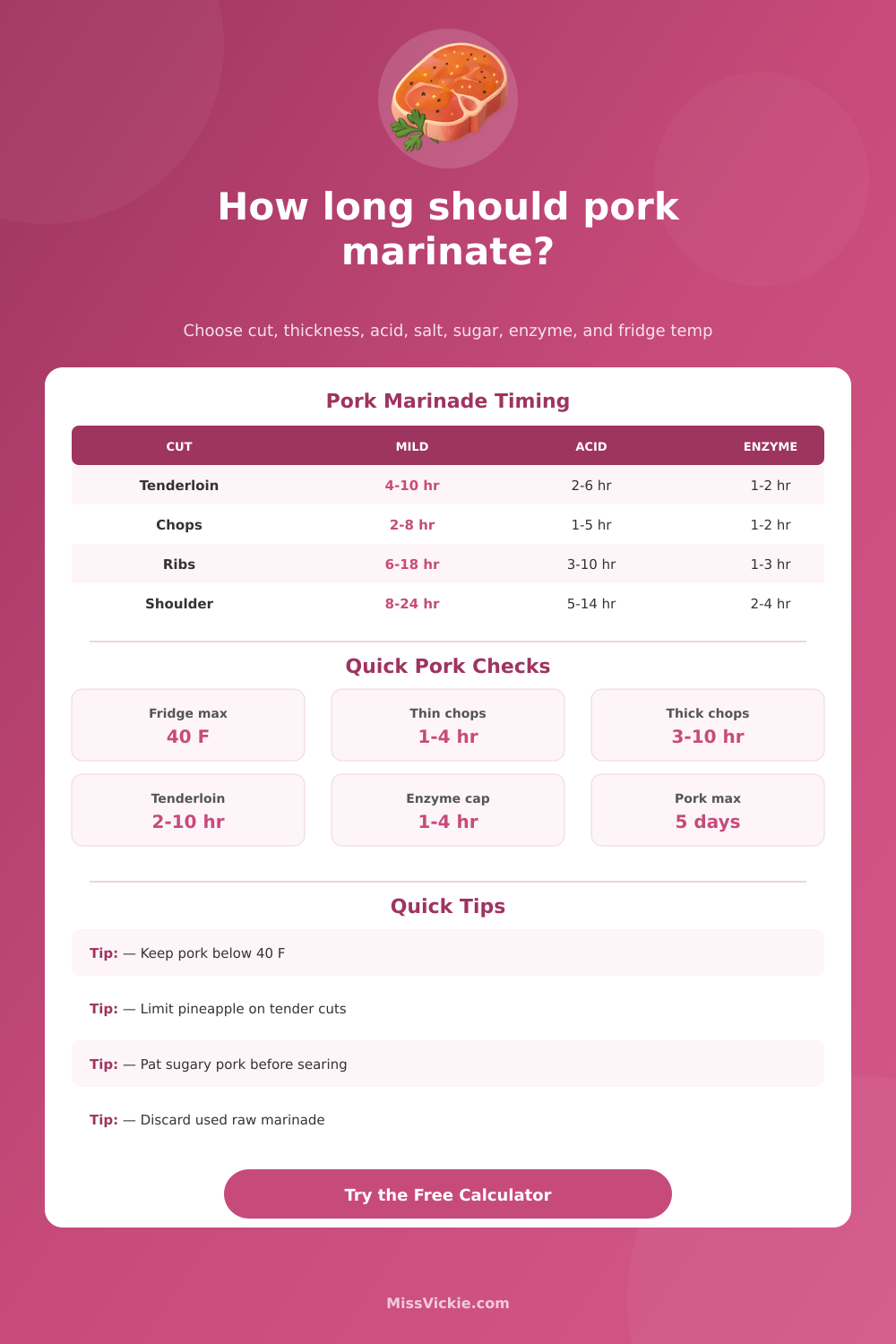
| Thin boneless chop or slices | 0.4-0.75 in / 1-2 cm | 1-4 hours | 45 min-3 hours | Dries and firms quickly; avoid long high-salt soaks. |
| Thick bone-in chop | 1-1.75 in / 2.5-4.5 cm | 3-10 hours | 2-6 hours | Good middle ground for apple, herb, soy, or garlic marinades. |
| Pork tenderloin | 1.5-2.5 in / 4-6 cm | 4-10 hours | 2-6 hours | Lean and tender already; enzymes should stay short. |
| Pork loin roast | 2.5-4 in / 6-10 cm | 6-18 hours | 4-10 hours | Flavor stays near surface unless scored or injected. |
| Ribs | Rack thickness varies | 6-18 hours | 3-10 hours | Acid and sugar build surface flavor; membrane removal helps. |
| Shoulder or butt | 3-6 in / 8-15 cm | 8-24 hours | 5-14 hours | Dense and fatty; mild marinades tolerate overnight prep. |
| Pork belly | 1-3 in / 2.5-8 cm | 6-18 hours | 4-10 hours | Salt and sugar travel well through fat layers. |
| Pork cubes or skewers | 0.75-1.25 in / 2-3 cm | 2-6 hours | 1-4 hours | Lots of exposed surface; strong marinades work fast. |
| Ingredient Type | What It Does To Pork | Timing Effect | Best Pork Use |
|---|---|---|---|
| Low-acid apple juice, beer, herbs | Builds aroma and gentle surface flavor | Can use the longer end of the cut window | Shoulder, ribs, loin roast, chops |
| Vinegar, citrus, wine | Firms the outer layer and brightens fatty pork | Shortens target time by about 20-45% | Ribs, belly, shoulder, skewers |
| Soy sauce, fish sauce, salty rub | Seasons more deeply than herbs or oil | High salt should stay below the top of the window | Chops, belly, tenderloin, skewers |
| Honey, brown sugar, maple | Encourages browning and sticky edges | Does not require long soaking; watch hot searing | Belly, ribs, breakfast slices, chops |
| Pineapple, papaya, kiwi | Breaks proteins quickly at the surface | Usually capped around 1-4 hours | Short skewer marinades only |
| Buttermilk or cultured dairy | Gently tenderizes and clings to breading | Moderate timing; avoid near the safety limit | Chops, strips, fried pork prep |
| Fridge Reading | Calculator Treatment | Raw Pork Window | Action |
|---|---|---|---|
| 34-38°F / 1-3°C | Normal timing, best quality control | Up to 5 days total for fresh whole cuts | Use the flavor window unless the use-by date is sooner. |
| 39-40°F / 4°C | Slightly tighter timing | Keep below the 5-day total storage cap | Cook promptly once the target flavor is reached. |
| Over 40°F / 4°C | Safety warning | Not a recommended marinating condition | Chill the pork first; do not use counter marinating. |
| Near use-by date | Safe cap reduced | Often 12-24 hours remaining | Use a short marinade and cook the same day. |
The calculator separates quality timing from the maximum refrigerated raw pork window. A safe window is not always a good flavor or texture window.
Low acid, light sugar, and herbs suit loin, ribs, and thick chops without harsh surface texture.
Salt-forward marinades season pork well; use shorter timing on thin chops and skewers.
Great for shoulder and skewers, but lean tenderloin can tighten if left too long.
Fresh tropical enzymes are powerful; use for cubes and cook soon after marinating.
| Preset | Cut | Key Chemistry | Target Range | Best Cooking Plan |
|---|---|---|---|---|
| Weeknight pork chops | Thin boneless chops | Medium salt, low acid | 1-4 hours | Pan sear or grill after patting dry. |
| Thick bone-in chops | 1.5 inch chops | Low acid, light sugar | 3-10 hours | Reverse sear or grill over moderate heat. |
| Honey garlic tenderloin | Tenderloin | Medium salt, sweet | 3-8 hours | Roast or grill; avoid burning the glaze. |
| Citrus carnitas shoulder | Shoulder or butt | Medium acid, low sugar | 5-14 hours | Slow cook, braise, or smoke. |
| Apple BBQ ribs | Ribs | Low acid, sweet | 6-16 hours | Smoke or roast low and slow. |
| Tropical pork skewers | Cubes | Fresh pineapple enzyme | 1-2 hours | Grill hot and fast after draining. |
Marinating is tricky with pork. If it sits too long in a powerful marinade, it will go from tender to mealy. Once those proteins breaks down, there is no way to fix it. To get your pork right, there are a lot of variables at play: cut, thickness, strength of flavors, refrigerator temp, acid/sugar/salt/enzymes.
The pork marinating time calculator will work this out for you. Your input includes all these variables so it knows how long to let the meat hang out in marinade so that it’s fully seasoned without being past safe or quality thresholds. But knowing what it takes into account will also mean you’re less likely to run into texture issues.
How to Marinate Pork Safely
People think that marinating longer means more flavor and that’s simply false. Marinades only penetrate a few millimeters or less, which is typically how far flavor go. It doesn’t soak in like water into a sponge; instead, it only affects the outermost layer of meat. Acid, aromatics and salt penetrate different, salt goes farther than anything else, and therefore even on a thicker cut, you have to watch out with heavy salt content.
To help with this, the calculator separate flavor maxes from safety maxes. So though you may be okay leaving a shoulder marinating in the refrigerator for a full week, maybe your ideal taste from a citrus carnitas preset is only 12 hours. After 12 hours, all that acid will begin to firm up that top layer. Most folks overlook this because while they’re thinking their goal is to get inside of meat to absorb flavor, really they’re hoping for the outside to fall apart.
The next consideration is whether the food is thicker or thinner. In terms of time in the marinade, this mean more mass, but it also means less contact with the marinade (like on a big bone-in chop). So we ask for an estimated thickness to get an idea of how much surface area the marinade can touch. If you’re using vacuum sealing, then the marinade is able to penetrate those nooks & crannies, which reduces the amount of time needed. If you just use a shallow dish, there will be lots of space where the marinade never touches food, increasing the time needed.
To avoid over-marinating your food, the calculator takes all these variables into account. It’ll adjust based off how much of the food’s outside comes into contact with the marinade. That way, if you opt for a baking dish instead of a heavy-duty bag, you won’t end up ruining the food.
There are also variables: acid and enzymes. Acid (such as vinegar or citrus) brightens fatty cuts, such as ribs or a belly. But it tightens lean proteins very fast. Eight hours of marination in lemon juice on tenderloin turns out too tough… More akin to shoe leather. For this reason the calculator cap the enzyme time aggressively.
The fruits it accounts for have their own protease (enzymes that shred muscle fiber), which occurs naturaly in fresh pineapple, kiwi or papaya. These will shred your muscle fibers in an hour; your edges may become mushy after two. That’s why you should of known the difference. If you’re marinating in the fridge, the cold slows the enzymes’ activity, so no cooking required. Still, the calculator warns you when you get close to the danger zone where the meat starts to fall apart.
TIPS: Sugar burns, but it also improves flavor (and color). Use a sweet marinade, such as those made from honey or glazes, and be sure to pat the meat dry before searing. The tool reminds you to pat the meat dry in the timeline breakdown.
Non-negotiables are the floor of any marination practice (safety). Always refrigerate. Your fridge must stay below forty degrees Fahrenheit. Bacteria multiplies very fast above that temperature (forty-one to one hundred forty degrees). That’s why the calculator highlights any higher temps right away. Saving a few minutes isn’t worth the risk: Don’t marinate on the counter.
It’s not about time; it’s about finding balance. Thin items only need minutes to marinate, while dense items needs days. That’s why I created a “sweet spot” calculator: plug in your cut, and it’ll tell you when flavor is peaking but texture hasn’t failed. It’s based off chemistry, not guessing, and will help get you cooking confidantely. Flavor should live on the surface or throughout the bite. Always seek out the former, though.