MissVickie flank steak planner
Flank Steak Marinating Time Calculator
Estimate flank steak marinating time from steak weight, thickness, acid and salt strength, tenderizing enzyme, marinade style, surface prep, fridge temperature, grill plan, and your maximum window.
Load a common flank steak plan, then fine tune thickness, acid, salt, enzyme tenderizer, fridge temperature, and grill timing.
Flank steak marinade plan
Adjust inputs to calculate a custom window.
Calculation Breakdown
| Marinade factor | Good flank steak use | Timing effect | Watch point |
|---|---|---|---|
| Low acid | Herb oil, coffee spice, mild vinegar | Can run longer for aroma | Season again before grilling if salt is light. |
| Medium acid | Soy ginger, balanced balsamic, fajita blends | Best all-purpose range | Turn halfway so thin edges do not dominate. |
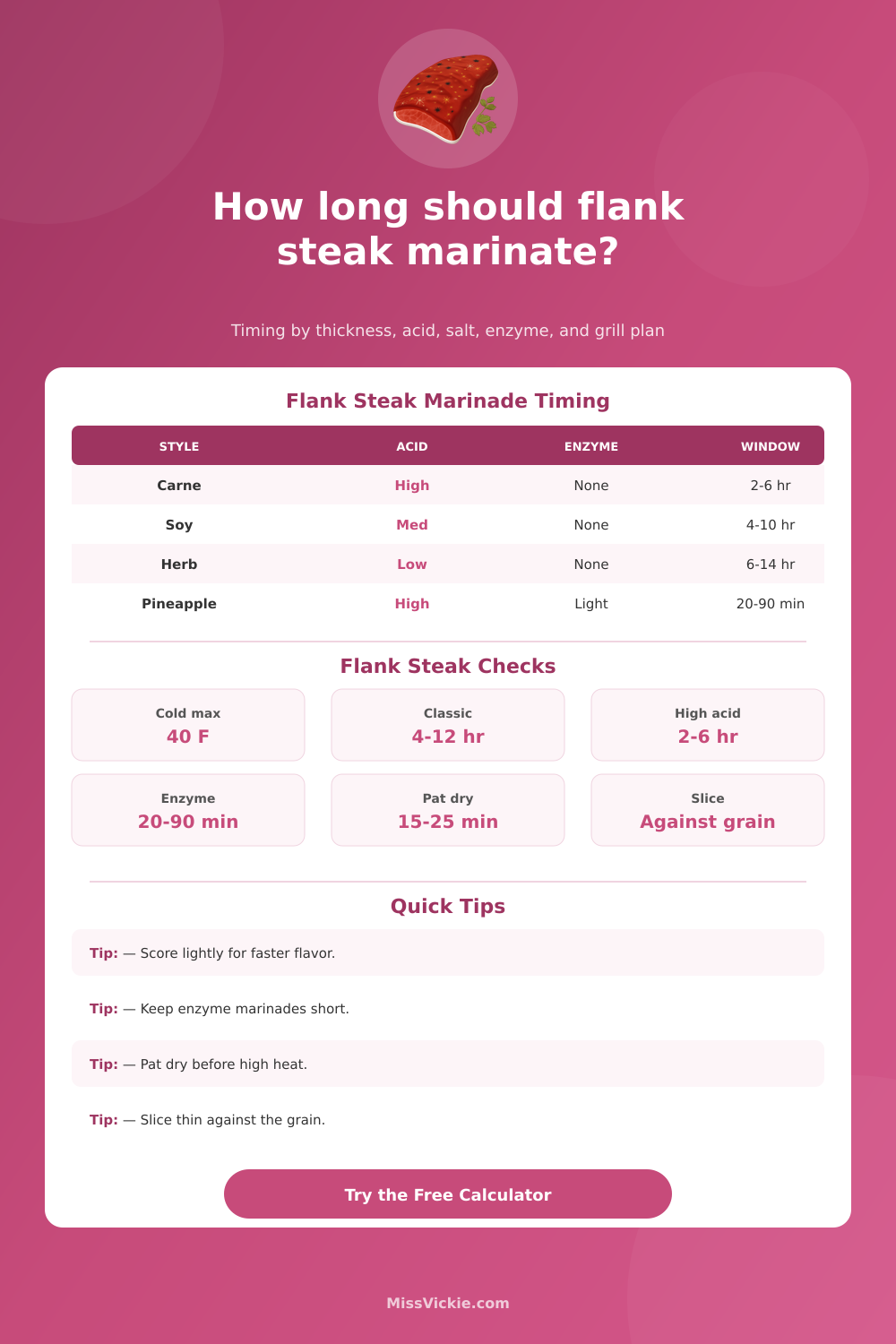
| High acid | Lime-heavy carne asada or lemon-vinegar mixes | Shortens the quality cap | Long soaks can make the surface chalky. |
| Fresh enzyme | Pineapple, papaya, kiwi, or strong pear | Minutes, not overnight | Use canned pineapple for less enzyme action. |
| Very salty base | Soy-heavy, fish sauce, bouillon, dry brine | Tightens the max window | Thin tapered edges can taste cured. |
| Flank thickness | Typical weight | Marinade adjustment | Before grilling |
|---|---|---|---|
| Under 0.6 in / 1.5 cm | Thin end or split piece | Use the short side of the window | Dry well; it cooks very fast. |
| 0.7 to 1.0 in / 1.8 to 2.5 cm | Most whole flank steaks | Use the calculated middle range | Rest at room temperature briefly while the grill heats. |
| 1.1 to 1.4 in / 2.8 to 3.6 cm | Thick center or large steak | Add time only if acid is moderate or lower | Probe temperature through the side. |
| Rolled or stuffed | Prepared flank roast | Marinate before rolling when possible | Use a thermometer; timing differs from flat steak. |
| Scenario | Best window | Max quality cap | Grill note |
|---|---|---|---|
| Weeknight soy garlic | 4 to 10 hours | About 18 hours | Pat dry and grill hot direct. |
| Carne asada lime | 2 to 6 hours | About 10 hours | High heat and quick slicing work best. |
| Chimichurri herb | 6 to 14 hours | About 24 hours | Reserve fresh sauce separately for serving. |
| Pineapple tenderizer | 20 to 90 minutes | About 2 hours | Drain early; enzyme keeps working on the surface. |
| Dry rub plus oil | 1 to 8 hours | About 18 hours | Oil lightly right before grilling. |
Balanced salt and sweetness, good for classic grilled flank steak and rice bowls.
Lime and orange brighten the beef but need a tighter cap to protect texture.
Herb oil carries flavor gently; serve fresh sauce separately after slicing.
Pineapple, papaya, and kiwi tenderize quickly and should not be an overnight plan.
This calculator is a practical kitchen planner for raw flank steak. It estimates flavor and texture windows; always keep beef cold and verify doneness with a thermometer.
Marinades: Marinating is your magic spell, throw some stuff in a bag, add liquid seasoning, wait awhile, and voila! Flavour! This won’t work on flank steak, which doesn’t play by the same rules than something tough (like a chuck roast). It’s thin, fibrous, and reacts poorly to strong enzymes or acids. Wait too long, and it will go mushy before the center’s had time to take on any flavur at all.
Here’s how to make it work, so that you know what’s going on with these muscle fiber. Enter your own steak parameters and marinade ingredients into this tool (above). It takes into account trade-offs most would overlook.
How to Marinate Flank Steak Properly
For example, cutting the steak in half or scoring its surface affects its surface area. This impacts how fast it can absorbs acid. That’s important, since a thinner flank steak has way more muscle exposed to the acid than a thicker ribeye do. So the calculator takes that into consideration and tweaks the timing accordingly so you’re not over tenderizing the outside while still waiting for the inside to absorb flavor.
It also considers what your grilling plans are, if you want a nice sear, then you need a dry surface. Ruined flank steak: What? It’s usually the result of too much acid. Grilling with lime juice or even vinegar (think ceviche) will break down protein rapidly; great for those preparations, but not so good at the grill. That’s why when you scan down through more high-acid dishes such as carne asada in the reference grid, you’ll note that the max time drops considerably. Why? Prolonged contact with citric acids will produce a chalky, overcooked outside and an underseasoned, still-raw inside. You need just enough time for flavor to penetrate but not enough for structural breakdown (acid acts on surface alone).
But it is not like that with salt. Soy-based marinades has a greater accepted window because of that. Salt stabilizes protein, helping it hold its shape better while improving texture, but even so, there’s a limit to salt. A very salty marinade, such as one containing fish sauce, will cause the calculator to narrow the maximum marinating time to avoid curing those slender ends into ham-like territory. So remember: Salt cures; acid damages. Knowing this helps you balance the flavor and keep your meat in good condition.
There’s also the issue of enzymes. Natural tenderizers in fresh fruits such as kiwi, papaya, and pineapple all aggressively break down muscle fibers and collagen. Amateur homecooks make this mistake more than any other: they think it’s the same thing to use some fruit puree as an herb oil. It’s not. Enzymes are strong, go to work quickly (in minutes) and don’t stop working when you remove the steak from the bag. That’s why enzyme-heavy marinades is limited to less than an hour on the calculator. If you want to soak longer, consider canned pineapple which has had most of its active enzymes cooked out during the canning process. You get the fruit flavor but avoid the mush factor.
This, of course, relies heavily on temperature. The chemicals act slower at lower temperatures (hence the need to marinate in the fridge). And if they’re too warm (say in a warmer garage fridge), enzymes and acids will work faster and destroy your steak long before you intend to eat it. It’s based off an assumption that you’ll be working with food in a safe cold environment where it just needs time to develop flavor instead of needing to think about potential risk to the safety of the food.
The least talked about part of grilling flank steak is drying the meat before putting it on the grill. The surface needs to be dry so that it can sear; if it’s wet, it’ll just steam. And even with well-timed marinade, if the surface of the steak is still glistening, there won’t be that flavorful crust. Get the steak off early, quickly pat it dry, and you’ll get better color and more tender texture. It is a little thing that makes a big difference when biting into the end result.
Flank steak marination is all about timing and technique: how much to season, when to stop? How long can I go before ruining the tenderness of the meat? This is the magic trick of the marinade. It is a bit like science, but we don’t think about it that way. We just instinctively know it works.
That’s where the tool comes in. It strips away some of the guesswork and adds a little math so you can calculate when your flank steak has reached its flavor peak without being overdone. Reduce the time. Adjust for thickness, enzymes, and acidity. Then let it rest and slice against the grain. Better steak follows.