Shrimp Thawing Time Calculator
Estimate safe shrimp thawing time by count size, shell-on or peeled prep, loose or block-frozen form, thaw method, water temperature, batch weight, cook deadline, and drain rest.
🍲 Shrimp Thaw Presets
Choose a common kitchen situation, then adjust the shrimp size, frozen shape, water temperature, and deadline to match your package.
🧮 Thaw Inputs
Shrimp thaw plan
Enter your shrimp package details to calculate a safe thaw schedule.
Thaw Math
Safety and Finish
📊 Shrimp Thaw Comparison
Fast for loose shrimp when sealed in a bag and checked often.
Best for planning ahead and keeping seafood consistently cold.
Thick blocks thaw slowly until you can split the shrimp apart.
Extra drying time improves browning for scampi, grills, and stir fries.
📏 Size, Shell, and Block Factors
📄 Seafood Safety and Thaw Tables
| Thaw Method | Best For | Typical Shrimp Time | Food Safety Note | Finish Step |
|---|---|---|---|---|
| Refrigerator | Overnight planning, large bags, cooked shrimp | 6-24 hours depending on weight and block depth | Keep fridge at 40°F or below. | Drain and cook within a short cold hold window. |
| Cold water | Loose raw shrimp needed soon | 20-60 minutes for many home batches | Seal in a bag and keep water cold. | Cook immediately after thawing. |
| Hybrid | Partly thawed fridge bag that needs a finish | Fridge time plus 10-35 minutes cold water | Do not leave shrimp at room temperature. | Drain, pat dry, and move to cooking. |
| Cook from frozen | Soups, boils, steams, and some skillet dishes | No thaw wait; add cooking time instead | Keep frozen until the pan, pot, or steamer is ready. | Cook until firm, pearly, and opaque. |
| Shrimp Count | Common Name | Cold-Water Behavior | Fridge Behavior | Use Case |
|---|---|---|---|---|
| U-12 to 12-15 | Colossal | Needs extra center time and gentle separating. | Best thawed slowly if shell-on. | Grill, broil, stuffed shrimp. |
| 16-20 to 21-25 | Jumbo | Fast once pieces loosen, slower if shell-on. | Good overnight thaw for dinner prep. | Cocktail, skewers, scampi. |
| 31-40 to 41-60 | Large or medium | Most predictable in 20-45 minutes loose. | Often ready same day in the fridge. | Stir fry, pasta, rice bowls. |
| 61-90 and smaller | Small or salad | Thaws quickly; avoid oversoaking. | Short fridge thaw; drain carefully. | Salads, dips, omelets. |
| Frozen Form | Time Factor | What Happens | Best Action | Watch For |
|---|---|---|---|---|
| Loose IQF shrimp | Fastest | Water or fridge air reaches each piece. | Move pieces around once or twice. | Avoid soaking peeled shrimp directly in water. |
| Tight bag | 1.15x | Middle shrimp stay insulated by outside pieces. | Flatten the sealed bag if possible. | Cold spots in the center of the bag. |
| Vacuum tray | 1.25x | Flat but dense packaging slows the center. | Keep sealed and flip during cold-water thaw. | Edges thaw before the center. |
| Solid block | 1.70x | Ice mass dominates until pieces separate. | Break apart as soon as the block loosens. | Center ice pockets. |
| Heavy ice glaze | 1.35x | Extra surface ice absorbs thaw energy. | Expect more drain time after thaw. | Watery pan if not dried well. |
| Temperature Check | Safe Target | Calculator Response | Why It Matters | Kitchen Cue |
|---|---|---|---|---|
| Refrigerator | 40°F or below | Above 40°F triggers a warning. | Seafood should stay cold while thawing. | Use a fridge thermometer. |
| Cold water | Cold tap water | Warmer water speeds math but raises warning level. | Cold-water thawing is for sealed seafood only. | Refresh water during checks. |
| Countertop | Not recommended | Not offered as a method. | Room-temperature thawing can warm the surface early. | Use fridge or cold water instead. |
| Done cooking | Firm and opaque | Shown as finish guidance. | Shrimp should turn pearly and opaque when cooked. | Pull before rubbery texture. |
This calculator estimates practical kitchen timing. Always keep shrimp cold, cook cold-water thawed shrimp immediately, and discard seafood with sour, rancid, or ammonia-like odors.
💡 Practical Shrimp Thawing Tips
When your freezer is full of frozen shrimp and you’re craving some quick tacos, you find yourself in the same predicament: How can I defrost this stuff fast? Twenty minutes before your friends show up, you grab that rock-hard package from the freezer, now there’s no turning back. What do you do? Maybe you put them out at room temperature (dangerous!)…or even worse, run them under hot water until they start melting (ruins the texture). There must be a better way! It turns out there is, but we don’t just want them thawed, we want them cooked, too. So how do we do it without risking either bacterial growth or a disastrous, mushy mess?
The answer is careful temperature control. It is not about brute force. Why does timing depend? This is because you may have a wad of shrimp versus a block. But the calculator takes into account variables that most home cook only learn about after making mistakes themselves. It considers not only weight, but also whether the shrimp are shelled and how tightly they is packed. For example, a bag of individually quick-frozen large shrimp thaw more quickly then an equal-weighted solid block of jumbo shell-on shrimp. Why? Because tightly-packed ice doesn’t conduct heat very efficient. You need to first break that thermal mass apart so the inner part can warms through fully. That’s where the frozen form question comes in, and the timeline multiplier is applied accordingly. Fail to consider such variables, and you’ll end up with slushy outermost shrimp, while the middles remains frozen.
How to Thaw Frozen Shrimp Safely
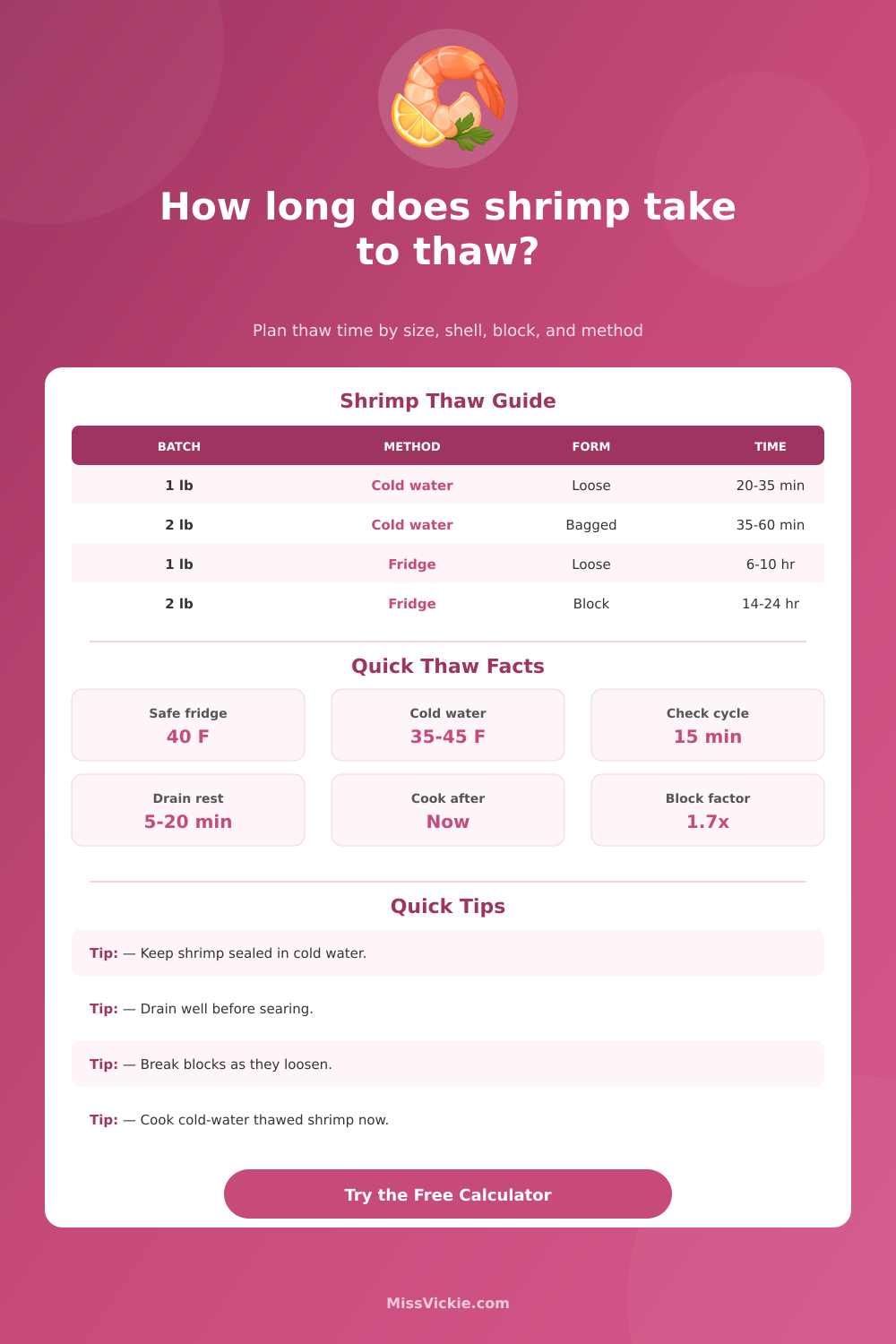
Refrigerator or cold water, which one do you choose? Refrigeration keeps constant temperatures (below forty degrees Fahrenheit), thus keeping texture throughout the whole batch. But refrigeration forces you to plan ahead: Expect about six hours for a pound of loose shrimp; up to twenty-four hours if using a large, thick block. By the time you remember to take something out of the freezer, the fridge is out of service.
Urgent dinner plans? There’s always cold water. Why does it work? Water removes heat much more efficient than air. As the water gets cold from the ice, it pulls the cold into the rest of the package much faster than if it were just sitting in a pile on the counter. The key restriction is that the water needs to be frequently swapped with fresh, cold stuff. Otherwise, you’re effectively cooking the outer layers as you leave middle raw.
People also forget another factor: shrimp should be very dry before they are served. If your intent is to fry them or even sear them, then you’re not finished thawing them once the ice melts, you’re finished when moisture is gone. If shrimp aren’t thoroughly dried, they’ll steam rather than brown, which results in something no one likes eating: a mess of gray on their plate. For high-heat cooking (such as grilling or scampi), where shrimp will cook very quickly, there’s a reason the device calculates a drain and rest time as part of the process: Drying time does matter. Leaving shrimp in a colander for 10 minutes realy helps with achieving a nice coating of butter later on. It is a little thing that could of made the difference between soggy and good.
Another big change is shell versus no shell on size. The bigger the size the longer it will take because the shell acts as an insulator and slows down heat getting into the interior. Just from volume alone, huge shrimp have more of that cold stuff to get through before its hot enough in the middle. Shrimp that are already shelled like salad shrimp is going to be small, which means there isn’t a lot of insulating mass between you and the warm water. Put those in too long and they’ll get all waterlogged. Getting to know how different sizes act physically will help you know what to expect with non-standard package size.
The web page includes some helpful reference tables laying out these trade offs, which show how each form behaves when subjected to each method: A vacuum tray will be quicker than a loose bag or a block because it’s flat yet dense, while a bag will be quicker than a block. If the math doesn’t seem right, plug it into those guides for sanity checking.
The bottom line is that cooking shrimp well begins far earlier than when the pan heats up. Cold, gentle attention paid to frozen seafood respects its thermal properties and prevents both tough bites and any foodborne risk. Instead of fighting physics by using hot water to thaw your seafood, trust the process. Planning the thaw properly ensures your dish tastes like a fresh catch rather than a freezer accident.