Roast Marinating Time Calculator
Estimate wet marinade time, injection rest, dry rub rest, turning schedule, and the maximum refrigerator window for beef, pork, lamb, poultry, and lean game roasts.
🥩 Roast Marinade Presets
Pick a common roast prep, then adjust cut, weight, thickness, acid, salt, injection, dry rub, fridge temperature, and your maximum raw-rest window.
⚖ Roast, Marinade, Rub, and Fridge Inputs
Roast marinade plan
Adjust the roast inputs to build your timing plan.
Timing Breakdown
📊 Roast Prep Summary Grid
🔍 Marinade Method Comparison
Best for herbs, garlic, wine, citrus, and roasts that will be turned during the cold rest.
Best for thick pork, poultry, and lean roasts when flavor needs to reach past the outer layer.
Best for oven, grill, smoker, and rotisserie plans where a dry surface improves crust.
Best when you want wet aromatics without enough liquid to fully submerge a roast.
📋 Roast Cut Timing Table
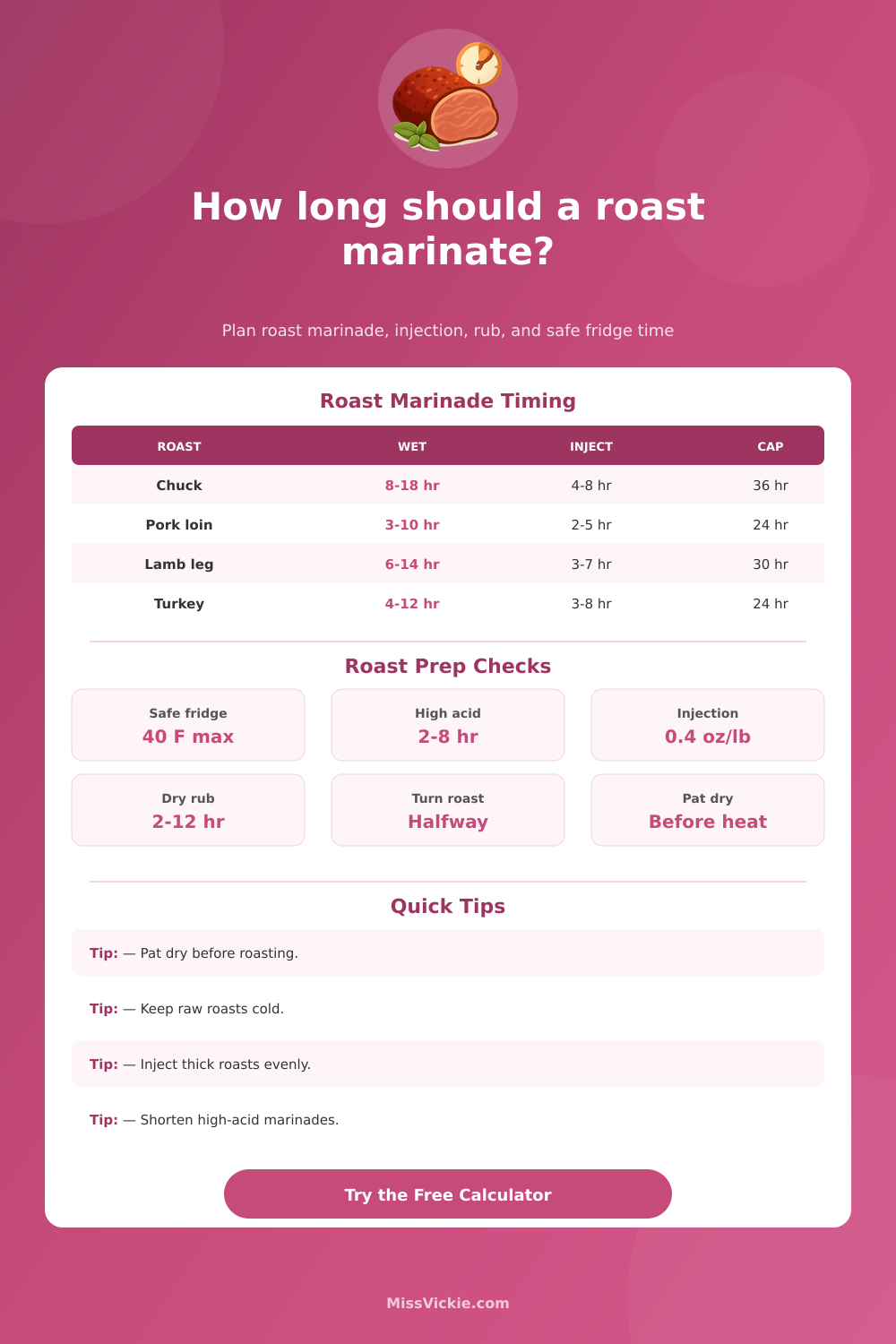
| Roast Type | Good Wet Window | Injection Rest | Dry Rub Rest | Quality Notes |
|---|---|---|---|---|
| Beef chuck roast | 8 to 18 hours | 4 to 8 hours | 4 to 12 hours | Dense and forgiving; handles wine or beer marinades well. |
| Beef rib or strip roast | 2 to 8 hours | 2 to 5 hours | 2 to 10 hours | Tender already, so avoid long high-acid soaks. |
| Pork loin roast | 3 to 10 hours | 2 to 5 hours | 2 to 8 hours | Lean meat benefits from salt control and gentle acid. |
| Pork shoulder roast | 8 to 20 hours | 4 to 10 hours | 6 to 14 hours | Fatty and thick, but surface still needs drying before heat. |
| Lamb leg roast | 6 to 14 hours | 3 to 7 hours | 3 to 10 hours | Yogurt, garlic, rosemary, and lemon need a moderate cap. |
| Turkey breast roast | 4 to 12 hours | 3 to 8 hours | 2 to 8 hours | Injection seasons the interior more reliably than soaking. |
| Whole chicken roast | 3 to 10 hours | 2 to 5 hours | 1 to 6 hours | Keep skin dry before roasting if crispness matters. |
| Venison roast | 4 to 12 hours | 2 to 5 hours | 2 to 8 hours | Lean game can dry or cure if salt is too aggressive. |
🧪 Acid, Salt, and Enzyme Safety Table
| Marinade Style | Time Effect | Best For | Quality Cap | Watch For |
|---|---|---|---|---|
| No acid | Slower flavor pickup | Herb oil, garlic, spice paste | Up to 48 hours cold | Needs salt or injection for deeper seasoning. |
| Low acid | Normal timing | Beer, onion, mild vinegar, cider | 24 to 36 hours | Turn large roasts for even surface contact. |
| Medium acid | Shortens time | Wine, balanced citrus, yogurt | 12 to 24 hours | Lean pork, poultry, and game need tighter timing. |
| High acid | Fast surface change | Mojo, lemon, vinegar-heavy marinades | 4 to 10 hours | Chalky edges and pale roasted crust. |
| Fresh enzyme | Very fast tenderizing | Pineapple, papaya, kiwi | 1 to 4 hours | Mushy texture if left too long. |
| Very salty | Cures faster | Soy, bouillon, dry brine | 8 to 24 hours | Firm or hammy texture in lean roasts. |
🌡 Refrigerator Window Table
| Fridge Temperature | Timing Adjustment | Raw-Rest Safety Window | Calculator Action | Practical Check |
|---|---|---|---|---|
| 30 to 34 F | Marinade works slower | Up to 72 hours | Adds a small time buffer | Avoid partial freezing near cold spots. |
| 35 to 38 F | Normal cold timing | Up to 72 hours | Uses the roast quality cap | Best range for overnight roast prep. |
| 39 to 40 F | Use a shorter window | Up to 48 hours | Reduces safe cap | Cook sooner and verify the thermometer. |
| Over 40 F | Unsafe for long rest | 0 hours | Shows chill-first warning | Cool the roast before marinating. |
📏 Thickness and Turning Table
| Roast Shape | Thickest Point | Wet Contact | Turn Timing | Timing Note |
|---|---|---|---|---|
| Small tied roast | 1.5 to 2.5 inches | Tight bag | Halfway | Seasons quickly; avoid long acid exposure. |
| Standard family roast | 2.5 to 4 inches | Bag or covered dish | Halfway plus final check | Balanced window for most oven roasts. |
| Large shoulder or leg | 4 to 6 inches | Bag, pan, or injection | Every 6 to 8 hours | Injection helps more than extending a soak. |
| Very thick holiday roast | Over 6 inches | Injection plus rub | Turn when possible | Wet marinade stays mostly at the surface. |
💡 Roast Marinating Tips
This calculator estimates practical roast prep timing for refrigerated raw meat. Always follow local food safety guidance and cook roasts to the proper internal temperature.
Too often, marination is thought of as easy: just plop some meat in a bath, then let time do its work. It is almost never true. Most marinades don’t go very deep into any thick roast, and instead sit happily at the surface layer until the marinade’s ingredients is exhausted by either time or by their own breaking down into mush. That’s why timing is so critical.
Flavor vs. You try to get as much flavor as possible without ruining the structure. This ensures your dinner won’t fall apart under the fork. After plugging in your specific method and cut, the calculator above does all the math for you, spare you having to guess at the rate of attack each acid has on various proteins. It also makes you think about factors most home cooks don’t consider.
How Long to Marinate Your Meat
Density is an example. The tighter structure of a muscle fiber, like in a dense chunk of chuck roast, resists dissolving quickly, so it can withstand a longer bath without breaking down too much. A lean pork loin or tender ribeye won’t. They lacks the strength to stand up to strong acids. So if you treat those tender cuts to the same length of time you do an overworked shoulder in a high-acid marinade, you’re going to get a gray crust around the edges and chalky meat, unable to brown.
And that’s what folks are getting wrong. They think that more time is more flavor. The usual culprit is acid level. Acid (yogurt; vinegar; citrus juice) break down protein bonds and tenderize. Sounds good in theory. In practice, the longer you do that, the more mealy it get on the surface of the meat. Even worse, enzymes found in fresh pineapple/papaya work faster still. They will also dig into collagen hard. Do that overnight, and you’re asking for a disaster. A few hours is plenty.
The reference table on the page makes this clear: it shows how much high-acid marinades shrink the quality window compared to gentle herb oils. An oil doesn’t penetrate muscle at all. It just coats the surface and carries fat-soluble flavors. So you can leave an oil-based rub on a day or two before it ruins the texture. Of course, this works as long as your fridge is realy cold.
Which brings us to the variable: temperature. One fridge at thirty-eight degrees Fahrenheit will behave much differently than one that’s sitting at a warm forty-five. At the lower end of the spectrum, bacterial growth is slow and steady. The closer you get to room temp, the faster bacteria will replicate. Most home refrigerators are warmer than what you might expect. If your refrigerator temperature registers over forty on your thermometer, then you’re going to want to shorten your marination times. Flavor isn’t worth risking food-borne illness, ever.
The calculator takes all of this into consideration, and caps off how long you can safely hold things, depending upon what temperature you enter. Remember, marinating raw meats is as much a battle with time as it is an exercise in building flavor.
Injecting it changes the game. Surface marinades on pork shoulders or turkey breasts etc., do little more than dress up the outside for the camera. Unless you add some form of liquid inside the meat, that middle part won’t be seasoned. By injecting, you can reach down into the muscle and season it directly. That means seasoning all the way through. Without having to wait for the magic of soaking to slowly spread flavor. Shorten your wet marinating period dramatically, but still enjoy an evenly seasoned result. You won’t get a mushy exterior, either.
It’s one reason many cooks forget this option; injection takes a tad longer than a toss-in-a-bag technique. Another answer for texture-oriented roasting is dry rubs. As salt extracts moisture from the meat, it dissolves on the surface in a brine which then soaks back in over time. But it does so gradually. A dry rub applied overnight will leave a seasoned exterior with no more wet liquid to steam the crust, which browns beautifully. That’s why the calculator distinguishes between dry rub time and wet marinate time. Each serves its own purpose. One works internally for flavor and moisture retention, while the other works externally for color and texture.
If you’re soaking in a shallow dish or loose bag, make sure to turn the roast partway through so both sides get exposed. Otherwise, only half of the meat will be seasoned. It is a small detail, but it matters in the end. And lastly: Pat the roast dry before cooking. This is not negotiable if you want a good sear on the outside. Moisture causes steaming, while dryness causes crisping.
These are the variables that go from a guess into a plan, and once you master them you’re in control and no longer at the mercy of luck. Deep flavor and holding onto texture is what we’re after, and it’s about more than eating something that doesn’t taste bad. It’s about precision and patience. Get the timing right, keep it cold and let the science take over. Pay attention to the details and your roast will thank you.