Smoked picnic and shoulder timing
Pork Shoulder Smoking Time Calculator
Estimate smoker time for pork shoulder, picnic shoulder, whole shoulder, skin-on roasts, boneless rolled cuts, slicing targets, pulling targets, stall behavior, wrap timing, and rest.
🍽Shoulder presets
Choose a real cook style, then adjust the cut, skin, bone, temperature, wrap, stall, finish target, and rest.
⚖Smoke planner inputs
Your pork shoulder smoke plan
Adjust the inputs and calculate for a custom shoulder timeline.
Timing breakdown
Shoulder factors
📌Shoulder timing markers
🔥Reference tables
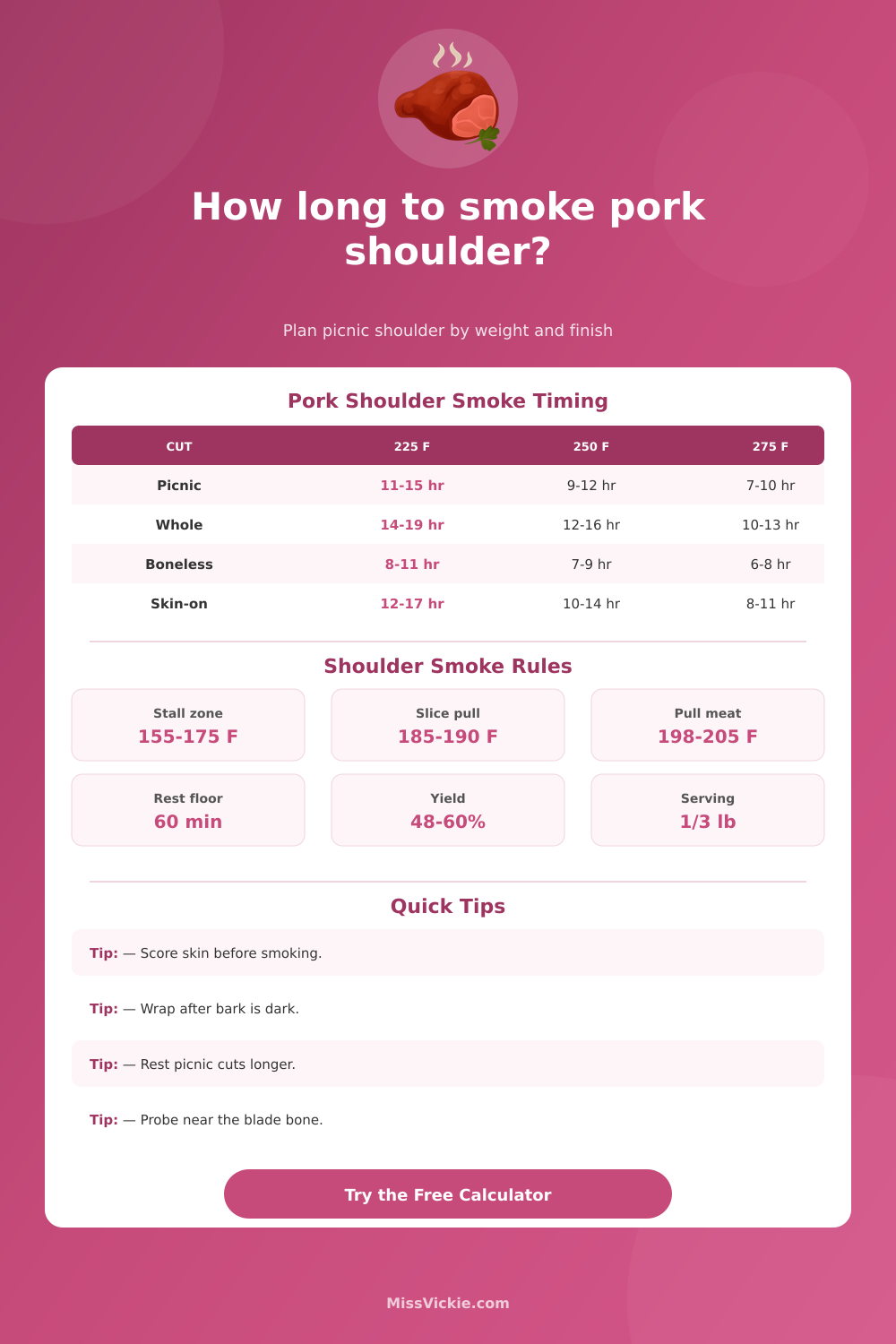
| Shoulder cut | Best target | 225°F estimate | 250°F estimate | Why it changes |
|---|---|---|---|---|
| Picnic shoulder, bone-in | Pull or chop | 1.45 to 1.8 hr/lb | 1.15 to 1.45 hr/lb | Lower shank muscles, skin, and bone slow the center. |
| Whole shoulder | Pull for a crowd | 1.35 to 1.65 hr/lb | 1.1 to 1.35 hr/lb | Large mass cooks slower, but the shape is less compact per pound. |
| Boneless rolled shoulder | Pull or slice | 1.15 to 1.45 hr/lb | 0.95 to 1.2 hr/lb | No bone drag, but netting can make the roast dense. |
| Split shoulder pieces | Fast pulled pork | 0.95 to 1.25 hr/lb | 0.75 to 1.0 hr/lb | More surface area reduces the center distance. |
| Finish style | Pull range | Rest range | Serving texture | Best use |
|---|---|---|---|---|
| Sliceable shoulder | 185 to 190°F | 45 to 90 min | Moist slices, still structured | Picnic roast dinner or sandwiches. |
| Choppable shoulder | 192 to 197°F | 60 to 120 min | Chunky chopped pork | Tray service, beans, tacos, rice bowls. |
| Pull-apart pork | 198 to 205°F | 90 to 180 min | Shreds with gentle pressure | Classic shoulder BBQ and sliders. |
| Extra-soft pulled pork | 203 to 207°F | 120 to 240 min | Very soft strands | Large pans, sauced service, long hold. |
| Wrap choice | Speed effect | Bark effect | Moisture effect | Shoulder note |
|---|---|---|---|---|
| No wrap | Slowest | Firmest bark | More surface drying | Best for scored skin or bark-focused picnic. |
| Butcher paper | Moderate | Good bark | Balanced | Wrap after color is deep and fat is rendering. |
| Foil | Fastest | Softer bark | High | Useful for thick skin-on shoulders running late. |
| Covered pan | Fast | Softest bark | Very high | Good for chopped pork when pan juices matter. |
| Raw weight | Expected cooked yield | Servings at 1/3 lb | Servings at 1/2 lb | Planning note |
|---|---|---|---|---|
| 5 lb / 2.3 kg | 2.4 to 3.0 lb | 7 to 9 | 5 to 6 | Small picnic or boneless roast. |
| 8 lb / 3.6 kg | 3.8 to 4.8 lb | 11 to 14 | 7 to 9 | Common bone-in picnic shoulder. |
| 12 lb / 5.4 kg | 5.7 to 7.2 lb | 17 to 21 | 11 to 14 | Large shoulder with rest buffer needed. |
| 16 lb / 7.3 kg | 7.6 to 9.6 lb | 22 to 28 | 15 to 19 | Whole shoulder or two picnic pieces. |
🔍Shoulder comparison grid
More connective tissue and skin drag. Plan extra rest and probe around the bone.
Closer to classic pulled pork timing, but still changes with bone and trim.
Needs the most buffer. It may finish unevenly between the picnic and blade end.
No bone delay, but tied roasts can hide cool pockets in the center seam.
💡Two shoulder smoking tips
Calculator times are planning estimates. Probe tenderness, internal temperature, and safe hot holding should decide the final serving moment.
You need patience. Smoking a pork shoulder well takes time for collagen to break down. If you rush this process, you’ll ruin texture of finished product. Most chefs use their meat thermometer as a stopwatch, pulling roast when it reaches whatever temperature they consider “safe.” That’s the wrong move; safety is the bare minimum, while tenderness is what you’re after.
When you pull shoulder at 160°F, it still taste tight and stringy because its connective tissue hasn’t begun to break down yet. What you want is for meat to give gently to slight pressure, typically achieved through continued cooking until it reaches nearly 200°F. This calculator helps you account for that fact with estimates for how long it will take your particular cut to reach that point.
How to Cook Pork Shoulder Perfectly
It consider the variables that realy impact cook time. So weight comes first, but not all pounds is created equal. Skin, fat, bone. They’re an insulating layer between you and the heat. Boneless meat rolls up into a denser form that provide less surface area for the heat to travel through. This isn’t to say generic “an-hour-per-pound” rules aren’t useful, they’re just an approximation instead of more precise information. That’s where tool comes into play. It factors those physical properties (density and shape) into account so you don’t have to waste time guessing about it.
Remember: thermal transfer and the drag it creates set stage before you light the fire. During the stall phase, you’ll notice pit appears to have gone dormant. Evaporation of the juices on the surface cools them down so they’re only about 155°F to 175°F inside for hours. New smokers gets frustrated at this point as they assume their fire has went out, but nope. It’s doing its job.
What you do now will determine finished texture. If you want it softer, you can wrap it in foil which traps the moisture and forces heat past the stall faster. But it also makes bark softer. A compromise is using butcher paper which allow some steam to come out but keeps meat from drying out. You can choose your wrap plan with the calculator, and it tells you approximately how much extra time that decision may add or save you.
That’s where most of these plans comes up short: managing temperature. You set your dial on the smoker to 250°F, and then the temperature of the grate starts bouncing all over the place, throwing off your timing. If you throw cold meat onto the grate, right out of the fridge; there will be some added warmup time as well, which won’t factor into your strict plan. Get that shoulder as close as possible to room temp before putting it in the pit. That will help keep that first rise steady. It is a little thing, but it is a big deal when you are feeding people at a certain time.
The other thing about the cook: There’s no such thing as optional downtime. The juices is in the middle. The fibers are tight when you take the shoulder off the heat. Slice into it right away, and all that deliciousness gets on your cutting board rather than back inside the meat. Letting it sit lets the protein relax so it can suck up its own moisture again. That is what the wait time buffer does with this tool. Otherwise, you might think you’re done early, but you would of served dry meat anyway.
Don’t treat smoke times as a law (more like a guide). Internal marbling, weather, humidity and so on will advance (or delay) the clock an hour or even more. Use the reference tables as good baselines to plan both your schedule and grocery list. But know that you’ll need to listen to meat to know when it’s ready. Every time, trust probe tenderness over the clock. If thermometer slips inside without much resistance, it’s game over. Otherwise, maintain a steady fire and trust the process.