Carrot Cooking Time Calculator
Estimate carrot cooking time from cut shape, piece diameter or thickness, method, baby versus whole or sliced carrots, batch size, glaze finish, doneness target, altitude, start temperature, and pan crowding.
🥕 Carrot Cooking Presets
Load a real carrot setup, then adjust the piece size, method, altitude, glaze, and texture before you start cooking.
⚖ Carrot Timing Inputs
Carrot cooking plan
Adjust the setup and calculate to see the timing window.
Timing Breakdown
Cooking Notes
Use this as the doneness check
⏱ Carrot Baseline Timing Grid
Quarter to half-inch rounds at a steady simmer.
Steam or boil until the thickest piece pierces cleanly.
Batons, chunks, and baby carrots at 400 F.
Full carrots need extra center heat and turning.
📋 Method Timing Table
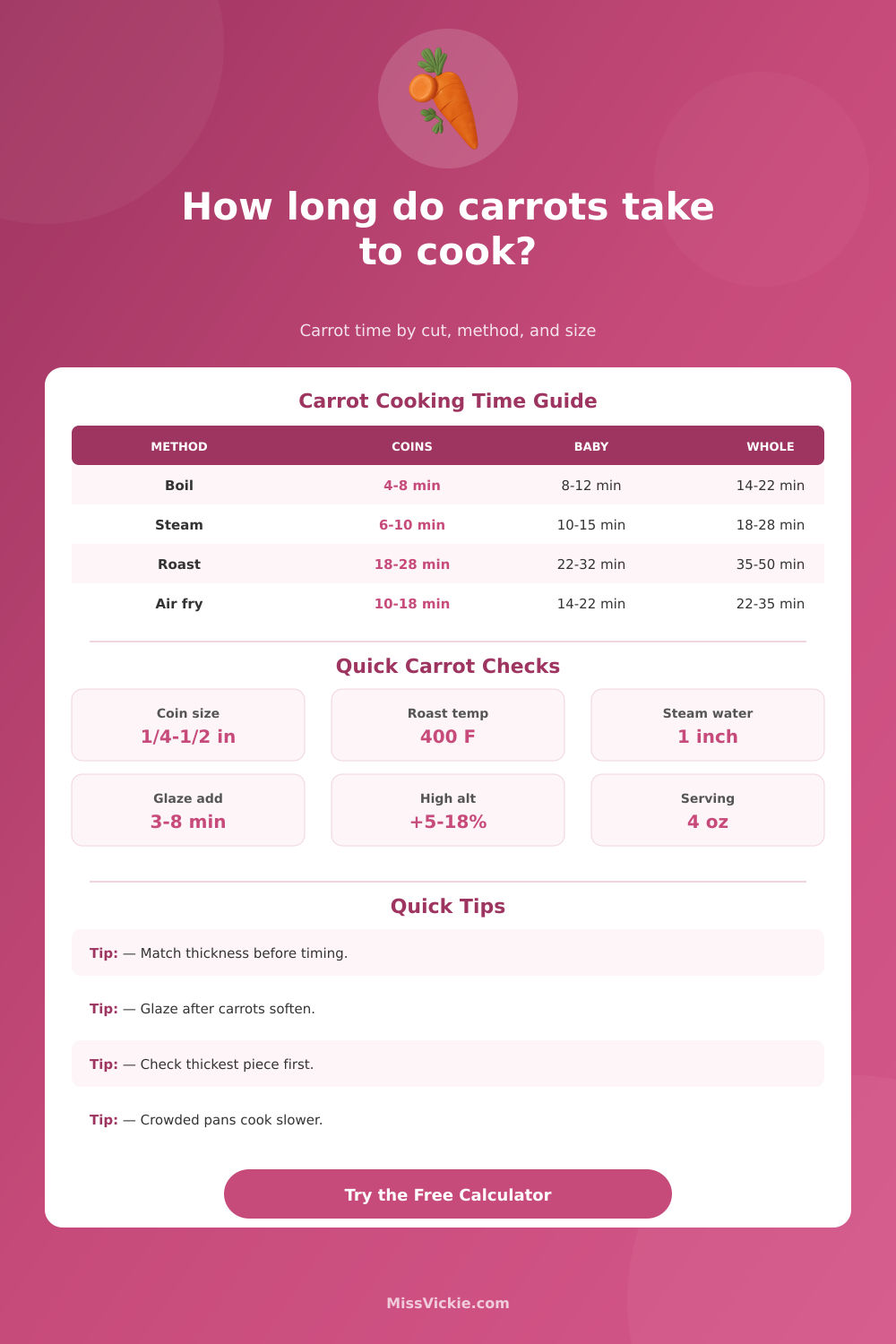
| Method | Best carrot shape | Baseline time | Heat setting | Timing cue |
|---|---|---|---|---|
| Boil or simmer | Coins, dice, baby carrots | 4 to 16 min | Steady simmer | Fork meets slight resistance for tender carrots. |
| Steam basket | Baby carrots, batons, slices | 6 to 22 min | Covered strong steam | Steam must be active before starting the timer. |
| Oven roast | Batons, chunks, whole carrots | 18 to 50 min | 390 to 425 F | Edges brown while the center turns tender. |
| Air fryer | Batons, chunks, baby carrots | 10 to 35 min | 360 to 400 F | Shake or turn when edges begin to color. |
| Skillet glaze | Coins, diagonal slices, baby carrots | 8 to 22 min | Medium to medium-high | Add glaze after water evaporates and carrots soften. |
| Microwave | Coins, dice, baby carrots | 3 to 12 min | Covered with splash of water | Rest 2 minutes so steam finishes the center. |
| Pressure cooker | Whole, baby, or large chunks | 1 to 7 min pressure time | High pressure | Use quick release for sliced carrots. |
🔪 Cut Shape And Diameter Table
| Carrot form | Measure this | Fast method | Slow method | Best doneness target |
|---|---|---|---|---|
| Thin coins | Slice thickness, 1/8 to 1/4 inch | Microwave or boil | Steam | Crisp-tender sides and salads |
| Thick coins | Slice thickness, 1/2 inch | Boil | Skillet glaze | Tender or soft glazed carrots |
| Batons or sticks | Thickest side, 1/3 to 3/4 inch | Air fryer | Roast | Roasted edges, tender center |
| Dice | Cube edge, 1/4 to 1/2 inch | Microwave or skillet | Steam | Soup base or quick sides |
| Baby carrots | Average diameter | Pressure or boil | Steam or roast | Tender snack-style center |
| Whole carrots | Thick end diameter | Pressure cooker | Oven roast | Soft center or caramelized roast |
🍯 Glaze And Finish Table
| Finish | When to add | Extra time | Best method | Watch for |
|---|---|---|---|---|
| Butter finish | After draining or after roasting | 0 to 2 min | Boil, steam, roast | Butter melting into hot carrots. |
| Honey or maple glaze | Last third of cooking | 3 to 6 min | Skillet, roast, air fryer | Sugar bubbling lightly, not smoking. |
| Brown sugar glaze | After carrots are nearly tender | 4 to 8 min | Skillet | Thick syrup coating the pan bottom. |
| Thick sauce or miso glaze | Last few minutes | 2 to 5 min | Roast or air fryer | Dark spots can form quickly. |
| Oil-coated roasting | Before cooking | 0 to 4 min | Roast or air fryer | Better browning, slightly faster edges. |
🗻 Batch, Altitude, And Doneness Table
| Adjustment | Low impact | Medium impact | High impact | Why it matters |
|---|---|---|---|---|
| Altitude | 0 to 2000 ft | 3000 to 6000 ft | 7000 ft plus | Boiling and steaming water temperature drops as altitude rises. |
| Batch layout | Loose layer | Normal home batch | Crowded or two trays | Carrots block steam, water flow, and roasting airflow. |
| Doneness | Crisp-tender | Tender side dish | Soft or puree | Soft carrots need more pectin breakdown in the center. |
| Start state | Room temperature | Refrigerated | Frozen or ice-cold | Cold pieces spend more time just warming through. |
🧮 Cooking Method Comparison Grid
Best for coins, dice, and soft side-dish carrots. Start checking once the thickest piece bends slightly.
Gentler than boiling and good for baby carrots, but altitude and deep baskets add time.
Best flavor for batons and whole carrots. Diameter matters more than weight.
Quick roasted texture if the basket is not piled. Shake halfway for even edges.
💡 Carrot Cooking Tips
Times are estimates for trimmed carrots. Use a fork, skewer, or knife tip to confirm doneness, especially for dense garden carrots and high-altitude kitchens.
At home, most people assess a carrot not by how dense it is, but how colorful. That’s why so many people are disappointed: a bright orange carrot might be woody if it was stored for months or grown in tight quarters. Usually it’s just a matter of getting some heat through the thickest point of carrot to make the difference between a nice side dish and a chewy regret. No PhD in thermo-dynamics required here, but you should of get over relying on your eyes as the only guide.
Once you know what form the carrot will be cut into, and how it will cook, the above calculator will do the math for you. It spares you from underestimating how long it will actualy take to soften up those hard carrots.
How to Cook Carrots Perfectly
For starters, what are we trying to cook? How big (or small) is it? A quarter-inch coin cooks in minutes because heat penetrates quickly from all sides. But a full-on thick carrot will take much longer, since its core is surrounded by insulation made off of layers of water and fiber. This is why having things be the same size is so important here. Throw some variously-sized carrots into a pot and by the time big guys are starting to get tender, the little ones have turned to mush.
This is where the tool comes in: Asking how thick/long/diameter you’re cooking allows the system to account for this by computing how long it’ll take heat to travel to the middle of whatever shape you have entered. The bigger the individual carrot, the longer it will take. It depends less on how heavy your batch is and more on how large the individual item itself are.
Each has its own logic, and the way they cook it changes the game. Water is an efficient way to transfer heat, so you can boil things quickly. But water will leach some of the vitamins and flavor from whatever’s in the pot. Steamers keep more color and retain more nutrients. This works as long as steamer basket stays under a cloud of vigorously steaming water. That steam can be broken up if you open the lid too many times. Air conducts poorly, so roasters take longer, but it also dries things out and concentrates their sugars (caramelizing them at the same time).
The reference tables inside the tool explain those basic differences in why, for example, you need to roast whole carrots almost twice as long as you need to boil coin-thin ones. It’s about gaining depth of flavor versus speed, so consider this when planning your schedule.
When it comes to wet cooking methods, altitude matters. As you rise above sea level, the boiling point of water lowers. For example, water boils at about 197 degrees Fahrenheit at seven thousand feet compared to the usual 212. This may not seem like a huge change… Until you realize that your boiling and steaming time increases by fifteen to twenty percent. Want some stubbornly raw carrots? Stick to the timing charts from down on the lowlands if you’re up in the mountains. Luckily, the calculator takes this into account.
So instead of pulling out a fork and finding a hard center just because the timer went off, everything is fine here. Other relevant variables: The other factors that impact how much heat or liquid circulates in a pan also include batch size and pan crowding. When you roast a panful of carrots on a sheet, each one gets exposed to circulating hot air. Put a bunch on top of each other and the top will dry while the bottom steams. Similarly, if you add cold veggies to a full-to-the-brim pot, not only does the water lose much of its heat, but it’ll take longer to get back to boiling again (a factor left ignored in most straightforward recipes). With this tool, enter what’s going into your pan, and you’ll have more accurate picture… One that considers both airflow restrictions and heat retention.
The other element complicating things: Glazes can burn before carrots becomes soft. If you toss carrots with brown sugar or honey right away, you’ll likely end up with burnt edges and a still-firm interior. Instead, I prefer bringing them to almost-done first, and adding that glaze during the last minute or two so it has just enough time to coat and thicken on the veg without hurting the precious sugars. That’s where the tool comes in, separating the primary cook time from the finishing window. You know what to do when!
So what does all this mean? In short: No algorithm will ever be as effective as a fork test. Because carrots come in many shapes, sizes, kinds, and ages, a little wiggle room is never unwelcome. First check the biggest carrot. It should offer some resistance when you pierce it with a fork, yet give way to a slight bend before any crunch sets in. The estimates are there to guide you; go with your gut for directions. After all, you want those carrots to feel firm to the touch yet fresh. It is not about luck; understanding how the heat moves through your carrots gets you there.