Asparagus Cooking Time Calculator
Estimate asparagus timing from spear thickness, cooking method, batch size, trim loss, start temperature, doneness, pan crowding, altitude, steam strength, and serving yield.
🥦 Asparagus Cooking Presets
Choose a common asparagus setup, then adjust spear size, load, trimming, heat, doneness, altitude, and crowding for your pan, oven, steamer, grill, or air fryer.
⚖ Asparagus Timing Inputs
Steamer basket timing
Cook asparagus until bright, tender, and still structured. The result updates as you change the inputs.
Timing Breakdown
Yield And Setup
⏱ Quick Asparagus Timing Markers
🥦 Spear Thickness Timing Table
| Spear Size | Diameter | Steam Or Blanch | Roast At 425°F | Saute Or Grill | Best Doneness Check |
|---|---|---|---|---|---|
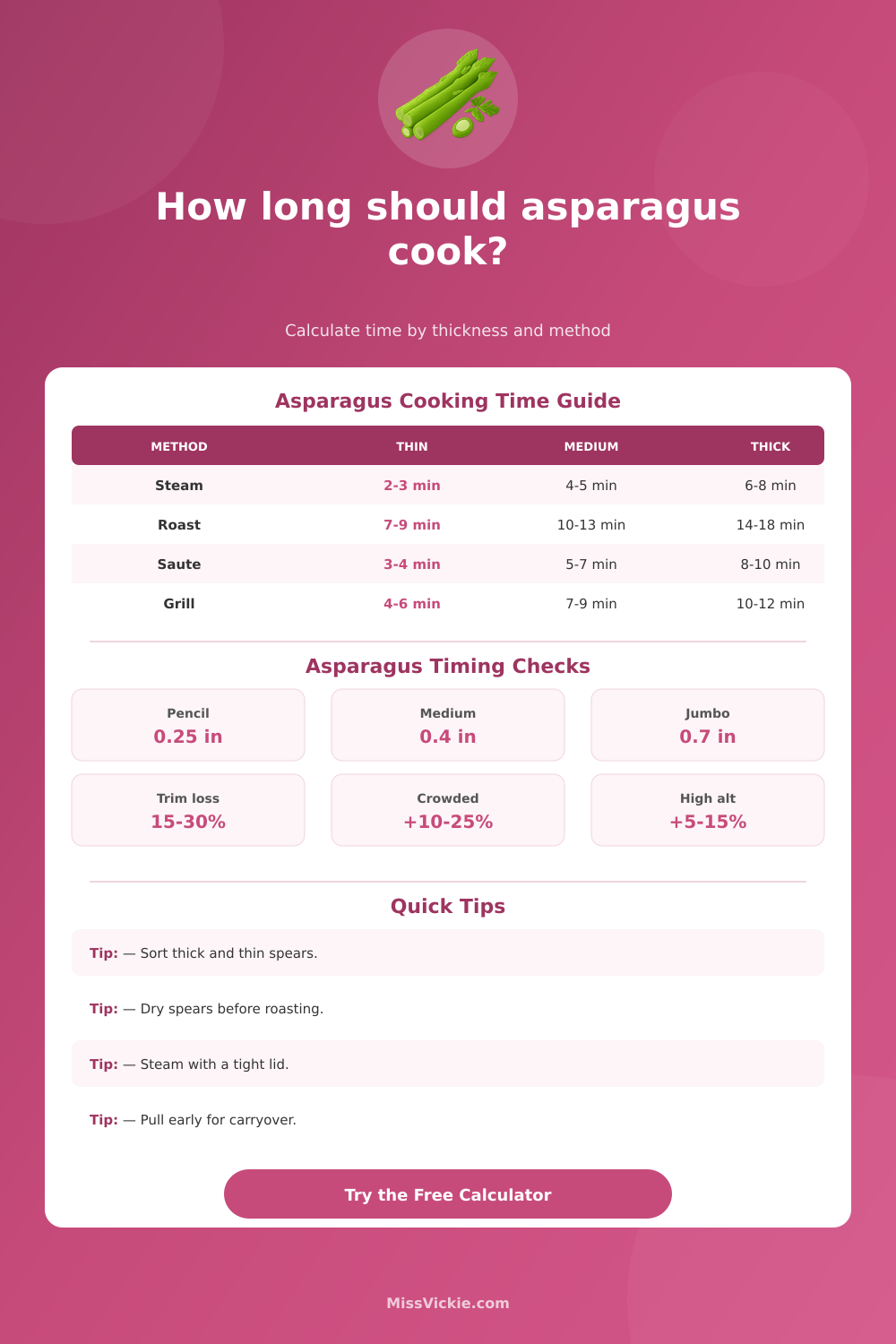
| Pencil-thin | About 0.20 to 0.27 in | 1.5 to 3 min | 6 to 9 min | 3 to 5 min | Tips wilt, stalks brighten quickly |
| Slim spring | About 0.28 to 0.35 in | 2.5 to 4 min | 8 to 11 min | 4 to 6 min | Stalk bends but still snaps |
| Medium market | About 0.36 to 0.48 in | 4 to 6 min | 10 to 14 min | 6 to 8 min | Knife tip slides into lower stalk |
| Thick | About 0.49 to 0.62 in | 6 to 8 min | 13 to 17 min | 8 to 11 min | Center is tender, tips not mushy |
| Jumbo | About 0.63 to 0.80 in | 8 to 10 min | 16 to 21 min | 10 to 13 min | Peel lower stalks for even texture |
| Mixed bundle | Uneven sizes | Cook in two groups | Sort before roasting | Pull thin spears early | Judge the thickest trimmed stem |
Times assume trimmed fresh asparagus, a single layer where relevant, and a tender finish. Start checking earlier for crisp-tender spears.
📊 Batch Size, Trim, And Yield Table
| Prepared Asparagus | Raw Bunch To Buy | Estimated Spears | Cooked Yield | Side Servings | Good Setup |
|---|---|---|---|---|---|
| 0.5 lb / 225 g | 0.65 lb with 22% trim | 10 to 16 spears | 1.6 to 1.8 cups | 2 small sides | Small skillet or half steamer |
| 1 lb / 450 g | 1.25 to 1.35 lb raw | 18 to 30 spears | 3.2 to 3.6 cups | 4 side servings | Full skillet or sheet pan |
| 1.5 lb / 680 g | 1.9 to 2 lb raw | 28 to 45 spears | 4.8 to 5.4 cups | 6 side servings | Two pans for roasting |
| 2 lb / 900 g | 2.5 to 2.7 lb raw | 36 to 60 spears | 6.4 to 7.2 cups | 8 side servings | Split batches for dry heat |
| 3 lb / 1.36 kg | 3.8 to 4 lb raw | 55 to 90 spears | 9.5 to 10.5 cups | 12 side servings | Steam in tiers or roast trays |
| 5 lb / 2.27 kg | 6.3 to 6.8 lb raw | 90 to 150 spears | 16 to 18 cups | 20 side servings | Cook in planned batches |
🌡 Method Adjustment Table
| Adjustment | Steam Or Boil | Roast Or Air Fry | Skillet Or Grill | Why It Matters |
|---|---|---|---|---|
| Refrigerator-cold spears | Add about 5% | Add about 8% | Add about 6% | The center starts colder and delays tenderness. |
| Wet after washing | Small change | Add 10% or dry first | Add 8% and expect less browning | Surface water steams before browning begins. |
| Crowded pan | Add 8 to 18% | Add 15 to 25% | Add 10 to 18% | Spears trap moisture and block heat contact. |
| Altitude above 3000 ft | Add 4 to 14% | No direct change | No direct change | Boiling water and steam run cooler at altitude. |
| Charred finish | Not ideal | Add a short finish | Add 5 to 10% | Browning needs time after the stalk is tender. |
| Meal prep hold | Pull early | Pull early | Pull early | Carryover and reheating soften the stalks. |
📋 Preset Reference Table
| Preset | Method | Thickness | Prepared Batch | Target | Typical Result |
|---|---|---|---|---|---|
| Thin spring steam | Steam | Pencil-thin | 0.75 lb | Crisp-tender | Bright, snappy side dish |
| Weeknight roast | Roast | Medium | 1.25 lb | Tender | Light browning and tender centers |
| Thick grill spears | Grill | Thick | 1.5 lb | Charred tips | Smoky tips, juicy stalks |
| Blanch for salad | Boil | Slim | 1 lb | Crisp-tender | Chilled green spears for salad |
| Party steam batch | Steam | Medium | 3 lb | Tender | Split-batch serving platter |
| High-altitude steam | Steam | Thick | 1.5 lb | Tender | Extra minutes for cooler steam |
⇄ Asparagus Method Comparison
Best for bright color and repeatable tenderness when the lid is tight and the basket is not packed deep.
Best for nutty edges, but wet spears or crowded sheet pans can steam before they brown.
Best for weeknight sides because direct pan contact cooks stalks quickly and gives control.
Best for thick spears that can handle strong heat without collapsing at the tips.
💡 Asparagus Timing Tips
Pulling them out of steamer when they’re just right is one possibility, though lower part of stem could be woody. Or tips might collapse into mush while base stays hard. Why? Plants is made up of materials that conduct or resist heat differntly. Thicker spears conduct slower than thinner ones; how long the asparagus take to cook depends on how quickly heat moves through it.
Most recipes includes a flat “range” for asparagus. The assumption is that your bundle is about the same size as theirs, it probably isn’t. You input your cooking type and the spear width and the calculator does the rest. No more guesswork about whether certain sizes takes longer, like if the large jumbos needs extra minutes.
How to Cook Asparagus Perfectly
The size (diameter) of the stalk in relation to the cooking temp determines how long they go. Heat travels farther through thicker asparagus then thin asparagus. Don’t try to cook both together or you’ll end up with some ruined vegetable. The best way to get an evenly cooked result is to sort by diameter first. Seems wasteful, I know…but better than eating a bunch of uneven-textured veggies!
Too much of a good thing: Home cooks often crowd their pans or steamers. When spears are piled up they retain steam around themselves, making them cook even longer and also slowing down browning. To get tender asparagus with a little browning on the tips, leave some air space between them. This allows moisture to evaporate so the spears stays crisp. Another mistake is adding levels, which table below shows in extra minutes for dry-heat techniques like roasting. For example, doubling the number of layer can add an additional 15 to 25 percent to the cooking time.
The effect of altitude (above three thousand feet) appears small but is important: When there’s less air pressure, water doesn’t boil as hot. Your steam won’t be as hot as if you were at sea level. The calculator also makes a slight change upward for people using higher altitudes. Not a big change but it’ll transform undercooked stalks into tender ones.
Similarly, starting temperature make a difference. Asparagus fresh from the fridge must use energy getting up to speed before cooking down. Put cold, moist spears on a hot pan without first patting them dry and they’ll merely steam, rather than roast. Patting dry guarantees they’ll make contact with heat, not create a soggy layer of moisture.
It depends on what you want done (is it crisp-tender, or something else?), but once you know that, how you get there doesn’t change. For example, there is not much wiggle room in getting asparagus right; there is not exactly a buffer zone between just-raw and perfect-crisp-tender. With tender spears, though, you have more leeway. If you’re cooking ahead of time to add to a meal, a bit of extra time might be fine (then ice water, to halt the cooking).
You should of used it. When you pick your desired doneness before you start, it’ll help you see how the timing changes based off those decisions. Want some with soft stalks for a puree? Or charred ends for grilling? Adjust your estimate.
As with many things, cooking asparagus isn’t so much about timing, it’s about learning the dynamics of heat. Surface area, fiber density, and water content are all in play. When you consider which variables shifts the results, you stop second-guessing each bunch. Consistency matters in the kitchen, not being perfect in a vacuum. Whether roasting for a crowd or steaming for two, knowledge of how the heat interact with thickness and crowding puts you in control of the outcome.