Chicken Drumstick Baking Time Calculator
Estimate oven-baked drumstick timing from piece size, oven temperature, skin, marinade, rack or pan setup, sauce timing, batch crowding, and target internal temperature.
🍳 Drumstick Presets
Choose a starting setup, then adjust the oven and pan details for your tray. The calculator estimates time windows; a thermometer decides dinner.
📏 Baking Inputs
Your Drumstick Baking Plan
The calculator estimates a practical oven window, thermometer check time, sauce moment, and rest plan.
Timing Breakdown
Tray Details
🌡 Drumstick Timing Baselines
Food safety depends on the thickest part of the drumstick, near but not touching the bone. Time estimates should never replace a thermometer reading.
📋 Oven Time Reference
| Average Drumstick | 350 F | 375 F | 400 F | 425 F |
|---|---|---|---|---|
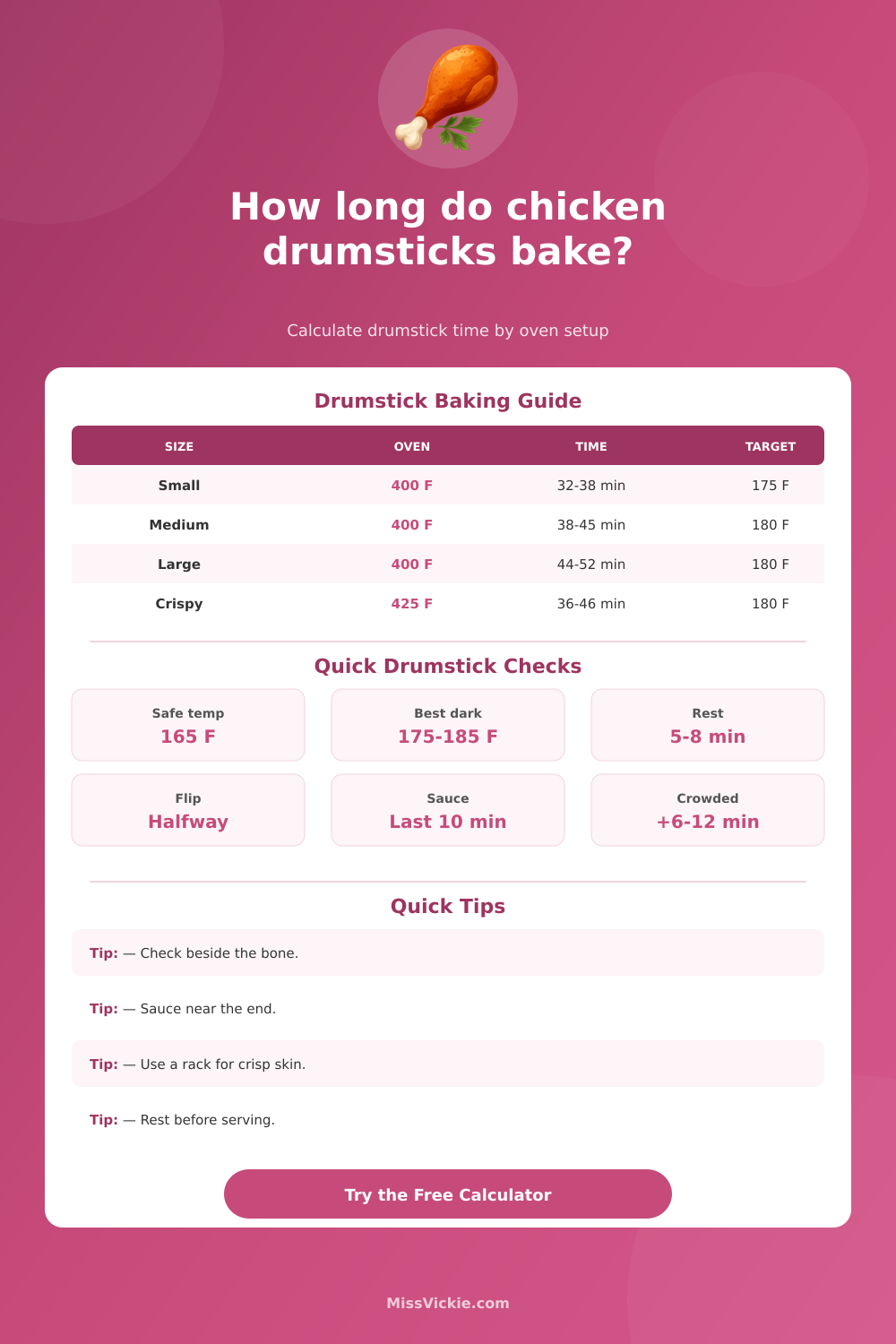
| Small, about 3 to 3.5 oz | 42 to 50 min | 36 to 43 min | 32 to 38 min | 29 to 35 min |
| Medium, about 4 to 4.5 oz | 48 to 56 min | 42 to 49 min | 38 to 45 min | 34 to 41 min |
| Large, about 5 to 5.5 oz | 55 to 64 min | 48 to 56 min | 44 to 52 min | 39 to 47 min |
| Jumbo, 6 oz or more | 62 to 72 min | 54 to 64 min | 50 to 59 min | 45 to 54 min |
These are plain, skin-on drumsticks on a roomy sheet pan. The calculator adjusts for pan material, sauce, marinade, skin condition, crowding, oven mode, and target temperature.
🧮 Adjustment Guide
| Variable | Faster Setup | Slower Setup | Typical Change | Why It Matters |
|---|---|---|---|---|
| Skin surface | Dry skin with oil rub | Wet skin or heavy marinade | -3 to +6 min | Moisture must evaporate before browning really starts. |
| Pan setup | Wire rack over metal sheet | Glass or ceramic dish | -2 to +8 min | Air circulation and pan response change bottom heat. |
| Batch spacing | Air gap around every piece | Touching pieces or two trays | +3 to +12 min | Crowding traps steam and cools oven recovery. |
| Target temperature | 165 F minimum | 185 F very tender dark meat | 0 to +8 min | Higher dark-meat targets need extra oven time. |
| Oven mode | Convection or fan bake | Cool-running oven | -4 to +7 min | Moving air cooks and dries the surface faster. |
🍯 Sauce Timing Table
| Sauce Plan | When To Brush | Best Oven Heat | Time Effect | Use For |
|---|---|---|---|---|
| No sauce or side sauce | Skip the brush step | 400 to 425 F | Neutral | Crisp skin, dry rubs, lemon pepper, simple seasoning. |
| BBQ or sweet glaze | Last 8 to 12 minutes | 375 to 425 F | +0 to +3 min | Sticky glaze without scorching the sugar. |
| Honey, teriyaki, or maple | Last 6 to 10 minutes | 375 to 400 F | +2 to +5 min | Very sweet coatings that darken quickly. |
| Sauced from the start | Before baking | 350 to 375 F | +5 to +9 min | Soft, lacquered skin rather than crisp skin. |
| Toss after baking | After thermometer target | Any heat | Neutral | Buffalo sauce, garlic butter, and spicy finishing sauces. |
🔥 Rack And Pan Comparison
Best air circulation, cleaner rendered fat, and the most even browning on both sides.
Good browning where the drumsticks touch the pan; flip once for more even color.
Easier cleanup and less sticking, but slightly softer bottoms and slower browning.
Holds juices around the drumsticks, which can be tasty but usually adds baking time.
💡 Drumstick Baking Tips
Unlike other recipes that use specific timers regardless of heat, weight, or moisture, chicken drumstick are different. If you take them out, they might look ready but be raw on the inside. Cooking times depend on your circumstances; there is no fixed number for how long they takes. The calculator takes care of this for you by taking all those factors into account. This means there is no guessing about how to cook based off a generic blog recipe written assuming your oven runs just right.
You’re making food, not acting in a play. It also takes into account the size. If I have a large drumstick, then I want the heat to penetrate to bone before serving, whereas if I have a small drumstick it will be done faster. If you use a timer based on a different size piece of meat, center will often be underdone while tip is overcooked. By taking weight of the stick into account, it automatically moves the starting point in line with that, so you’re not just guessing at when its done.
How to Cook Chicken Drumsticks Perfectly
Wet skin will steam rather than brown, so it doesn’t start that chemical process to produce color and flavor until all that water have evaporated. The calculator assumes there’s some amount of moisture, like when your chicken arrived in its package or after marinating, so it adds extra minutes for the drying time first. It’s physics; soaking wet things can’t crisp up. Often just patting skin dry with a paper towel before seasoning makes a big difference in both texture and baking time.
The end result is also affected by how you arrange the trays. Placing many pans of chicken on one baking sheet keeps steam surrounding them, converting what should be roasted into what is basically braised. Though the chicken will be tender, it’ll remain pale and sodden… No air can circulate. When you leave some room between items, heat reaches each side of each piece efficienty, resulting in more rapid cooking (a bit) as well as even browning.
Using a flat pan instead of a wire rack is fine. However, a wire rack raise the pieces high enough to let hot air circulate under the chicken, which a pan would otherwise block. As a bonus, bottom will no longer stew in its own juice while top overcooks. You can check out timing differences in the data in the reference tables below on the page.
One error people frequently make at home is their timing with sauces. With meats like this chicken, where you have a honey glaze or BBQ sauce applied from the beginning, that sugar can burn off by the time the inside of meat gets cooked through. In turn, your chicken will be underdone but charred on the outside. Instead, cook your chicken through (but not all the way) in oven and then toss on your sticky sauce during those final moments. That way you still achieve the glossy effect without any bitter burnt-sugar flavor. You’ll get the look without sacrificing the texture underneath.
Keep in mind: Temperature is important, but not precision. For tastiest results, bake until thermometer reads 175-180 degrees internally; dark meat will be more juicy then if pulled when the minimum-safe reading of 165 degrees is reached. The drumstick’s connective tissue must reach higher temps. This softens it into gelatin and ensures moist meat. Meat that is tough instead of tender are no good.
Five to eight minutes of post-bake rest lets the juices recirculate so each bite remains moist. Cut now, and bye-bye to juicy goodness; hello, greasy glop on the cutting board. You should of waited just a minute and all your bites will be juicy.
Don’t guess. Don’t use your watch as a guide. The process of baking chicken drumstick is all about managing heat transfer. Let the oven do its thing; control the variables; and then use the thermometer to tell you when it’s finished. Respect the rest, trust the science and quit guessing when dinnertime will be.