Chicken Thigh Cooking Time Calculator
Estimate chicken thigh cooking time from bone-in or boneless cut, skin, cooking method, thickness, heat setting, marinade, batch size, start temperature, and target tenderness.
🍲 Chicken Thigh Presets
Choose a common thigh setup, then adjust the cut, skin, method, thickness, heat, marinade, and batch load before cooking.
⚖ Thigh and Heat Inputs
Recommended Chicken Thigh Timing
The calculator estimates the center cooking window and a practical check schedule.
Timing Breakdown
Your Setup
- Preheat fully before adding thighs.
- Flip or rotate at halfway if the method needs it.
- Probe the largest thigh first.
- Rest before slicing or shredding.
🌡 Thigh Temperature Targets
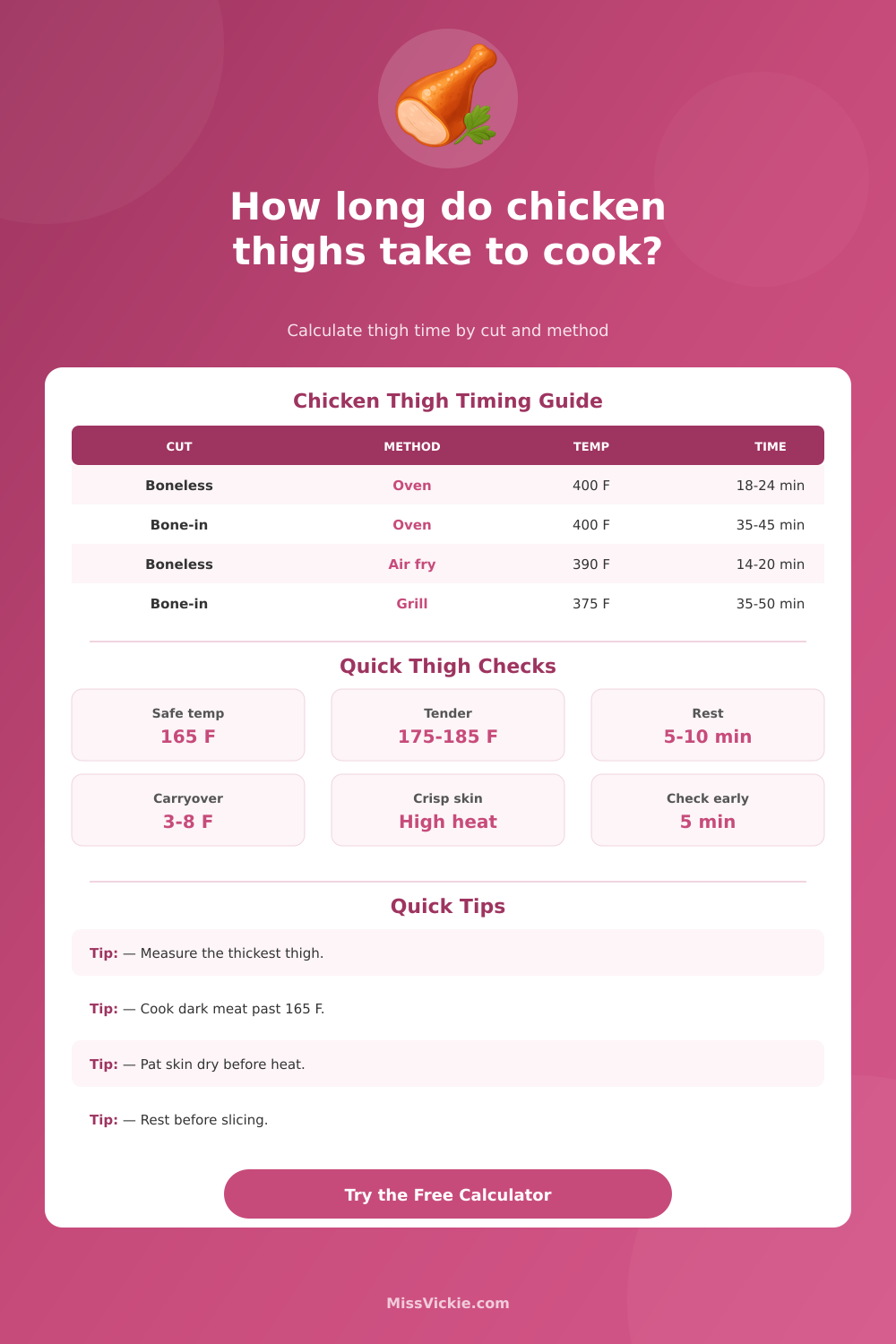
USDA safety guidance uses 165 F as the minimum internal temperature for chicken. Thighs have more connective tissue than breast meat, so many cooks prefer 175-185 F for tenderness.
📋 Chicken Thigh Timing Tables
| Cut and Skin | Typical Thickness | Oven at 400 F | Best Pull Range |
|---|---|---|---|
| Boneless skinless thighs | 0.9-1.3 in | 18-25 minutes | 170-176 F |
| Boneless skin-on thighs | 1.0-1.4 in | 20-28 minutes | 170-178 F |
| Bone-in skin-on thighs | 1.2-1.8 in | 35-45 minutes | 175-185 F |
| Large thigh quarters | 1.6-2.2 in | 42-58 minutes | 180-190 F |
| Method | Best Heat Range | Timing Effect | Thigh Handling Note |
|---|---|---|---|
| Oven bake or roast | 375-425 F | Baseline | Use a rack for crisper skin. |
| Convection oven | 350-400 F | About 8% faster | Rotate trays if cooking two pans. |
| Air fryer | 375-400 F | About 18% faster | Do not stack thighs in the basket. |
| Indirect grill | 350-425 F | Variable | Move over direct heat to crisp skin. |
| Covered braise | 300-350 F | Slower but tender | Sauce protects the surface from drying. |
| Marinade or Coating | Timing Change | Browning Risk | Best Adjustment |
|---|---|---|---|
| Dry seasoning or salt rub | No added time | Low | Pat dry and cook uncovered. |
| Oil-based marinade | Add 1-2 minutes | Moderate | Drain excess oil before high heat. |
| Wet acidic marinade | Add 2-4 minutes | Steamy surface | Pat dry if roasting or air frying. |
| Sugary BBQ or honey glaze | Add 1-3 minutes | Scorches easily | Glaze near the end of cooking. |
| Yogurt or buttermilk | Add 3-5 minutes | Spotty browning | Scrape excess coating before heat. |
| Batch Layout | Heat Flow | Likely Add-On | What To Watch |
|---|---|---|---|
| Single layer with space | Air moves freely | 0 minutes | Even browning and fastest timing. |
| Close but not touching | Small steam pockets | 1-3 minutes | Rotate pan at halfway. |
| Crowded pan or basket | Moisture trapped | 4-7 minutes | Skin may need a final blast. |
| Some overlap | Blocked surfaces | 8-12 minutes | Separate pieces once they shrink. |
| Two oven trays | Reduced circulation | 5-9 minutes | Swap racks during cooking. |
🔍 Method Comparison Grid
Best for small batches with space around each thigh and a dry surface.
Bone-in skin-on thighs crisp best at 400-425 F on a rack.
Covered sauce cooking is slower, but the thighs stay moist as they tenderize.
Indirect heat cooks through, then a quick direct finish browns the skin.
💡 Chicken Thigh Timing Tips
Perhaps with chicken thighs, it’s all just a matter of time; just get those bad boys into the oven and wait 20ish minutes, right? Uh no. Things is never quite that simple. Yes, chicken thighs are forgiving, thanks to their abundance of connective tissue which will break down when heated long enough to become gelatinous goodness. But they’re also the richest cut, capable of quickly going from deliciously juicy to dry as a bone were you to cook them the very same way you’d cook a breast.
How much longer does it take with an extra inch of meat? Or is a crowded baking dish slowing things down? Plug those details into the calculator above and let the math do its work. No more guesswork.
Why Cooking Chicken Thighs Is Not Simple
And yes, it’s not just about safety; it’s about texture, too. The worst thing people do is cook meat to its lowest safe temperature and then take it off the heat. We know from the USDA the safe temperature is 165 degrees Fahrenheit. But sometimes, we like our dark meats a little bit beyond that because it’s tastier. Thighs has more collagen than breasts, so you have time to let that collagen break down. If you pull them off at 165, they may be firmer and maybe a little bit chewy. Usually I find if I wait till it reaches about 175 to 185 degrees, that will be much silkier.
That is why the tool allows you to choose a temperature based on food safety regulations or the temperature you are trying to reach. What does that tenderness look like? “That mindset change makes you think differently about the entire cooking process.
One other thing that most people mess up with this recipe: Weight do not matter as much as thickness. It’s possible to have two thighs that weigh exactly the same, but are very different than shaped (i.e., one is rounded and thick while the other has been patted down thin). Because heat moves from the outside inward, a thick thigh, no matter what the oven temp, is going to take longer for its center to get up to temperature. So we ask you for the thickness of your thickest thigh because that measurement alone determine when the center will be cooked through. The bone inside bone-in thighs also insulates and slows down heat transfer even more. This is why bone-in pieces tends to take much longer then you might think compared to similarly sized boneless piece, despite appearances.
It also accounts for all other aspects of your cooking style. With a powerful air fryer, things cook much more quickly (and skin gets extra crispy faster) compared to the same thing cooked in a regular oven. Moist heat in a covered braise is slower, but ultra-forgiving; the liquid will keep things from drying out. So that’s what the calculator takes into account when estimating cook times: the way your chosen method applies heat.
Want to use a sugary glaze? Whether it’s BBQ sauce or honey, the tool will tell you to change your estimate to account for potential burning risk. Sugars burn before anything has had a chance to cook, so typically sugar tastes best if applied nearer the end, not the beginning.
But there’s another issue: crowding. Because thigh meat releases moisture as it cooks, if you put them too close together in a pan then all that moisture doesn’t have anywhere to go. As a result, it boils off and that steam keep the surface from turning brown (and also slows the cooking process by making the air inside hotter). This “batch spacing” variable is built into the calculator, which accounts for the real world. Yes, putting more stuff in a pan will take longer. It’s not a huge change, but it’s what happens behind the scenes that makes your dinner occasionally run late despite following a recipe to a T. Don’t worry, you’re not a bad cook. You’re battling thermodynamics.
No exceptions to the rule: Rest. “Carryover” cooking will still cause the interior temperature to rise several more degrees after you take them out of the heat. But even more importantly, allowing the meat to rest lets the juices re-distribute throughout. Slice into them too soon and all those juices will flow onto your plate… not inside the meat. The calculator’s total window includes rest time, reminding you that the clock doesn’t stop once the timer sounds. Be patient; it’ll pay off with every bite.
So really, thigh cooking isn’t much of a chart-memorization exercise, it’s a way of thinking through the connection between time, temperature, moisture, and protein. The numbers here are mere guidelines; the last word will be your eyes and your thermometer. Plan according to the charts, but make the call based on your senses. Feed it good ingredients, give it some respect, and let the process unfold, then you’ll have tender, tasty thighs worthy of the waiting.