Beef Per Person for Chili Calculator
Plan chili beef by guest count, chili style, ground beef fat percentage, bean ratio, bowl size, topping load, leftovers, and cooking shrinkage so the pot lands where you need it.
🌶 Chili presets
Pick a real chili situation, then adjust the beef, beans, bowl size, topping load, shrinkage, and leftovers for your crowd.
⚖ Chili inputs
Your chili beef plan
Calculated from guests, style, beans, fat percentage, bowl size, toppings, leftovers, and shrinkage.
Beef calculation
Pot and stretchers
Planning notes
- Adjust the settings above to see chili-specific yield and serving changes.
📌 Quick chili planning cards
📊 Chili beef reference tables
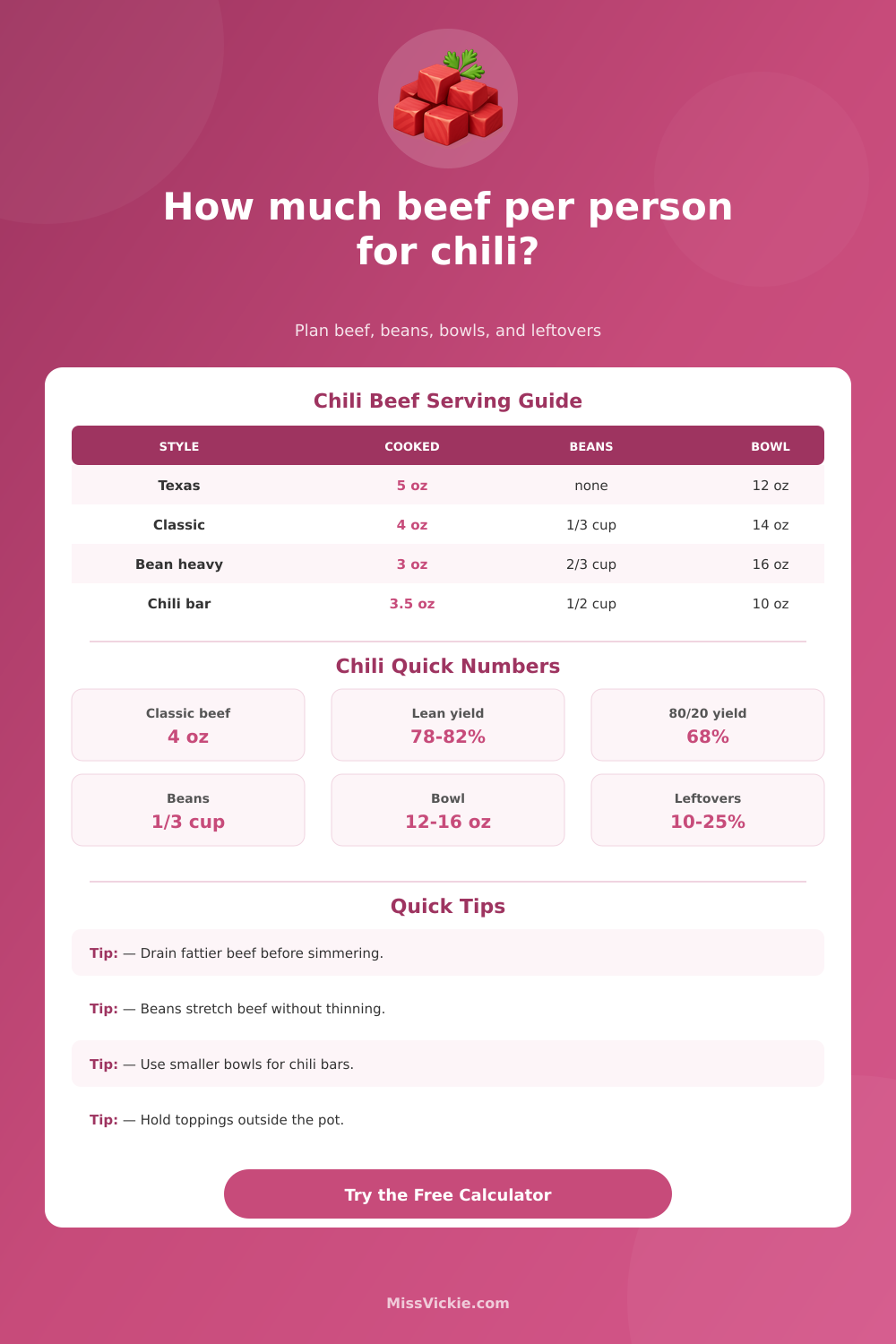
| Chili style | Cooked beef per person | Bean level | Best serving size |
|---|---|---|---|
| Texas-style no-bean chili | 5 to 6 oz cooked beef | None | 10 to 12 oz bowl |
| Classic beef and bean chili | 3.5 to 4.5 oz cooked beef | About 1/3 cup beans | 12 to 16 oz bowl |
| Bean-heavy family chili | 2.5 to 3.5 oz cooked beef | 1/2 to 2/3 cup beans | 14 to 18 oz bowl |
| Chili bar with toppings | 3 to 4 oz cooked beef | 1/3 to 1/2 cup beans | 8 to 12 oz chili base |
| Hot dog or coney chili | 1.5 to 2.5 oz cooked beef | Usually none | 3 to 5 oz topping |
| Ground beef | Drained cooked yield | Raw needed for 1 lb cooked | Chili note |
|---|---|---|---|
| 93/7 very lean | About 82% | 1.22 lb raw | Least drain-off, can taste drier |
| 90/10 lean | About 78% | 1.28 lb raw | Good for lighter chili bowls |
| 85/15 regular lean | About 72% | 1.39 lb raw | Balanced flavor and shrinkage |
| 80/20 ground chuck | About 68% | 1.47 lb raw | Rich flavor, drain well |
| 73/27 ground beef | About 62% | 1.61 lb raw | Buy extra and drain thoroughly |
| Guests | Classic 85/15 raw beef | No-bean meaty raw beef | Bean-heavy raw beef |
|---|---|---|---|
| 4 people | 1.5 lb | 2 lb | 1.25 lb |
| 8 people | 3 lb | 4.5 lb | 2.25 lb |
| 12 people | 4.25 lb | 6.5 lb | 3.25 lb |
| 20 people | 7 lb | 10.5 lb | 5.25 lb |
| 50 people | 17.5 lb | 26 lb | 13 lb |
| Add-in | Per person | For 12 people | Planning note |
|---|---|---|---|
| Drained beans, classic | 1/3 cup | 4 cups | About 2 to 3 standard cans drained |
| Tomato sauce and broth | 1/2 to 2/3 cup | 6 to 8 cups | More for long simmered chili |
| Shredded cheese topping | 1/2 oz | 6 oz | Keep separate from pot |
| Onion, chips, sour cream | 1 to 2 oz space | 12 to 24 oz | Reduce chili in smaller bowls |
| Leftover freezer portion | 12 to 16 oz | Add 1 bowl each | Use the leftover buffer field |
🧮 Chili style comparison
Highest beef need because almost every spoonful is meat and sauce.
Balanced beef, beans, tomato base, and a normal dinner bowl.
Beans and sauce stretch the batch while keeping bowls filling.
Toppings reduce the amount of chili base needed in each serving.
💡 Chili planning tips
Serving estimates assume browned ground beef that is crumbled, drained when selected, then simmered in chili. Very thick chili, extra tomato paste, or unusually wide bowls can change the visual fullness of each serving.
When the chili turns out to be a bowl of brown water instead of food, you might panic. It’s supposed to make a meal, yet meat you purchased shrank away as it cooked. Sound familiar? Most people has experienced that at least once. A pound of meat at the grocery store becomes soup because you don’t realize the distinction between cooked yield and raw weight.
Water and fat go down the drain. Often, a lot of it. We’re taught to cook what we buy, so most of us shop for beef the way we always have: by eye, not math. We select whatever we want based off size (a big one!) or price (it’s on sale!), then assume that it will survive the stew pot whole.
Why Your Chili Meat Shrinks When Cooking
That’s where batches goes wrong. Moisture evaporates and fats render out when we simmer ground beef, shrinking it quite a lot. Richer blends such as an eighty twenty chuck pack offers greater depth of flavor in the bargain. But they also shrink more, whereas lean beef hold together better. Know how much you’ll need to allow for shrinkage before lifting first can of tomatoes.
When you enter your target portion size and your blend’s fat content into the calculator above, it do the rest of the math for you, no more guessing at yield percentage or shrinkage amount. How much beef is a matter of personal preference when it comes to chili. Depending on what kind of chili you’re making, you may want more or less meat per bowl.
With a traditional Texas-style chili, there’s no hiding behind thick starchy additions. It’s all about the meat; every bite has to have something substantial about it. There’s no place for beans there. In a classic family style chili or Cincinnati chili, however, the meat isn’t meant to be the sole provider of substance. The meat gets stretched out by hearty tomato base, as well as by addition of beans.
When you’re at a chili bar heaping your bowl high with sour cream, onions, and cheese, you don’t necessarily expect every cubic inch of that bowl to be filled with meat. The toppings will take up some room in the bowl so adjust your expectations accordingly. Then you won’t risk over-buying expensive protein or under-delivering on your guests’ hungry bellies.
Think about what you’re serving in. Sure, making chili will feed 10 people if each has a small portion in their own six ounce cup, but that’s twice as many people than you could serve with ten large sixteen-ounce bowls of chili. That’s just a volume game. You’ll have almost tripled the amount of raw beef required to maintain the visually pleasing meat-to-sauce ratio in those big bowls.
And the chart on the page make it clear: Bowl size translates directly into your grocery list. Buying additional sauce or beans is often cheaper than scrambling for extra ground beef at the last moment.
Surprisingly, how fat your beef is will determine your ultimate volume surprisingly large. If you get very lean beef, perhaps only ten to fifteen percent shrinkage and you’ll have most of what you purchased. A standard eighty twenty blend can loses nearly a third of its weight as grease drains away. If you retain that rendered fat, which is flavor gold, most chili recipes require that you drain off the oil, so you don’t leave an oily feel in your mouth.
Drain that pot, and you’re stuck with a lot less meat than you thought you were going to get based off the package. The solution: buy more raw beef up front, so that when the shrinking happens you’ll still have heft in the finished dish. This is a buffer for leftovers. The chili will taste better tomorrow. Flavors deepen and meld.
Putting back a portion for another dinner (or for freezing) offsets the upfront expense. You should of planned ahead. Also consider hungry teenagers, or guests prone to double dipping. A little extra to your guest list protects against anyone heading home disappointed.
Aim for precision without causing a sweat. Keep enough in the pot so it satisfies, but do not overdo it on both budget and waste. These are the variables that transform an otherwise potentially disastrous kitchen event into something you can do again and again with confidence: a good meal to eat and one that is even better to enjoy.