Stir Fry Per Person Calculator
Size a full stir-fry plan by guest count, protein, vegetable density, sauce amount, rice or noodle side, wok capacity, appetite, and shrinkage before the heat gets loud.
🥘 Stir-fry presets
Each preset fills a real stir-fry situation with its own cooked portion target, sauce level, side dish weight, and wok load so the batch logic stays realistic.
⚖ Stir-fry inputs
Stir-fry plan
Your stir-fry sizing will appear here.
Detailed breakdown
Batch logic
Wok guidance
- Choose a preset or adjust the fields to build a stir-fry plan.
📊 At-a-glance serving numbers
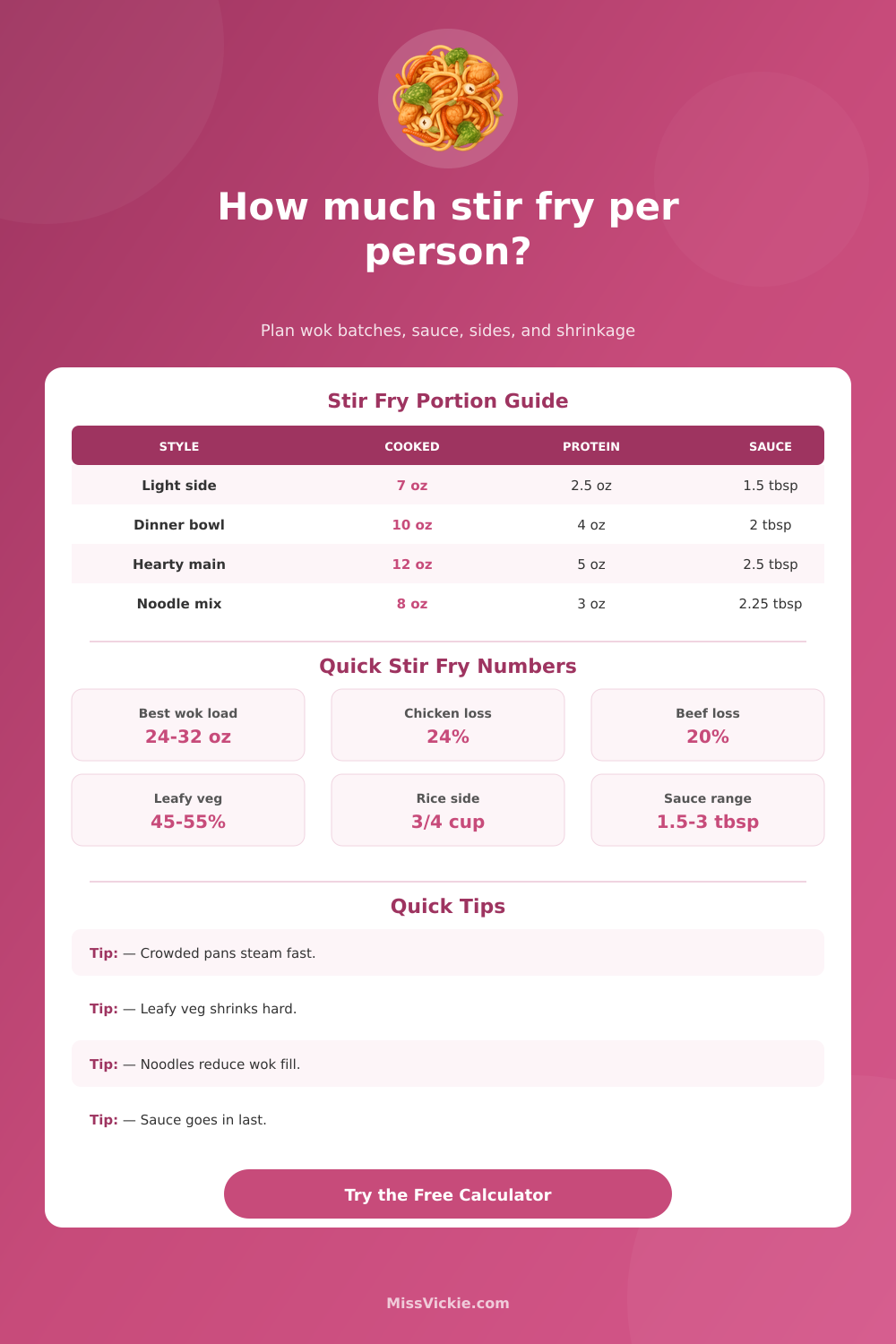
🍲 Stir-fry serving style table
| Meal style | Cooked stir fry each | Typical side | Best use |
|---|---|---|---|
| Light side | 6.5 to 7 oz / 185 to 200 g | Rice plus other dishes | Family table with soup, dumplings, or a second main. |
| Balanced dinner bowl | 9.5 to 10.5 oz / 270 to 300 g | 3/4 cup cooked rice | Default weeknight dinner portion for most adults. |
| Protein-forward main | 11 to 12 oz / 312 to 340 g | Small rice side | Best for beef, chicken, or shrimp when stir fry is the center dish. |
| Vegetable-heavy stir fry | 11.5 to 13 oz / 326 to 369 g | Light rice or none | Useful for tofu bowls, low-carb dinners, and extra produce use. |
| Noodle mix | 7.5 to 8.5 oz / 213 to 241 g | Cooked noodles | Noodles add weight, so less sauced stir fry is needed. |
| Buffet pan | 6 to 7 oz / 170 to 200 g | Rice and other trays | Portions run smaller when guests sample several dishes. |
🥩 Protein yield and shrinkage table
| Protein | Typical cooked yield | Raw needed for 4 oz cooked | Planner note |
|---|---|---|---|
| Chicken thighs | 76% yield | 5.3 oz raw | Forgiving in a crowded skillet and stays juicy in batches. |
| Chicken breast | 72% yield | 5.6 oz raw | Needs shorter cooking to avoid drying out before sauce. |
| Beef flank or sirloin | 80% yield | 5 oz raw | Best with high heat and quick sear so the strips stay tender. |
| Pork loin or tenderloin | 75% yield | 5.3 oz raw | Lean pork cooks fast and benefits from thin slicing. |
| Shrimp | 82% yield | 4.9 oz raw | Very fast protein, so cook it separately and fold back in. |
| Extra-firm tofu | 88% yield | 4.5 oz raw | Pressing improves browning and reduces sauce dilution. |
| Tempeh | 90% yield | 4.4 oz raw | Holds shape well and tolerates reheating in meal-prep bowls. |
| Mixed protein pan | 78% yield | 5.1 oz raw | Use the average when combining meats or meat plus tofu. |
🥦 Vegetable density and raw-to-cooked table
| Vegetable mix | Typical yield | Raw needed for 6 oz cooked | Kitchen note |
|---|---|---|---|
| Crisp mix | 74% yield | 8.1 oz raw | Good default for peppers, onion, carrots, and snap peas. |
| Dense mix | 79% yield | 7.6 oz raw | Broccoli and beans stay bulky, so raw buy weight is lower. |
| Leafy mix | 52% yield | 11.5 oz raw | Bok choy, napa, and spinach collapse quickly in the wok. |
| Watery mix | 64% yield | 9.4 oz raw | Zucchini and sprouts release water, so crowding matters more. |
| Frozen blend | 60% yield | 10 oz raw | Drain or dry well first to avoid a soupy skillet. |
| Mushroom-heavy mix | 58% yield | 10.3 oz raw | Mushrooms shrink hard and brown better in a separate round. |
🍚 Sauce, side, and batch table
| Choice | Typical amount | Calculator effect | Best planning note |
|---|---|---|---|
| Light sauce | 1.5 tbsp each | Keeps the pan drier and improves browning | Use when vegetables are watery or noodles already carry sauce. |
| Standard sauce | 2 tbsp each | Balanced coating for rice bowls | Good all-purpose range for soy, garlic, oyster, or teriyaki mixes. |
| Saucy bowl | 2.5 to 3 tbsp each | Adds more cling and pan moisture | Useful when rice needs extra spoon-over sauce. |
| Standard rice side | 3/4 cup cooked | Lowers stir-fry portion modestly | Typical home dinner balance for one main wok dish. |
| Noodles | 1 cup cooked | Lowers stir-fry portion more | Noodles carry weight, so raw wok ingredients can drop. |
| Home wok load | 24 to 32 oz raw | Usually one strong sear batch | Above this, a second round often beats one crowded pan. |
👥 Stir-fry comparison grid
Standard rice softens the wok load, so portions can stay near 10 ounces cooked.
Without rice or noodles, protein and vegetables must carry the whole meal.
Zucchini, mushrooms, and sprouts need more raw weight to land the same cooked portion.
Splitting into extra rounds protects sear, sauce texture, and final volume.
💡 Stir-fry planning tips
These ratios are practical kitchen planning numbers for home stir fry. Sauces, marinades, cut size, and pan heat all change the final cooked weight a little.
Kitchen panic can be avoided with proper ingredient management. If you don’t have a big enough pan, and try to cook too many things together, it will result in mush. It’s all about cooking in batches and controlling portions. There is nothing worse then a soggy stir fry versus a great meal.
Using the calculator above, you do not have to guess what you need by sight. All you have to do is enter how many guest and what kind of protein and it does the math for you. So how does it work? That’s where the shrinkage comes in: Bok choy and spinach look like a lot when uncooked, a pound looks like a large amount. But cook them and they becomes a pile of sad little bits. More than half the volume of leafy greens can dissapears when cooked. Want a full bowl after eating? The tool accounts for this by adjusting the raw buy weight based off the vegetable density you select. The calculator takes this into account, factoring in the density of vegetables so that it give you a raw buy weight that reflects what you’ll end up with at dinnertime.
Why Use This Calculator
For example, denser veggies such as broccoli maintain their structure well. Watery ingredients such as zucchini give off moisture that dilutes your sauce. Knowing about this yield factor helps avoid another shopping slip-up: underbuying something that was deceivingly large at the supermarket.
Another common mistake is lumping all ingredients into a hodgepodge when they behave differently, because protein does not behaves the same way as vegetables. When cooking meats, there must be room to sear correctly. A crowded wok causes the temperature to lower, resulting in steam rather than brown. That’s a major no-no; you’ll miss out on the delicious caramelization. The same is true for shrimp, which also requires immediate action because it becomes rubbery within seconds if left unattended.
The calculator recognizes this difference: It factors in how many “wok rounds” are truly necessary. Depending on the capacity of your comfy pan and whether you’re working with one big batch, it will inform you if you need to prepare your protein first (then set it aside), followed by veggies, before tossing all items together for the finishing toss in sauce. Each food element gets its proper treatment.
Another obvious thing that gets messed up is how much sauce to use. Two tablespoons per person doesn’t seem like much…until you see how much sticks to the sides of the pan and evaporates. You may want to use less sauce on your stir fry if it is being served with something starchy. The starch will soak up some of the flavors.
This is where their reference table (on the page) comes in handy, it breaks down amount by style… So you can see what would be a light, side-dish portion vs. It is a more balanced, dinner-bowl size. Use smaller individual amounts if you’re doing a buffet tray, as people pick at several different things. Use a heavier protein share if it’s the focus of a main course and people need something to fill them up.
How hungry are your diners? Are you expecting a bunch of gluttons (or children, who always want more)? You’ll need to add a bigger buffer, but if you’re expecting a light crowd at lunchtime, you won’t need as much. Add an extra 10-15% to your total order to account for that gap between planned consumption versus actual consumption. Better to leave some food behind than not enough when dinner arrives.
And that’s what makes high-heat cooking less stressful: you planned ahead. Before the knife even comes out, you know your raw weights. You know how much food will fit in your pan with room for the next batch without steaming the last one. You also know exactly how much sauce to whisk up to coat the food, rather than letting it pool at the bottom of the bowl. By the time the timer ticks, you’re already ahead of the game. The math was done and the portions were set. All that’s left is to cook it.
With that confidence, what could of been a chaotic scramble becomes a smooth meal that everyone actualy enjoys eating.