Naan Per Person Calculator
Plan naan for curry dinners, biryani nights, buffet trays, kids, rice sides, saucy dishes, leftovers, and reheating so every basket lands with enough bread.
🫓Naan planning presets
Choose the closest meal, then adjust the inputs. Each preset changes guest count, naan size, meal role, sides, appetite, children, leftovers, and reheating holdback.
📝Naan meal inputs
Naan plan
Your naan count will appear here.
Detailed naan breakdown
📊Quick naan portion numbers
🍛Serving role reference
| Meal role | Adult portion | Child portion | Best use |
|---|---|---|---|
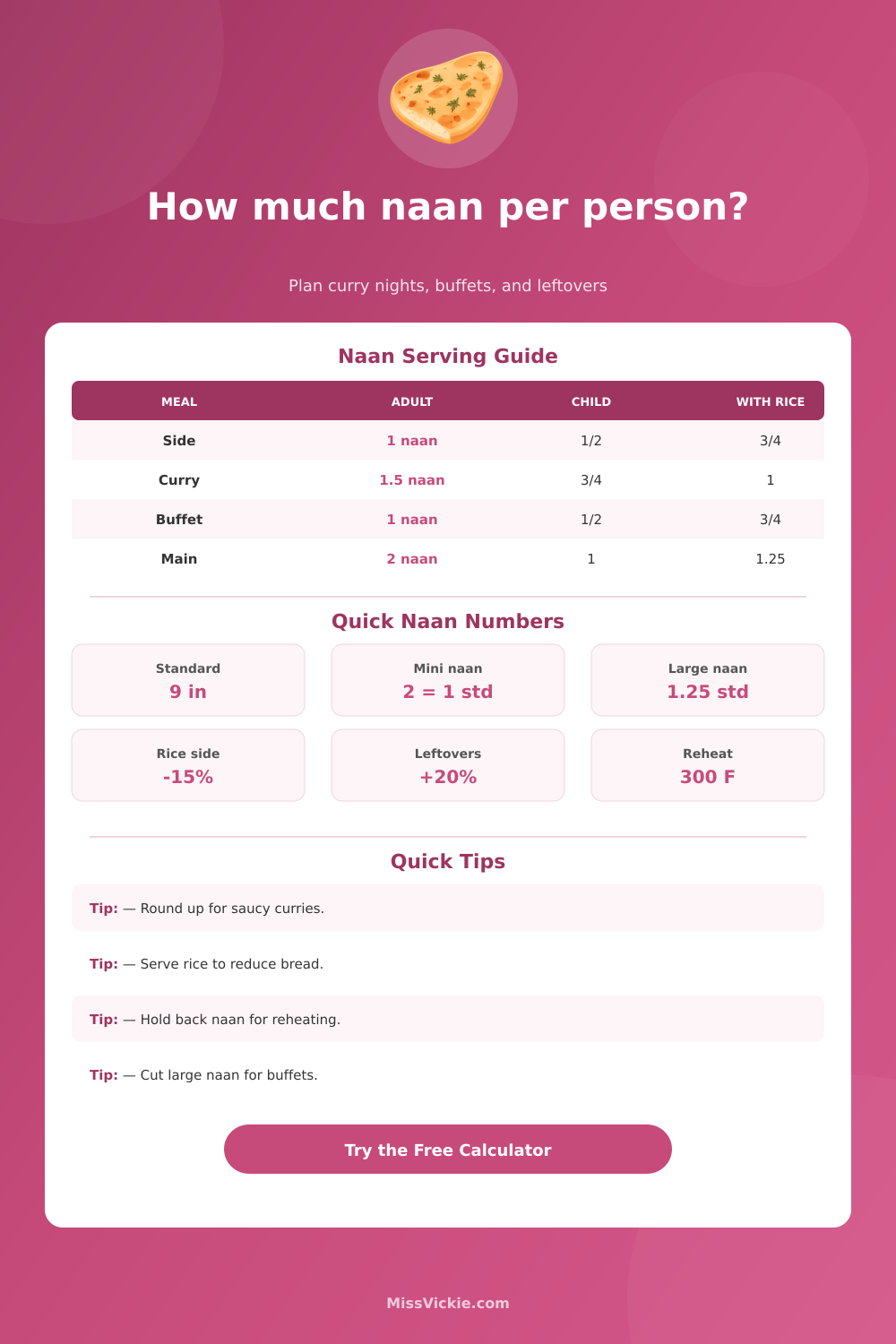
| Light side with rice | 0.75 to 1 standard naan | 1/3 to 1/2 naan | Biryani, pulao, or meals with several vegetable sides. |
| Curry partner bread | 1.25 to 1.5 standard naan | 1/2 to 3/4 naan | Most weeknight curry dinners with a small rice bowl. |
| Bread as main starch | 1.75 to 2 standard naan | 3/4 to 1 naan | When naan replaces rice and guests will scoop most of the sauce. |
| Buffet tray | 0.85 to 1.15 standard naan | 1/2 naan | Potlucks where people take smaller portions from many dishes. |
| Snack board | 0.5 to 0.75 standard naan | 1/3 naan | Dips, chutneys, kebab bites, and appetizer boards. |
📏Naan size and yield table
| Naan style | Typical size | Standard equivalent | Planning note |
|---|---|---|---|
| Mini naan | 5 inches / 13 cm | 0.50 standard naan | Great for kids, dips, and appetizer boards; count two mini per standard naan. |
| Standard naan | 8 to 9 inches / 20 to 23 cm | 1.00 standard naan | The baseline for most home portions and packaged naan. |
| Large restaurant naan | 10 to 12 inches / 25 to 30 cm | 1.25 standard naan | Cut into halves or thirds for buffet baskets. |
| Garlic or butter naan | 8 to 10 inches / 20 to 25 cm | 1.05 standard naan | Slightly richer, so the calculator counts it just above standard. |
| Stuffed naan or kulcha | 7 to 9 inches / 18 to 23 cm | 1.20 standard naan | More filling; pair with lighter portions of rice or sides. |
🍚Sides, sauce, and appetite adjustments
| Factor | Light count | Standard count | When to use it |
|---|---|---|---|
| Plenty of rice | Reduce 15% to 22% | Keep 1 naan as a side | Rice, biryani, potatoes, or pulao carry much of the meal. |
| No rice served | Add 8% to 15% | Move toward 1.75 naan | Naan is the main starch and guests will use it for scooping. |
| Very saucy curry | Add 8% to 12% | Round up generously | Dal, butter chicken, chana masala, and paneer gravies. |
| Dry kebab plate | Reduce 5% to 10% | Serve chutney too | Less sauce means less bread is needed for wiping plates. |
| Hearty crowd | Add 12% to 18% | Plan seconds | Late dinners, hungry teens, and naan lovers. |
🔥Reheating and holding guide
| Method | Holdback | Reheat target | Texture note |
|---|---|---|---|
| Fresh from pan | 0% to 5% | Serve immediately | Best texture, so most naan can go straight to the table. |
| Foil-wrapped warm hold | 10% to 15% | 300 F / 150 C oven | Wrap in foil with a towel-lined basket to keep it soft. |
| Staggered batches | 20% to 25% | Warm as needed | Put out a first basket, then reheat the second wave later. |
| Microwave quick reheat | 15% to 20% | Damp towel, short bursts | Works fast, but serve promptly before bread toughens. |
| Frozen for later | 25% to 35% | Wrap before freezing | Separate leftovers early so they are not dried out on the buffet. |
🧾Comparison grid
Best for biryani, pulao, and curries served with several starch sides.
The default balance for standard naan, curry, and a modest rice bowl.
Use when naan replaces rice and guests will want seconds.
People take smaller pieces, so cut large naan and refresh the basket.
💡Naan planning tips
With the calculator above, you can avoid that dilemma of wondering if a package of four breads is enough for your family. It converts vague hunger into real math. To see how those numbers change, examine the impact of naan on your dinner table.
Naan isn’t simply food. It’s also an instrument. With a dry tikka plate, it has a supporting role, as something to dip in chutney. However, with a rich dish like butter chicken or a heavy dal, bread becomes a vital scooper for gravy. Why? Because the volume of sauce determine how fast people eat, far more different than their level of appetite. Until basket is empty, diners may not even notice that they’re eating extra bread.
Why You Need a Naan Calculator
To account for this, the tool enables you to set aside the richness of the curry itself, as well as any accompanying rice side dish. Starch competition is very real; if you serve lots of potatoes or another type of rice with the bread (biryani, anyone?), then the number go down quite a bit. People will start filling up on rice, leaving them with little space left for naan. Conversely, if most of the carbs comes in the form of naan, then you’ll have to bump it up. It’s just a matter of volume versus variety. Depending on what else your guest are eating, it changes how full they feel. This affects how much they will eat.
The complication come from children. They don’t eat in adult proportions. When they want to eat, it’s now or never. With the calculator, you can account for them as individual. Instead of pretending they’re mini-adults, or just not caring about them at all, it turns them into fractions of adults. While a normal child might be able to eat half of a regular-sized naan, a larger child might get almost an entire one. This is why we have detailed input… So you don’t round everybody up and end up with one bread per person, which inevitably ends in stale leftovers nobody wants to pack for lunch.
Then there is texture question. Left sitting on a hot plate, naan will quickly dry out and get tough. After a few minutes it get unpleasantly chewy. To prevent this problem, plan ahead for reheating. For a lengthy dinner or buffet, don’t serve up all the bread right away, that’s a bad idea. Instead, put aside a portion, tightly wrapped in foil, to reheat later. That way the initial batch stay soft without making you wait too long for a fresh supply. Depending on how you intend to serve the naan, the calculator can tells you what percentage to hold back. That way you won’t be stuck with any rubbery bread.
People guess wrong (most do). Why? We tend to think in whole numbers rather than flow. For example, someone might say, “I’ll get 6 because I want 8 people.” They forget that once the food is served, naan gets eaten faster then expected. The tool has some pre-sets for your quick reference for typical situations such as a big potluck or even just using it for dinner on a week night. It takes out any need to start from scratch. Make adjustments based off how hungry everyone will be and throw in a little padding for seconds, and you’ve gone from guesswork to plan. You should of used the tool earlier.
Ultimately, good hosting is about rhythm as much as food quantity. How does the bread come out? When’s it time for another piece? Will someone get stuck without any at the end? The logistics are all about the numbers. Always have pliable, warm bread in everyone’s hands with zero dead airtime around an empty basket. That transforms what could be a stressful guess-and-check situation into a smooth part of the meal. Now, instead of worrying about how many pieces was consumed, you can worry about enjoying the conversation. You might recieve more people than expected naturaly with such luxurius food.