Cayenne heat math for meat
Cayenne Pepper Per Pound of Meat Calculator
Estimate cayenne for beef, chicken, pork, turkey, fish, lamb, or venison by matching Scoville strength, meat weight, rub or sauce use, cooking loss, servings, and heat tolerance before the spice goes into the bowl.
Start with a real cooking situation, then adjust the cayenne SHU, batch size, sauce volume, serving count, and heat buffer to match your recipe.
Cayenne Plan
Your cayenne estimate will appear here.
Detailed Heat Breakdown
| Cayenne Product | Typical SHU | Approx g per tsp | 0.75 g per lb Equivalent | Best Use |
|---|---|---|---|---|
| Mild supermarket cayenne | 30,000 SHU | 2.6 g | 0.29 tsp per lb | Family chili, taco beef, light BBQ rub |
| Standard cayenne powder | 40,000 SHU | 2.6 g | 0.29 tsp per lb | Balanced dry rubs, meatballs, sauces |
| Hot cayenne powder | 50,000 SHU | 2.7 g | 0.22 tsp per lb | Wings, spicy pork, blackening blends |
| Extra-hot cayenne | 70,000 SHU | 2.7 g | 0.16 tsp per lb | Chili pots and high-heat barbecue |
| Coarse crushed cayenne | 35,000 SHU | 2.0 g | 0.38 tsp per lb | Visible flakes, marinades, finishing sauce |
SHU ranges are practical kitchen estimates. Freshness, pepper variety, grind size, and storage can change perceived heat.
| Meat Type | Heat Carry Factor | Typical Cook Loss | Serving Size | Cayenne Behavior |
|---|---|---|---|---|
| Ground beef | 0.95 | 18% | 4 oz cooked | Mixed evenly; fat rounds off sharp heat. |
| Chicken wings | 1.08 | 25% | 5 oz cooked | Surface heat concentrates as skin crisps. |
| Pork shoulder | 0.88 | 32% | 5 oz cooked | Fat and long cook soften the burn. |
| Fish or shrimp | 1.20 | 12% | 4 oz cooked | Lean flesh makes cayenne taste direct. |
| Venison or game | 1.16 | 20% | 4 oz cooked | Lean texture carries heat quickly. |
| Application | Calculator Factor | Carrier Goal | When to Add | Heat Pattern |
|---|---|---|---|---|
| Dry rub | 1.00 | 0.5-1.4 g per lb | 15 minutes to overnight | Bold surface heat and bark. |
| Wet paste | 0.94 | 0.4-1.2 g per lb | 20 minutes to 6 hours | Rounded by oil and aromatics. |
| Marinade | 0.82 | 0.3-0.9 g per cup | 1 to 12 hours | Diffuse heat with less surface bite. |
| Cooked sauce | 0.76 | 0.25-0.8 g per cup | During simmer | Even heat, softened by sweetness. |
| Finishing toss | 1.12 | 0.5-1.5 g per cup | After cooking | Immediate, bright cayenne hit. |
Medium 40k SHU taco beef or chicken thigh strips, about 0.6 tsp total.
Medium dry rub level for pork or beef, about 1.5 tsp of fine powder.
Hot wing-style seasoning before sauce, roughly 4.8 tsp at standard density.
Medium simmered heat at 40k SHU, adjusted down by sauce and tomato volume.
| Heat Target | Base g per lb at 40k SHU | Tsp per 5 lb | Per Serving Feel | Good Match |
|---|---|---|---|---|
| Gentle warmth | 0.22 g | 0.42 tsp | Background warmth | Meatloaf, meatballs, mild tacos |
| Mild family heat | 0.42 g | 0.81 tsp | Noticeable but calm | Pulled pork, turkey burgers |
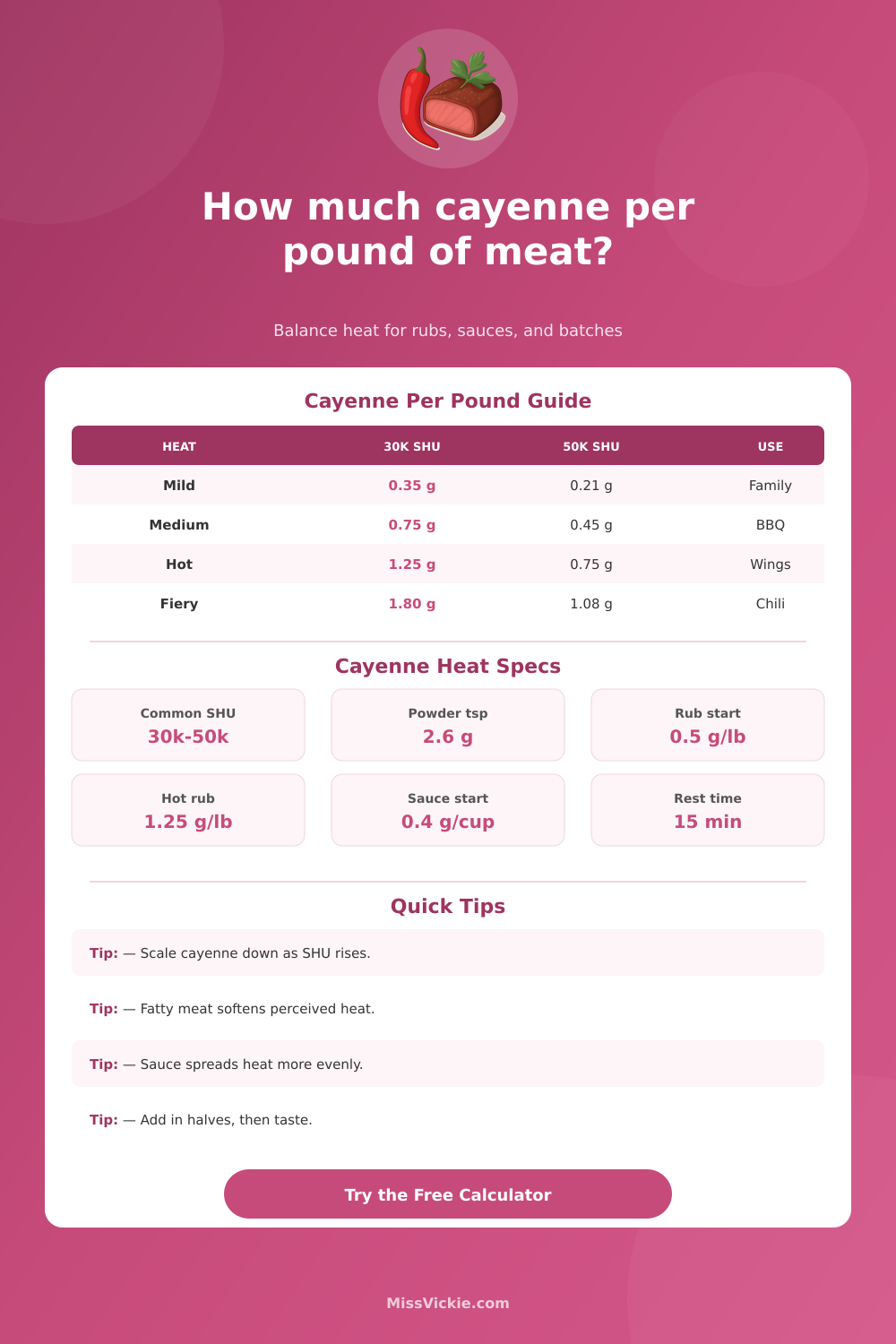
| Medium BBQ heat | 0.75 g | 1.44 tsp | Warm bite | Brisket rub, chili, kebabs |
| Hot wing style | 1.25 g | 2.40 tsp | Strong burn | Wings, blackened fish, hot sausage |
| Fiery chili heat | 1.80 g | 3.46 tsp | Lingering heat | Spicy chili and hot sauce meat |
Ever had dry rub go wrong? The heat level gets out of control mid-cook: you put just a dash of that cayenne into the mix, and now meat is dangerously hot. It’s not necessarily that it’s the spice, because it’s the way ground-up powder behaves in relation to meat fibers. Spiciness varies depending on how much fat there is, the length of cooktime, and if it’s surface applied or part of a sauce.
These are all variables that calculator up top will do for you automatically, but knowing the logic will keep you from making the same mistake in the future. Heat levels can vary among brands. Cayenne pepper doesn’t always equal 30,000 Scoville Heat Units (SHU). It could be higher; some are over 50,000 SHUs. If you use a fresh jar like it is an old one, you will double the heat without knowing difference. This rating is what tells calculator how many grams to weigh out to maintain consistancy in spiciness across brands.
How to Control Spice Heat
Fat is also key. Fat coats your mouth, softening immediate bite from the capsaicin. Ground beef has higher tolerances for heat than lean chicken or venison. This is why you can absorbs much hotter spices when cooking with fattier meats. The type of meat affect how much heat it holds. Because there is less fat available to blunt the sting, leaner meat will cause a sharper burn. Even leaner game meat will need even less spice because its dry texture carry the heat more intenseley.
It’s not just what kind of meat you put it on; it’s how you cook it. For example, a dry rub applies direct heat from outside in, so that first bite has an immediate impact. Each grain of bark on your brisket counts. On the other hand, if you mix in some cayenne with a sauce, you’re spreading it out over oil or tomatoes as a carrier and diluting strength per square inch of meat. You may put more total grams onto something in a chili than you would on wing rub, but because it’s dispersed over entire dish, it seems to be less spicy.
The taste differs depending on how long it rest pre-cooking. Moisture is important for releasing capsaicin’s full power; if you add spice right before searing, there may be uneven heat and raw, dusty notes. Allowing the meat to rest lets the natural protein juices mix with the cayenne so that they can fully develop together. Rest time affects the final suggestion, which takes rest into account (e.g., a sprinkle right before versus an overnight marinade).
Don’t judge the heat when making mixture of cold ingredients; that’s a common error among many home cooks. Our perception changes with temperature, and what tastes mild to us uncooked may concentrate its flavors as it cook, tasting spicier. Better to introduce half (or even a third) of spice initially rather than going whole-hog up front. Or better yet, taste-test if you can. Otherwise, go by the numbers on the initial mix and adjust downward a bit on each try after that until you arrive at right heat for you.
Spicing things up… To be balanced means not to overpower but respect what is being spiced: “A good rub enhances the meat without hiding it.” Control the fire by looking at the SHU rating, thinking about fat content and whether heat has been applied dry or with a sauce. When you have that, you stop guessing and begin to control the level, giving you confidence in the kitchen, and for understanding the math. You should of tried this before!