Black Pepper Per Pound of Meat Calculator
Estimate black pepper by teaspoons, grams, grind size, meat type, rub style, heat level, and surface coverage so the bite feels intentional instead of dusty or flat.
Black pepper is not just a teaspoon conversion. Fine pepper tastes sharper, coarse cracked pepper covers uneven surfaces differently, and smoky bark rubs can carry far more pepper than chicken or fish.
Your Pepper Amount
Calculated from meat weight, grind density, rub style, heat, and surface coverage.
Seasoning Math
Coverage And Rub Balance
How To Apply This Amount
These cards compare the same meat weight against common black pepper styles so you can see whether the selected result is light, balanced, or crusty.
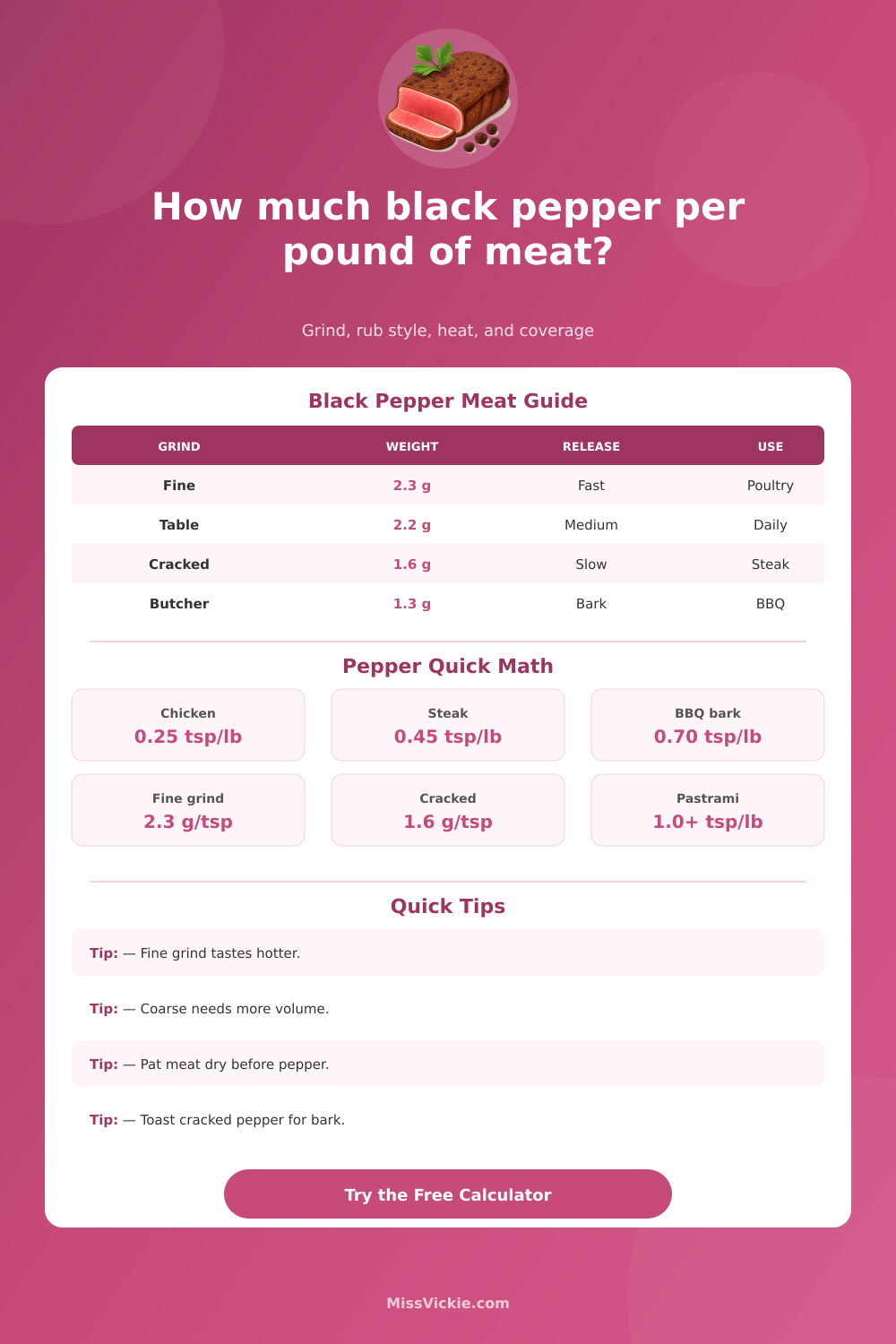
| Grind | Approx Weight Per Teaspoon | Flavor Release | Calculator Bite Factor | Best Meat Use |
|---|---|---|---|---|
| Fine ground black pepper | 2.3 g per tsp | Fast, sharp, highest perceived heat | 0.86 volume factor | Chicken, turkey, meatloaf, quick pan sauces |
| Table grind black pepper | 2.2 g per tsp | Medium release with familiar speck size | 1.00 volume factor | Everyday roasts, chops, burgers, mixed rubs |
| Fresh medium grind | 2.0 g per tsp | Rounded aroma with moderate heat | 1.06 volume factor | Steaks, pork chops, lamb, finishing before sear |
| Coarse cracked pepper | 1.6 g per tsp | Slower bite, strong visual coverage | 1.18 volume factor | Steak crusts, brisket, ribs, smoked meat |
| Butcher grind pepper | 1.3 g per tsp | Chunky texture with lower spoon density | 1.30 volume factor | BBQ bark, peppered roasts, pastrami blends |
| Half-cracked peppercorns | 1.1 g per tsp | Slowest release and bold crunch | 1.42 volume factor | Pastrami, corned beef crusts, heavy bark rubs |
Pepper weights vary by brand, moisture, and grind. For repeatable rubs, weigh the calculated grams after choosing the grind.
| Meat Type | Base Black Pepper | Typical Range | Surface Assumption | Flavor Note |
|---|---|---|---|---|
| Beef steak or chops | 0.45 tsp per lb | 0.35 to 0.70 tsp | Two broad faces | Handles visible pepper well, especially with searing. |
| Beef roast | 0.36 tsp per lb | 0.25 to 0.55 tsp | Lower surface per pound | Needs all-side coverage more than high per-pound volume. |
| Brisket or smoked beef | 0.58 tsp per lb | 0.45 to 1.10 tsp | Bark forming surface | Coarse pepper survives long smoke better than fine pepper. |
| Pork shoulder or ribs | 0.40 tsp per lb | 0.30 to 0.75 tsp | Irregular, fatty surface | Benefits from medium to coarse pepper in sweet rubs. |
| Chicken pieces | 0.25 tsp per lb | 0.18 to 0.40 tsp | Skin and meat surfaces | Fine or table grind distributes more evenly under herbs. |
| Fish fillets | 0.16 tsp per lb | 0.10 to 0.28 tsp | Delicate broad surface | Use less because pepper can dominate lean fish quickly. |
| Ground meat | 0.30 tsp per lb | 0.25 to 0.45 tsp | Mixed throughout | Fine and table grinds taste stronger when fully mixed in. |
| Lamb chops or leg | 0.42 tsp per lb | 0.30 to 0.65 tsp | Fat cap plus cut sides | Medium grind pairs well with garlic, rosemary, and salt. |
| Rub Style | Pepper Multiplier | Dry Rub Volume | Expected Pepper Share | Best Contact Time |
|---|---|---|---|---|
| Simple salt and pepper | 1.00x | 0.80 tbsp per lb | 25% to 45% | 20 minutes to 1 hour |
| Balanced dry rub | 0.90x | 1.35 tbsp per lb | 12% to 24% | 1 hour to overnight |
| BBQ bark rub | 1.38x | 2.00 tbsp per lb | 18% to 35% | Overnight to 24 hours |
| Steakhouse crust | 1.55x | 1.10 tbsp per lb | 35% to 55% | Right before sear to 1 hour |
| Herb poultry seasoning | 0.78x | 1.25 tbsp per lb | 8% to 18% | 1 hour to overnight |
| Pepper-forward rub | 1.70x | 1.40 tbsp per lb | 35% to 60% | 20 minutes to overnight |
| Pastrami style crust | 2.25x | 2.65 tbsp per lb | 28% to 50% | Overnight to 24 hours |
| Delicate fish seasoning | 0.55x | 0.55 tbsp per lb | 8% to 18% | Right before cooking |
| Coverage Choice | Volume Factor | Area Model | Use When | Coverage Goal |
|---|---|---|---|---|
| One exposed side only | 0.58x | 55% of normal area | Sheet-pan fillets, one-sided seasoning | Light visible speckling on top |
| Top and bottom coverage | 1.00x | Standard area | Steaks, chops, burgers, chicken pieces | Even, not clumped, both sides seasoned |
| All sides of roast or chops | 1.12x | 115% of normal area | Roasts, thick chops, turkey breast | Edges get pepper without overloading faces |
| Many small pieces | 1.24x | 145% of normal area | Skewers, wings, stew meat, meal prep cubes | More total pepper because surface area rises |
| Full bark coverage | 1.45x | 150% of normal area | Brisket, pork shoulder, ribs, pastrami | Visible pepper matrix for bark formation |
It’s something we all do: We reach into the grinder, confident in our seasoning technique, then watch in horror as our steak come out looking as if it were coated in volcanic ash. Go easy,” the recipe advises; “be liberal with the seasoning.” But it taste like pepper instead of meat. Why? It is not about your ability to gauge taste. Rather, it’s one of geometry and physics.
Pepper isn’t a monolith. Because there is so much empty air space between particle, a teaspoon of fine ground black pepper contain far more perceived heat (and volatility) from its volatile oils than a teaspoon full of coarsely cracked peppercorns. Unless you account for differences in grind size, you’ll end up overdoing delicate fish or overpowering tender beef with bitterness. That’s where the calculator comes in on this page.
Why Your Pepper Overpowers Your Meat
It doesn’t merely translate weight into teaspoons. It considers both surface area of whatever it is you’re cooking and the density of its grind. Surface area can differ so much from one food item to another. Even a three pound beef roast differ greatly in terms of exposure compared to a three pound brisket, despite being equal weights. Whether you want to rub the entire outside of a pork shoulder or simply coat one side of a filet, that’s called “coverage” here. The calculator ask how much. And that input determine the overall amount needed to provide an even speckle without heavy clumping or leaving large areas unseasoned.
If you don’t account for this, your seasoning won’t seem right, and if it doesn’t seem right, it isn’t right, which is why we default back to memory instead of geometry.
Grind selection is where most home cooks lose control of their seasoning profile. The essential oils in pepper are released aggressively and rapidly because when they come into contact with even moisture and air, those oils are exposed immediately. This makes fine pepper perfect for mixing into ground meat (where it distribute easily) or for use on poultry. With coarse cracked pepper, the bite comes later and you can see it: It sticks to things that are sticky, such as smoking briskets or salt-cured meats. The slow release allows time for the pepper to stick to the surface, creating tasty texture and dark coloring we associate with good barbecue.
So the calculator factor in this density difference, adjusting the recommended volume accordingly. For example, if you choose butcher grind for your rub, the tool bumps up number of teaspoons, since those bigger chunks will occupy more space in bowl while delivering less concentrated flavor per spoonful than their finer-grain versions. A small thing, sure, but it adds up when you’re striving for balance in an elaborate dry rub containing brown sugar and paprika.
The other variable is contact time and the type of rub (how much ends up on the plate, as opposed to the trash or sink). Dry rubs destined for the smoker need more volume then something like a simple salt-and-pepper seasoning slapped on just prior to searing. The longer it sits, the more seasoning get drawn into meat by moisture, altering felt heat levels. The calculator takes this rest period into account, reducing the starting amount so that end result tastes deliberate, not dusty, not flat. It will even factor in a heavy crust like what’s needed when making pastrami (which needs to last twenty-four hours curing and then smoking). When you’re after a fast-panned steak? It’ll shave off extra to leave the actual meat front-and-center.
It all boils down to balance. The balance of sight and sensation, the balance of appearance and experience. Too little pepper looks like it hasn’t been seasoned; too much will taste more like pepper than meat. Matching your grind size with the surface area and cooking method removes the guesswork and replaces it with a series of calculations. Once you know the ratio, let the math do the thinking while you manage heat and time. Trust in the calculated adjustment rather than the wobbly hand grasping the grinder above the hot pan. Flavor follows the numbers. When they add up, you’ll have a story to tell next time someone asks how you learned to cook with precision and how you left the ash cloud in the past.
You should of used it earlier.