
There’s something special about staring down a big hunk of uncooked meat and wondering if it’s all going to turn into an amazing holiday feast or not. Drinks have been poured, people are coming over, and you don’t have time to fuck this up. It’s time for the main event: the bone-in ribeye roast. And it’s one of the scariest cuts to prepare, where do you think you can hide if you screw up the timing? A solid idea of how heat will penetrate all that beef is actualy incredibly important here.
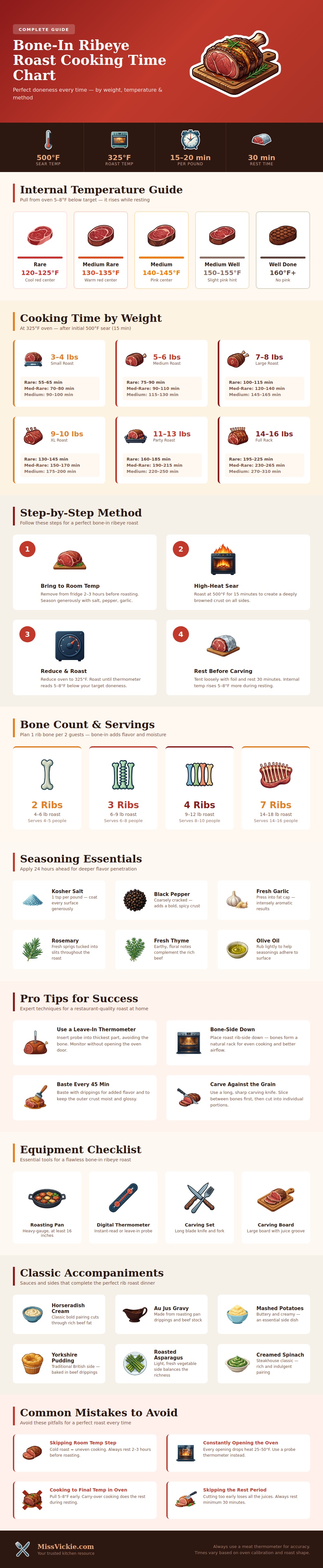
Before the door ever swings open on your oven, there’s some prep work required: Get that roast out of the fridge and place it on counter for two to three hours. Sounds like a recipe for food safety disaster. Sounds like a recipe for food safety disaster. But no, it’s physics: Ice cold meets hot, and what happens? The exterior cooks while the interior stays rock-solid frozen. Uneven cooking = unevenly done. By letting the roast come to room temp first, you’ll ensure even heating from crust to core. One little step, and you won’t have that gray ring of overcooked meat around rare center.
How to Cook a Perfect Ribeye Roast
After all that preparation with the meat itself, it’s time to think about contrast. You’re aiming for a nice pink inside (tender) but also a well-browned outside (to lock in flavor). To do this, chart recommends two stages: first a high-heat searing on 500 degrees for fifteen minutes, followed by a much lower cooking temp. This way you gets the best of both worlds.
An initial blast from the high heat create a delicious crust thanks to the Maillard reaction. This is essentially the chemical reaction that makes something taste like beef instead of just boiled water. Then the lower temps gently finish cook the roast so it doesn’t burn on the outside or dry out.
Most people who attempt this at home fails right here: They memorize “minutes per pound” rather than trust their thermometer. It’s true that there are rough rules-of-thumb (about fifteen to twenty minutes per pound), but every oven is different, differing in its airflow as well as calibration. You don’t have time to play Russian roulette with your meal by just counting down minutes on your timer. Instead, pay attention to the actual temperature reading it gives off (see below).
You’re looking to hit about one hundred thirty degrees Fahrenheit in the center of the roast, which would give you a medium-rare doneness (though I’m assuming you know what rare is). The key detail is that you should of take it out once that temp reaches within five to eight degrees of your goal. Pulling it too soon might seem odd, since we want it cooked through, but don’t worry: carryover cooking ensures that the still-warm roast will keep rising in temp while resting. That’s how you get that juicy middle without any gray around the edge.
And then there’s the resting: There’s no compromise here. As the roast sits in a hot oven, the muscle contract and forces its juices inward. Carve too soon and all of that liquid goodness will be draining on your cutting board, leaving you with a pile of dried-out meat. Letting it rest for half an hour (tented loosely with foil) gives the proteins time to relax and soak up that flavor-filled liquid again. It is well worth the wait.
But now that the meat’s resting, you have time to focus on the other players in this meal. Horseradish cream bites through the richness of the ribeye, cutting through fat like a knife. Yorkshire puddings or even some buttery mashed potatoes prepared from juices in the roasting pan round out the dish. You’re creating a timeline, not simply making dinner. And by trusting the thermometer rather than the clock, and giving it time to rest, you shift that anxious energy into something confident. Before you know it, the roast will taste as good on your tongue as it does in the table.