
If you’ve ever brined anything, then you know it’s supposed to ensure juiciness. It sounds easy: Dissolve some salt in water, submerge your protein, and off you go. But there are common missteps by home cooks around timing. Brine something too long, like a chicken breast, and it turn out soapy. Under-brine a turkey and its white meat can dry out before its dark meat reaches safety.
It’s not just the amount of salt that make a difference, but the time it spends in solution. But how does it work? It’s simple science: The salt messes with the proteins in the meat’s muscles, causing them to relax and retain more moisture as they cook. Moisture travels deeper into the fibers through osmosis; when it encounters heat, it contract less. A well-brined roast will feel weightier on your plate. Water that might of been lost to evaporation gets to stay put.
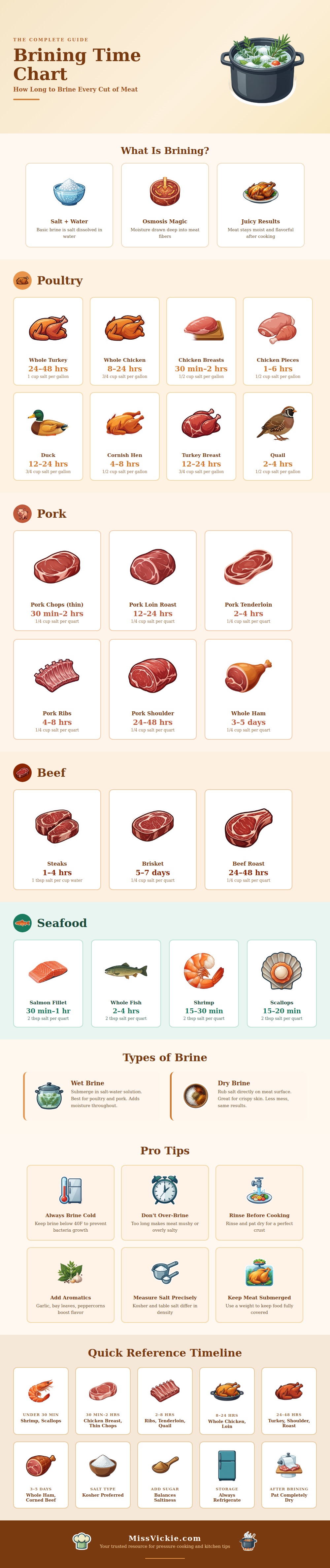
How Long to Brine Different Meats
There is a good reason for this. Birds are tricky; poultry is near and dear to my heart because it is hard to predict how much error there is. For instance, whole turkeys need to soak in the brine for almost 48 hours so the flavor reaches the breast bone. Chicken breasts, which are smaller pieces, progress more quickely (thirty minutes can be enough with a robust brine). Whatever cut or size of bird, adjust the soaking duration accordingly. Don’t treat a thigh like a breast, otherwise one will be salty and the other bland.
The muscle density and fat content of pork differ from that of chicken, as well. For example, tough fibers on thick pork cuts (such as shoulder) require longer soaks that span an entire day, whereas thinner slices like pork chops can be quickly dunked in the brining liquid. Soaking time matter more than the ratio; you wouldn’t brine a thin chop the same way you would a giant ham.
A lot of chefs will tell you that there’s no reason to brine good beef. They’re right about tender steaks, in general, but they aren’t as correct when talking about brisket. While a ribeye benefits from a good dry rub for surface flavor, a tougher cut like brisket needs time in the water to soak up moisture all the way down into the grain. It isn’t to hide inferior meat; it’s to provide tough meats a fighting chance against high heat.
Fish cooks fast. You cannot mess with it once it’s cooked, so be gentle when making seafood. A fillet of salmon, for example, should stay in the brine for no more than an hour or maybe less. Scallops and shrimp requires only a quarter-hour (fifteen) to soften. Salt makes fish turn to rubber; it doesn’t take long to do that, and once you’ve overbrined your fish, you have ruined dinner. So limit the soak, and chill the brine.
To do this, you have two main options. You can use a wet brine, where the meat is submerged in the salty solution and actualy takes on some of the water’s weight. Or, you can use a dry brine by rubbing the salt right onto the meat and leaving it uncovered in the refrigerator. With a dry brine, the salt extracts moisture from the meat, and that moisture reabsorbs as a more concentrated brine. Both techniques results in tender meat, though a dry brine tends to intensify the flavor without increasing bulk.
There’s one very important caveat to all of this: safety. Bacteria thrive in warm, salty environments, so be sure that the brine never gets above forty degrees Fahrenheit. Make sure you use a separate container and submerge your meat entirely (you may need weights or plates to achieve full coverage). After soaking, rinse the meat well to wash away any extra surface salt and carefully pat it dry (this is important; moist surfaces don’t brown; they just steam).
There’s nothing complicated about brining: it’s all about controlling variables. By relying on the clock and the size of your cut, you remove moisture loss as a variable in your cooking. This eliminates guesswork, turns possible failure (dry) into guaranteed success (not dry), and lets you roast with confidence. Salt doesn’t wait for anyone; check the clock before you do.