
This likely sounds obvious; what else could “room temperature” possibly mean? You reach into your pantry, grab a bottle of Cabernet, pour yourself a glass and plop onto the couch with a good book. Seems like you’re on the right track. Here’s the unwelcome reality of our current climate. These days, your house stay between 72 degrees and well above. This is much warmer then the cellar environments that wine was meant for. So when you uncork a red and pour at, yes, room temperature, guess what? You’re not pouring properly. You’re basically pouring warm booze and burning off any subtlety. It is a slight oversight but one that completely ruins enjoyment.
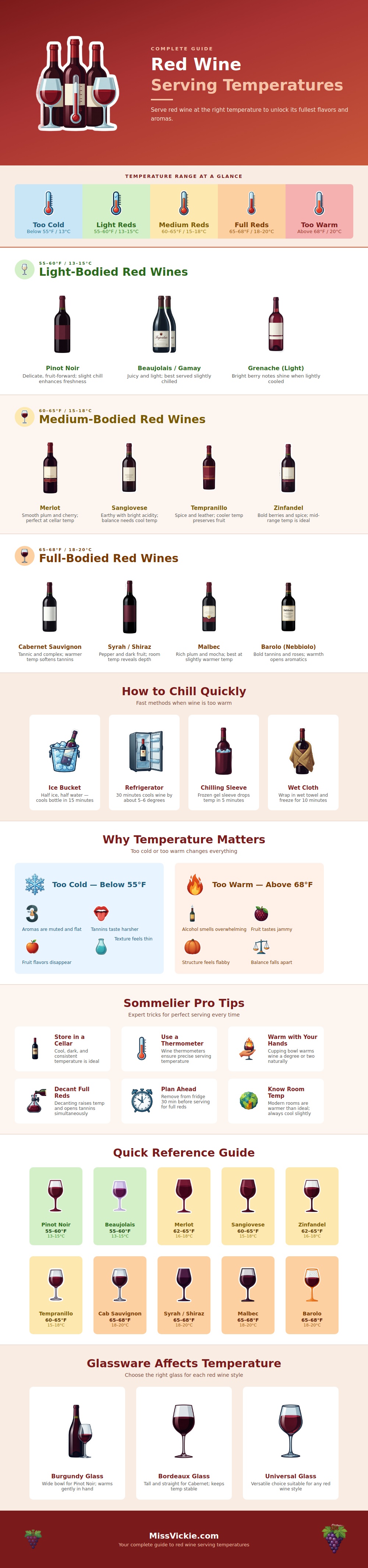
This graph (above) spells it out nicely: Some wine styles really benefit from a little chill; others don’t. You want Beaujolais or Pinot Noir chilled slightly so its fruity flavors pops with a little more crispness. Serve them at room temperature and they will taste thin and watery. On the flip side, you want big guns like Malbec or Barolo served with a little warmth to mellow their powerful tannins. There’s no one-size-fits-all here. The visual guide allows you to get a sense of each category’s sweet spot, from barely above fridge cold for lighter-bodied wines to a touch warmer for bolder varieties.
How to Serve Wine at the Right Temperature
That sweet spot is where the aromas start to pop, aromas that otherwise remain trapped in the bottle. But why does it matter if something’s too cold or warm? It’s all about chemistry. Volatility is suppressed in colder temperatures. Below fifty-five degrees, wines that are too cold won’t have enough of their aromatic compounds evaporating into air and reaching your nose. This makes flavors seem dull. Meanwhile, harsh tannins makes the structure feel stiff instead of being softened by proper warmth.
While warmer temps amplify volatility of alcohol. Anything above sixty-eight degrees will hit you with the ethanol long before you taste any fruit. Instead of a fresh flavor, you smell boozy and taste jammy. The burn overwhelms your taste buds instead of letting you enjoy the complex flavors. Temperature that strays outside of its best range cause balance to fall apart.
Planning for this will save your bacon: Most folks don’t realize how hot their bottles are…until it’s too late. When serving at home, don’t pull wines from the cellar just as everyone arrives. Thirty minutes or so ahead of pour time is plenty for full bodied reds to warm up to that magic 65-degree sweet spot. This ensures they don’t goes past that warm zone. Lighter reds only need a quick trip to the cooler. According to the infographic, an ice bucket filled with ice and water can chill down a bottle within fifteen minutes. Skip the dry ice basket if you’re in a hurry. Air alone isn’t as effective than water for conducting cold.
Your glassware: You can also adjust the temperature in other ways. Pinot Noirs tend to open up if they’re gently warmed by your hand and exposed to some air, so a wide Burgundy bowl does this. Heavier wines benefits from being kept cool, so a taller Bordeaux glass decreases the amount of surface area coming into contact with your fingers, helping to keep them cold longer. It’s not decoration; think of it as part of the serving ritual. Accidentally chill a full-bodied red too much? Just grab the bowl of the glass with your palm; your body heat will slowly increase its temperature a degree or two over the course of minutes. Sommeliers does this all the time to adjust small errors on the fly, it’s a simple trick.
Air also comes into play through the act of pouring. When I pour a big wine into my decanter, it is exposed to air, which opens up aromas and softens tannins. Because that wine is exposed to the open air, it also warms up quicker than what’s sitting in a dark bottle. You’re killing two birds with one stone when you decant. But don’t forget, don’t leave a delicate red wine out for an hour because it needs some time to breathe. It will lose its fresh character and warm up way too quickly. Understand the body of your wine so you know how to treat it.
Ultimately, serving temperature is about respecting the work of the winemaker. They’ve been balancing the fruit with the tannin and acid and other elements for months. Don’t ruin that by pouring it from a bottle into a hot kitchen or a cold cellar. Let your nose be your guide, use this guide as a starting point, and adjust as you see fit. When the wine comes out of the bottle looking bright and clear and showing its own quality, the glass can shine.