
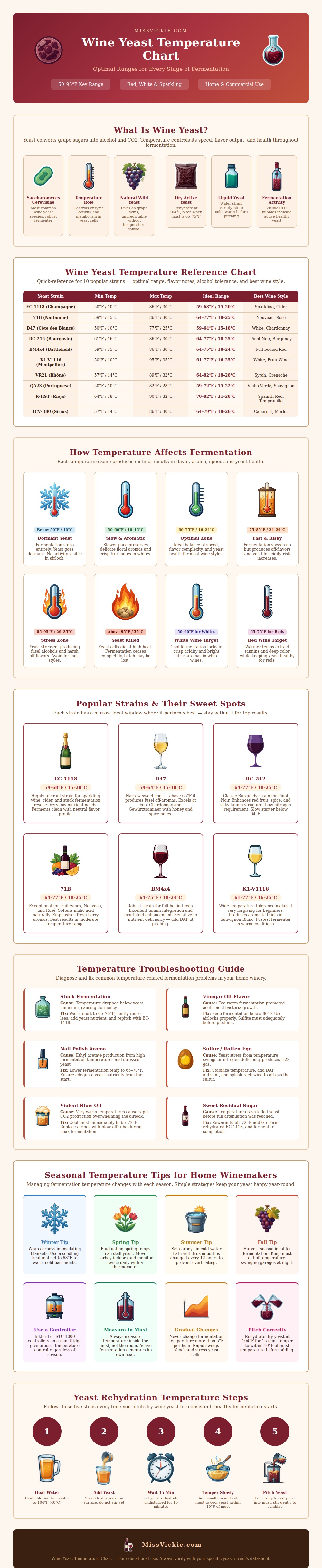
The single most important tool to control for flavor is temperature. You’ve crushed the grapes, measured the sugars, sanitized the vessel. Everything seems perfect, then you go to pour the must into carboy and suddenlly realize it’s boiling in summer or freezing in winter in your basement. No need to panic, that’s when you know that temperature isn’t just a number on a thermometer but rather something that has a huge impact on biology at play.
The chart above does an excellent job breaking it out. It demonstrates how various strains of yeast will behave given particular temperature ranges. Knowing what happens beneath the number makes all the difference between a good wine and a great one.
Why Temperature Matters for Yeast
In the winery, yeast is factory’s living workforce. When the temperature of the factory (i.e., your brewing space) drop below a certain level, the yeast will slow down and stop working altogether. You’re left with an incomplete batch of sweetened goop, ripe for bacteria to take over. Voilà: a stuck ferment.
Conversely, when conditions gets too warm, the yeast spits out fusel alcohols which are nasty-tasting compounds akin to solvent or nail polish remover. No one wants to sip on glass of paint thinner. You want to keep yeast’s comfort zone and let them do their thing without any messiness.
The infographic above illustrates some clear sweet spots for various types of wine. Cooler temperatures tend to be better for white wines, as these chiller conditions helps to maintain the subtle aromatic compounds. You want those floral and citrus aromas to come out, not be cooked off by yeast working too much. For reds, you typically have to give it a little more time to realy draw out the skin color and tannins. This is a question of both structure and grace, knowing where your wine sits on this spectrum will tell you everything about how you approaches temperature.
But there’s one other factor that many home winemaker overlook: seasonal variation. During summertime, even ambient heat can drive your ferment above dangerous levels within hours. This is where a makeshift jacket (a water bath surrounding your carboy) keeps things cool. Refill it daily, if not every couple days with ice.
During the cold months, you may of to use a tiny bit of heat with a heating pad underneath the vessel and/or an insulated blanket wrapped around it to keep things chugging along. Consistency is the name of game. Yeast doesn’t like being shocked. Temperature fluctuations will cause yeast far more stress then a mild, consistent temperature will ever cause. Small gradual tweaks are your friend.
Monitoring is only half the battle; preparation is also critical. Before yeast ever enters the must, proper hydration give it a fighting chance. The right way to wake those dormant yeast cells is with one-hundred four degree F warm water. Full rehydration occurs in about fifteen minutes. After that, slowly add small amounts of must while reducing the temperature difference between the yeast and must. You don’t want thermal shock and this helps get the ferment off to a strong start. A little bit of ritual now, big dividends on reliability later.
Your thermometer is usually the place to start troubleshooting. When your wine stinks of vinegar, you probably let it gets too warm, which invites acetic acid bacteria to come and party. When it has this gross sulfury rotten egg aroma, it’s probably because yeast was stressed (perhaps from a rapid change in temp) or starving for some nutrition. Changing the environment addresses the problem (rather than covering up the symptom).
Wine making is a game where we control the variables we can reach out and touch; it’s a game of managing expectations. We cannot manipulate the weather, but we can create our own microclimate within the confines of our fermenter. If we respect the biological desires of these wee cells they will work with us to produce exactly what we desire in the glass. Manage the beast, make him happy, keep things stable; and leave the rest up to time. The reward reflects your care, not just your ingredients.