
Turkeys are dry birds most holidays. Why? Because when you roast them standing up in the oven for several hours, by the time dark meat is cooked through, the white meat is already drying out. Then what do you have: Well-done dark meat and rubbery white meat? To compensate, you slather on the gravy.
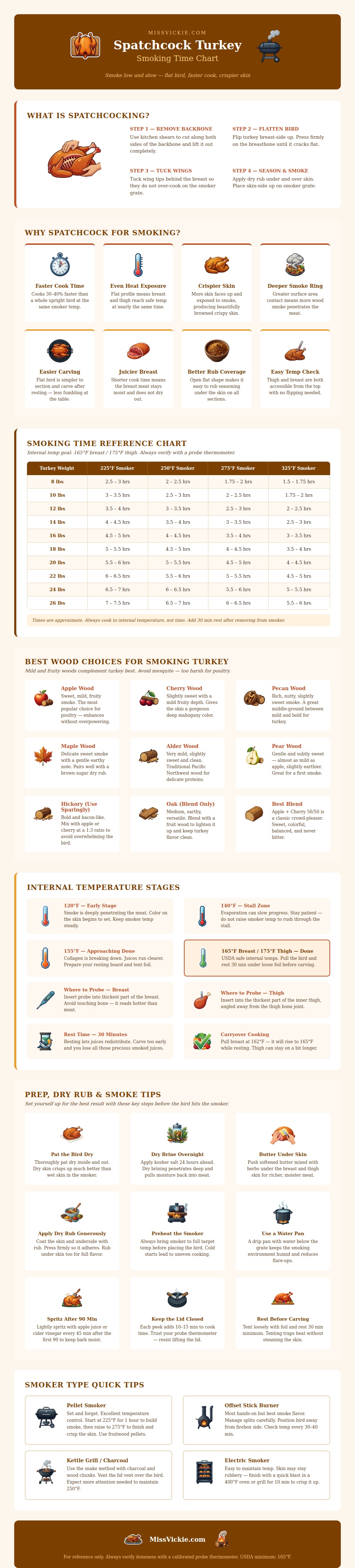
Spatchcocking alters the shape of your process. Removing the backbone and flattening the turkey transforms a tall object into a flat one. See graphic above? With that butterfly shape, more skin is exposed directly to heat. This results in crispy golden-brown turkey versus pale, steamed poultry skin. A flat bird transfers heat more effectivly than an upright turkey. If you roast a turkey upright, then hot air has to go around its rounded shape to hit every surface. Not all surfaces cooks evenly with the outside burning before inside is cooked through. By laying the turkey out flat, both thighs and breast have equal airflow.
How to Cook a Turkey Better
Below is a chart demonstrating how quickly it cooks different than regular roasting. By saving about one-third of your cooking time in the smoker, you also keep the breast meat from drying out as much which is biggest key to having good poultry.
Wood smoke is something that’s still worthy of your respect, however. Unlike a fatty cut such as a brisket, which will hide aggressive smokiness, turkey need to be treated delicately; it’s not going to take strong flavors well. Go with mild fruits like cherry or apple (cherry also gives skin a nice mahogany hue). These add sweetness in the background without dominating the taste of bird. Stay away from heavy wood types such as hickory or mesquite, which may leave your turkey tasting like charcoal. Clean up your palate and complement the turkey by using pure fruitwood or blends.
Just like with cooking time, preparation is key. Before putting skin into the smoker, pat skin down so that it’s bone dry. Wet skin will steam rather than crisp up. Dry brining (overnight) seasons meat well and extracts moisture from surface for increased browning. The wings are often forgotten about when prepping bird; however, they’ll get burnt fast in smoker if left hanging free. To avoid this, tuck ’em back for concentrated heat on the thicker sections of bird.
The last step is the temperature. Keep the temperature steady at 225-275 degrees Fahrenheit. Depending on the smoker’s temperature, cook times will change as indicated by reference guide. Cooking slower in a cooler smoke will penetrate more of flavor, but take longer. If the fire gets too hot (remember, you are cooking low and slow), then the skin will crisp up quickly but you run risk of drying out meat if you aren’t careful. Use a probe thermometer at all times. Time is just an estimate; internal temp tell the truth. For turkey, shoot for an internal temperature of 175 degrees in the thigh and 165 degrees in the breast.
Remove bird before it is overcooked and let it rest so carryover heat can finish cooking it. Letting it rest works best. Ideally, cover the turkey loosely in foil and allow it to rest for at least half an hour. That way, when you carve, juices will redistribute within meat instead of oozing all over your cutting board. Wasting that juice by carving right away means having a dry slice. Rest time is the visual guide’s focus here, it’s why the difference between good vs. Exceptional.
Next time you tackle that big turkey, break out your shears and make sure to spatchcock it first. Flattening the bird help it cook evenly. This results in moist meat and better texture. It also saves you time and gives you confidence in kitchen. Whether or not your dinner guests recognize change, they’ll know something’s different when they taste its tenderness. It’s the quiet victory of better technique.