
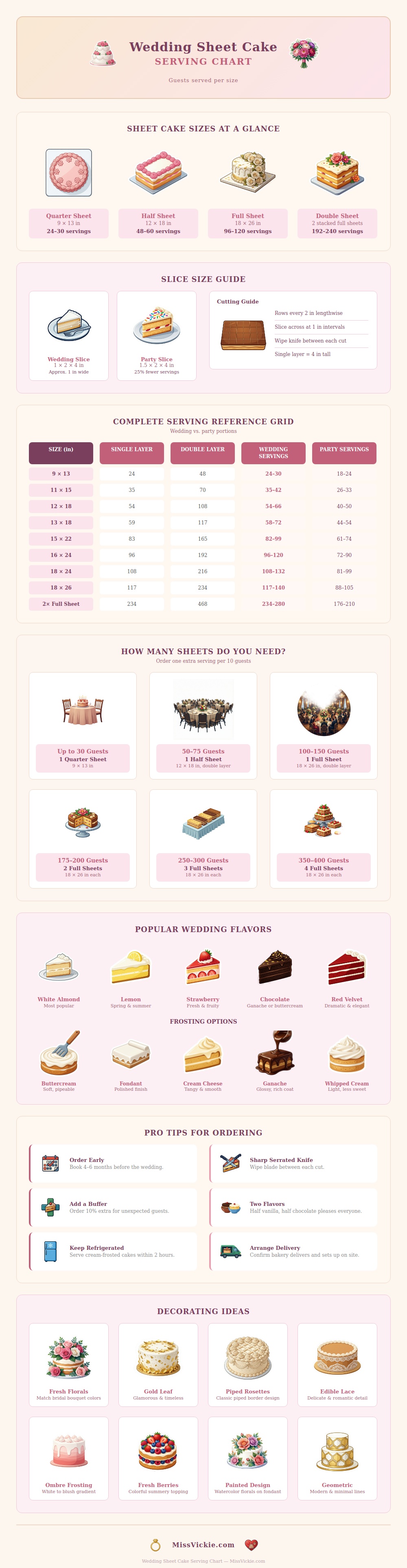
It’s easy to get carried away creating centerpieces, only to overlook what will be on the dessert table. If you’re having sheet cake at your reception, don’t make this error. Sheet cakes is not only affordable but sensible! No need to worry about transporting towering tiers in and out of narrow doorway. Just remember that they require some math if you aim to satisfy all guests. Luckily, the infographic provides clear cut serving size explanations based off them. That way you won’t run out of cake before the final toast.
It’s important to realize that people often underestimate how much frosting their guests actualy consume. Because there are typically several desserts being served at weddings, the slices is going to be smaller than what you would expect at a regular party. A typical wedding slice measures about one by two by four inches. Compared to a piece of cake you’d serve at an informal backyard BBQ, that’s about a quarter of a piece. Looking at the chart, a 12 by 18 inch sheet cake will provide approximately fifty four servings. That number assume average appetites and precise cutting skills. If your guests have big dessert appetites, or there aren’t any other sweets on offer, then plan on using low end of those servings. Better to have a couple extra squares left over rather than having your wait staff scrambling for additional desserts.
Choosing the Right Sheet Cake for Your Wedding
The decision between a full sheet and a half sheet comes down to the reality of how many guests you’ll be serving. One double-layer half sheet will generally serve seventy-five guests. This leaves enough for everybody but no mountain of leftover that ends up in the trash. If, however, you’re expecting more than a hundred guests then you might want to move up to an eighteen by twenty six inch (the size of a full sheet) or even combine two small sheets of cake. The visual guide shows how different sized cakes scale up. This also explains why doubling your cake does not directly double your servings as there’s trim waste and irregular cuts. You must factor in the messier corners and edges you encounter when serving.
You’ll also need to think about portion sizes, what flavors to choose, and how large of a piece per person to get. The classic vanilla almond will never disappoint, it’s versatile enough to complement all different themes and frosting colors. If you’re looking for something more on the tart side that will help cut through heavy savory dishes, lemon’s a great choice, especially for spring weddings. For winter occasions, where comfort and warmth are most important, chocolate’s got no chance of failing. If you have a group that’s split down the middle, go ahead and order a whole sheet cake but divide it into flavors. Half chocolate, half vanilla makes just about everyone happy. And remember to tell the bakery who gets which half (label it accordingly for your waiters).
In the past 10 years, decorating techniques on sheet cakes have come a long way. Forget boring old swirls of buttercream, there’s so much more you can do now! Gold leaf adds a touch of luxurios that photographs incredibly well against white fondant. Ombre color fades add depth and interest without being fussy. Gold leaf brings in a little sparkle that looks beautiful next to the bride’s bouquet. Fresh flowers applied right onto the icing immediately tie into the bride’s own bouquet. And piping rosettes bring out a sense of classic style that’s never trendy, just timeless. Whether you’re concerned with the cake coming off as too casual or not, these extra touches turn a grocery-store-basic into a designer-dessert-table-centerpiece.
The last part of this equation? It is about timing. Any sheet cake with fresh fruit toppings or cream cheese frosting must arrive within two hours (max) of being served. Fondant and buttercream fare better in warmer settings, but are best kept cool until presentation time. Ask at your bakery as to whether they set things up for you. Some bakeries has their own servers and cutting boards that will provide clean lines. Neatness counts when it comes to slicing; a serrated knife wiped down after each cut goes a long way towards making slices appear neat on the plate. Happy guests = clean cuts = no feeling of eating crumbs.
For a wedding, most of what we do with dessert planning comes down to logistics and aesthetics. Sheet cakes are a nice balance between the two with no tower of terror structural worries. Knowing how many portions go into each cake and when they’ll arrive helps you focus more on celebrating at your reception then whether or not there will be enough sugar. Trust your baker on the structure aspect; order just a little more than you feel comfortabley with, and then sit back and watch your guests enjoy the final sweet taste of a long day. It is all to make sure everybody gets their one perfectly square piece.