
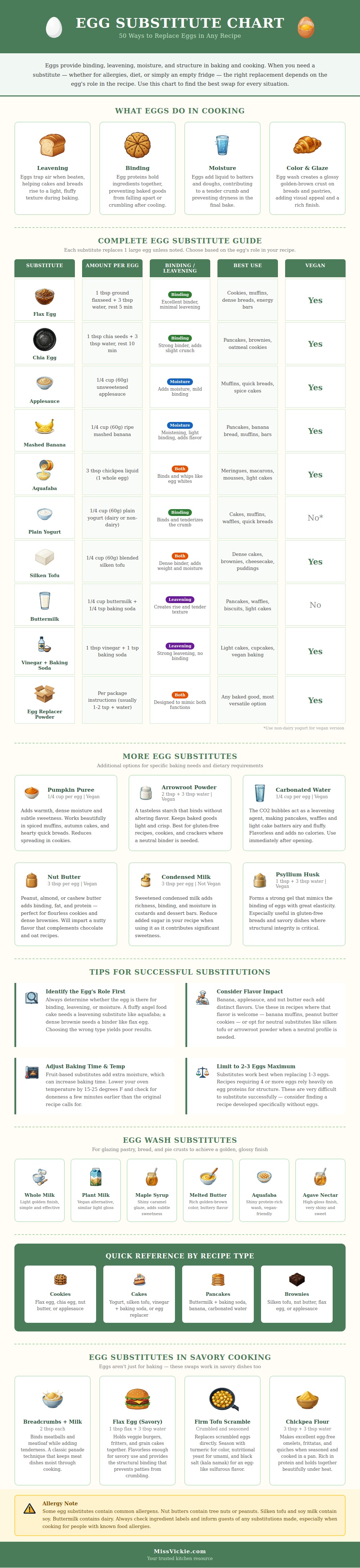
So you want to make some cookies or a loaf of banana bread, but there are no eggs in the refrigerator! What’s the big deal, right? Not at all. There is plenty of substitutes in the kitchen. The trick is knowing what it is that egg accomplishes in whatever dish you’re making.
Too often when bakers swap ingredients they do so out of blind faith; they think of eggs as a one-unit interchangeable ingredient. They ends up with crumbly bars or heavy cakes. Does the recipe call for moisture? Does it provide lift? Does it call for something that will bind ingredients together?
How to Replace Eggs in Your Baking
What do eggs do? First, they bind: When cooked, their proteins thicken, holding other ingredients in place so your cookie doesn’t fall apart or spread out too thinly. Second, eggs adds moisture to dry mixtures. Without them, baked goods is likely to be dry rather then tender. And third, beating them traps air making cakes and batters light and allowing them to rise during baking.
Why does knowing this matter? Certain foods, such as mashed bananas, won’t substitute for what an egg do. For example, if you’re baking a sponge cake that requires beaten egg whites (to provide leavening), those mashed-up bananas aren’t going to cut it. You want something that can approximates the aeration effect.
Eggs also bind well: The sticky protein network hold it all together. Seeds are no slouch when it comes to binding. Chia seeds (or any ground seed) combined with water make a gelatinous mix. That’s great for heavy baked goods such as energy bars and muffins. In those items, you don’t want as much airiness; you’re looking for structure instead. Perhaps a chart will show that seed-based eggs won’t add much height but they’ll keep things held together.
For anything where you do want a little bit of lift, there’s leavening. Acidic ingredients + baking soda = a chemical reaction that produces carbon dioxide bubbles. Buttermilk alone or vinegar plus baking soda can give your pancakes and other lighter cakes just enough of a lift. Chemistry at work, baby! It replaces the need for physical air pockets by generating gas.
There are plenty of substitutes for moisture. Yogurt or applesauce can be found in most kitchen cabinets. For a quarter cup use unsweetened applesauce which provides some mild sweetness and moisture. It’s great for dense items like muffins or even spice cakes. Another option is mashed banana, providing similar moisture but with a definite taste profile. Best used if that taste enhances another component, such as bananas in banana bread or chocolate chip muffin.
The substitutions do weigh down the batter. Expect a bit of a denser crumb then using eggs. But again, this isn’t bad, just a different crumb from the swap-out ingredient.
The thing that’s revolutionized vegan baking: Aquafaba. It is water from a can of chickpeas. Whip it up and it behaves just like egg whites, becoming all airy and peaky-stiff. So now you can make mousse, macaron and meringue, sans animal. It’s one of the best substitutes for both leavening and binding, more than anything else on this list.
Another great choice? Silken tofu. Whisk it into batters, it provides rich body and makes everything denser. And unlike aquafaba, it doesn’t change the taste much at all. In brownies and cheesecakes when you’re going for that fudge-y, heavier texture, silken is your friend.
And don’t neglect the savories. Meatloaf and veggie burgers is often bound with eggs. Panades made from a combination of milk and bread crumbs keep things tender while holding the mixture in place as they cooks. Chickpea flour combined with water make a batter that you can cook into something firm enough to be served as an omelet or frittata. Seasoning requires some trial and error. But it’s surprisingly convincing.
When experimenting, remember to keep your expectations reasonable. Recipes made with four eggs depend a lot on their hard-to-replace protein structure. For this reason, I’d suggest starting out substituting either three or one egg at a time so you’ll have some control over the outcome. Think about how your substitution will affect flavors. Nut butters makes things richer, but they are also going to taste stronger. Arrowroot powder will just hang back and bind without adding much flavor. If you include more liquid-y subs such as fruit purées, expect to adjust bake times (since these will take longer to dry off).
Once you know what works and which swaps is best, you won’t hesitate as much before an empty fridge becomes a problem. Options are hiding in your pantry, just waiting to rise up to the occasion.