Soft Boiled Egg Time for Ramen Calculator
Estimate ramen ajitama timing from egg size, fridge temperature, boiling-start recovery, altitude, ice bath, soy marinade salinity, marinade time, batch count, yolk texture, and when the noodles will be served.
Choose a ramen service scenario, then adjust the egg weight, boil style, marinade salinity, batch size, ice bath, and noodle timing. This calculator is tuned for peeled soy-marinated ajitama, not plain breakfast soft boiled eggs.
6 classic ajitama eggs
The timer is calibrated for a boiling-start ramen egg with a soy marinade finish.
Boil Timing Breakdown
Marinade And Ramen Service
Most ramen egg charts assume a large chicken egg.
Classic center when started from boiling water.
Stops carryover before peeling and marinating.
Balanced soy color without an overly salty center.
| Egg size | Approx. weight | Molten ramen center | Classic jammy ajitama | Set jammy slice |
|---|---|---|---|---|
| Medium chicken egg | 49 to 53 g / 1.7 to 1.9 oz | 5:45 to 6:05 | 6:15 to 6:35 | 7:00 to 7:15 |
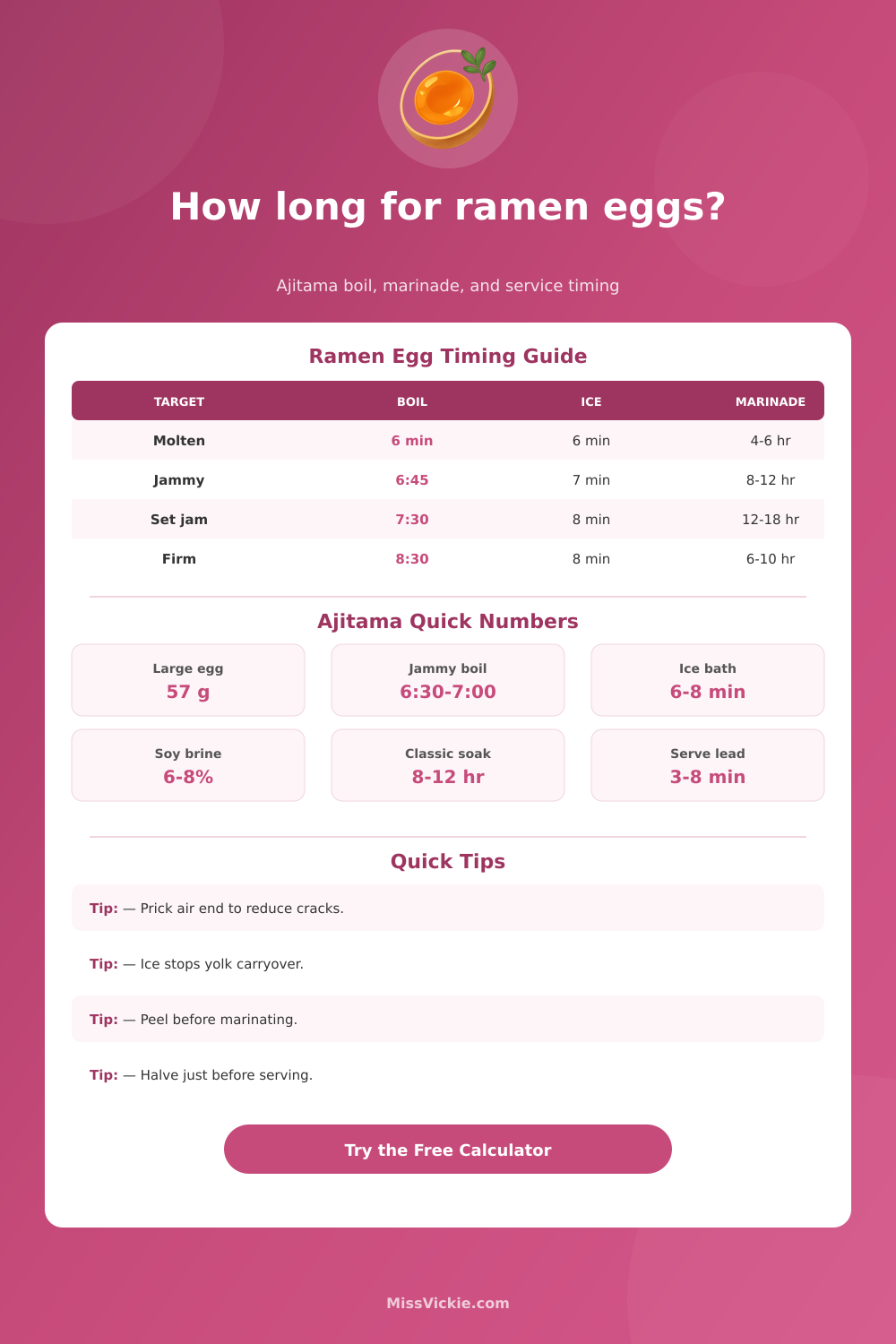
| Large chicken egg | 54 to 60 g / 1.9 to 2.1 oz | 6:00 to 6:20 | 6:30 to 7:00 | 7:15 to 7:40 |
| Extra-large chicken egg | 61 to 67 g / 2.2 to 2.4 oz | 6:20 to 6:45 | 6:55 to 7:20 | 7:40 to 8:05 |
| Jumbo chicken egg | 68 to 75 g / 2.4 to 2.6 oz | 6:45 to 7:10 | 7:20 to 7:45 | 8:05 to 8:35 |
Times assume a boiling start, gentle active boil, immediate ice bath, and peeled eggs marinated after cooling.
| Finished marinade | Estimated salinity | Best ajitama soak | Flavor result | When to use it |
|---|---|---|---|---|
| Dashi-diluted soy marinade | 4% to 5% | 12 to 24 hours | Gentle color and light seasoning | Subtle shio or chicken ramen bowls. |
| Classic soy, mirin, sake, water | 6% to 8% | 8 to 12 hours | Balanced ajitama with amber edges | Most shoyu, miso, and tonkotsu bowls. |
| Tare-heavy ramen marinade | 9% to 11% | 4 to 8 hours | Dark edge and stronger salt bite | Fast prep or rich broth that needs punch. |
| Straight soy-leaning mix | 12% or more | 2 to 5 hours | Very salty surface, fast staining | Use only when sliced thin or served quickly. |
| Service step | Typical lead | Why it matters | Calculator input tied to it |
|---|---|---|---|
| Pull eggs from marinade | 5 to 10 minutes before noodles finish | Drips stop and the surface is easier to cut cleanly. | Egg service lead. |
| Warm peeled egg | 0 to 2 minutes | Hot broth warms the outside while the center stays jammy. | Warming method. |
| Halve the egg | 30 to 90 seconds before plating | Fresh slices keep the yolk glossy and centered. | Noodle cook time and service cue. |
| Place on ramen | After noodles and broth are in the bowl | The egg should garnish the bowl, not sit in the pot. | Noodle finish time. |
A typical large chicken egg before marinade, based on common nutrition references.
Useful ramen topping protein without changing noodle cooking time.
Most fat sits in the yolk, so texture affects richness in the bowl.
Marinade salinity and soak time drive sodium more than the egg itself.
For most home cooks, ramen eggs is a trivial matter of time: put them into some boiling water, wait six minutes. You can easly do it wrong, by getting a runny center or a rubbery white, or you can do it right.
Many ramen recipes ignores three factors for a successful bowl of shoyu ramen. These are the starting temperature, altitude, and how carryover cooking works. While there is a calculator that will give you exact figures, knowing how they work enables even phoneless cooks to improve their result.
How to Cook Perfect Ramen Eggs
DON’T assume all eggs begin from the same thermal starting point. A raw egg from the fridge have a cold center… About thirty-eight degrees Fahrenheit. It’s going to be less sensitive to heat than an egg that’s been sitting out on your counter for an hour. As soon as you plop that cool ball into rolling waters, the temperature of liquid drops instantly. It is going to take a while for water to boil again. This is especially true if you are making several egg at once in a small pot with just two quarts of water.
That lag time is why you should of never set the timer until the water reaches a solid simmer, rather than when those shells first touch the water. Otherwise, whites will overcook while you wait for yolk to reach doneness.
Here’s another wrinkle that no kitchen timer can pick up: Altitude. Because of lower air pressure, water doesn’t boils until a lower temperature. At sea level, water reaches two hundred and twelve degrees Fahrenheit. That figure’s much lower in Denver (and any other high elevation city). And because the water have a lower boiling temp, it’s less aggressive when transferring its heat to egg. The yolk and whites’ proteins takes longer to set.
If you’re after the same sort of jammy consistency you’d have at sea level, you’ll need to add a little extra to your cooking time. It is not a big difference but it is enough to matter if you want that glossy, amber center instead of a pale, firm disc.
That’s where the timer ends, but it doesn’t stop there. After you take the egg out of its shell, the interior are still very hot and will continue to cook the yolk for several more minutes. That’s what we call carryover cooking, and it’s responsible for ruining so many ajitamas. The idea behind the ice bath isn’t merely practical (for easy peeling). It also serves as a type of thermal emergency brake: By plunging the cooked egg into an ice-water slush for six to eight minutes, it stops those chemical reactions that hardens the soft yolk. If you don’t do this, you might not peel the egg immediately after the six-minute boil. It may end up cooking for seven or eight minutes instead. This results in a drier and less vibrant topping.
That’s where the chemistry part comes in: The marinade step. Through osmosis, brining solutions like soy sauce, water, sake and mirin soak into the egg white. You want the egg to take on some color and flavor but not turn into a hard salami-like cured product. Six to eight percent salt content is a classic sweet spot. If it’s any more concentrated, you has to reduce your soaking time. This prevents the outside from getting too salty before the inside reach the right flavor. For something with a traditional flavor and color, most home cooks are happy with a range of eight-to-twelve hours. That gives you plenty of time to build up the beautiful amber hue, but doesn’t overwhelm yolk’s tender richness.
This is where theory collides with the chaotic nature of putting together a warm dish: don’t pull your eggs out of the marinade and then leave them on the counter while it takes you 20 minutes to boil some noodles. That moist exterior will start to drain the flavor and the insides goes flat. Plan accordingly. Time your noodle-cooking so that it’s close to when you need to cook the eggs. Five to ten minutes before dropping the noodles in the water, take the eggs out of the fridge. Once the noodles have drained well, quickly halve them and put them straight into the bowl. You can also give them a quick dip in hot water or stock to release the aroma, but this will cook the yolk a little more.
There’s no one right way to make an ajitama, in fact, mastering them has less to do with following rules and more to do with controlling energy flow throughout each step. There’s the shock of boiling water followed by the careful drip-drip of ice into an ice bath, each step controlled for effect. Once you know how salt moves through moisture and heat move through protein, there’s no need for guessing. No more blindly following timers; just cook with intent. And your egg will be what it was meant to be, a rich jammy center pulling the whole bowl together.