Bolognese Sauce Per Pound Of Pasta Calculator
Scale a slow bolognese ragu by dry pasta weight, meat blend, soffritto, milk, wine, tomato, simmer reduction, pasta shape, make-ahead loss, and parmesan finish.
🍴Real bolognese presets
Pick a starting point, then adjust the ragu style, pasta shape, serving size, and holding loss to match your pot.
⚖Build your ragu
Full bolognese breakdown
🍝Serving size grid
📋Pasta shape and sauce cling table
| Pasta shape | Finished ragu per lb | Why it changes | Best finish |
|---|---|---|---|
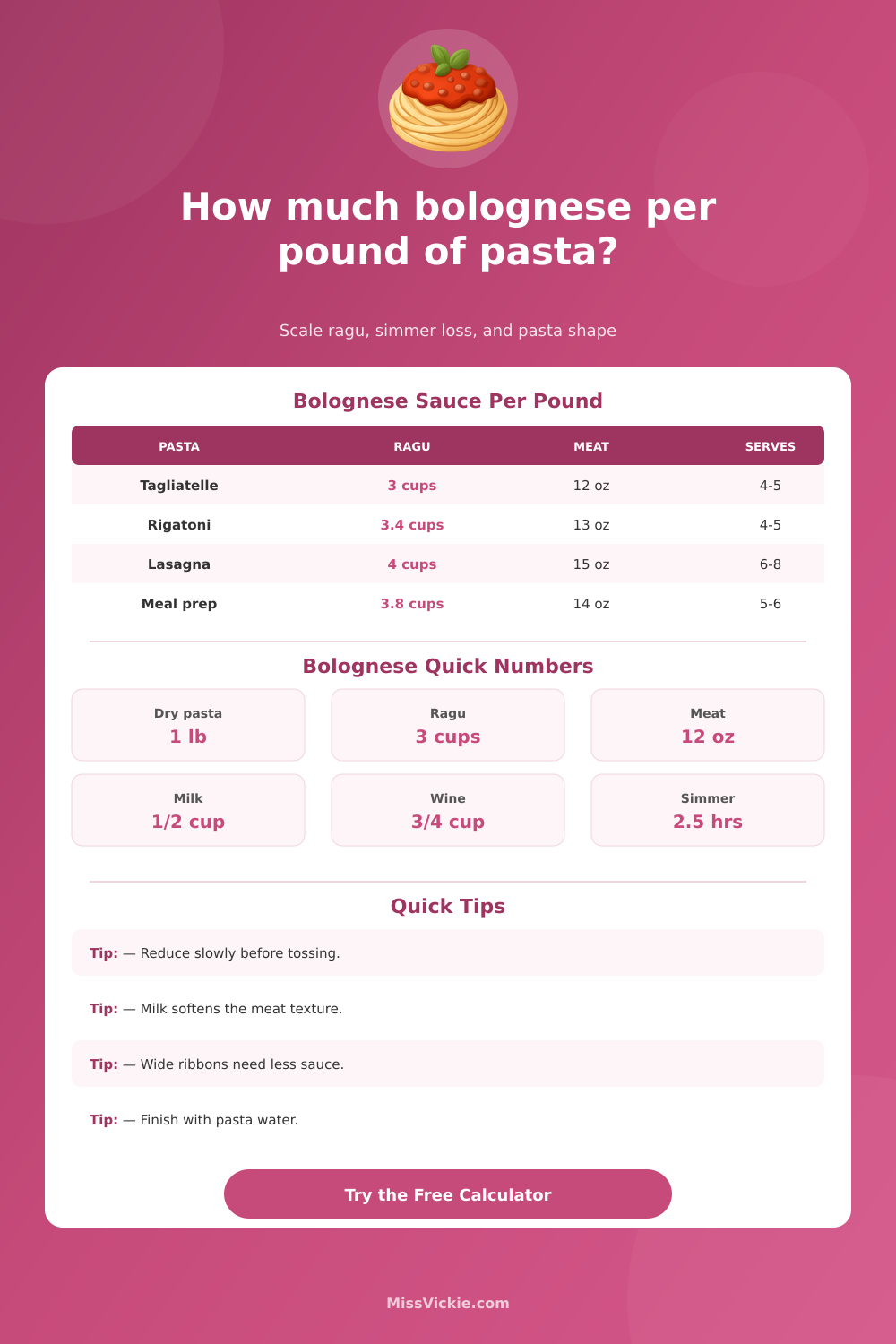
| Tagliatelle or fettuccine | About 3 cups | Wide ribbons coat evenly without needing a wet sauce. | Toss in pan with pasta water. |
| Pappardelle | About 2.8 cups | Broad ribbons show off meat texture and need a thicker ragu. | Fold gently to avoid tearing. |
| Rigatoni or paccheri | About 3.4 cups | Tubes and ridges trap more meat and glossy liquid. | Use extra pasta water to carry sauce inside. |
| Spaghetti | About 3.2 cups | Round strands need looser tossing liquid for cling. | Use fine meat and a little more water. |
| Lasagna or baked pasta | About 4 cups | Layering and baking dry the sauce and need extra coverage. | Keep the ragu spreadable. |
| Gnocchi | About 2.7 cups | Potato dumplings are rich, so a smaller ragu coat works. | Thin lightly and spoon, not flood. |
These amounts are for finished ragu. The calculator increases the starting pot amount for simmer reduction and holding loss.
🥩Meat blend and yield table
| Blend | Raw meat per lb pasta | Typical cooked yield | Flavor note |
|---|---|---|---|
| Beef and pork | 12 oz | 82 percent | Classic balance of savory depth and soft fat. |
| Beef, pork, and veal | 12.5 oz | 84 percent | Tender texture, restaurant-style ragu body. |
| Beef, pork, pancetta | 13.5 oz | 80 percent | Saltier and richer, with more rendered fat. |
| All beef | 12 oz | 78 percent | Meatier, firmer, and less sweet than mixed ragu. |
| Turkey with pork | 11 oz | 86 percent | Lighter, helped by pork fat and milk. |
| Beef with mushroom | 10 oz | 88 percent | Earthy stretch while keeping a ragu texture. |
⏲Milk, wine, tomato, and simmer ratios
| Per pound of pasta | Balanced ragu | Rich ragu | Lasagna ragu |
|---|---|---|---|
| Milk or cream | 1/2 cup milk | 2/3 cup milk | 1/2 cup milk |
| Wine or stock | 3/4 cup white wine | 1 cup red or white wine | 3/4 cup wine |
| Tomato base | 1 cup passata plus paste | 1.2 cups passata plus paste | 1.5 cups thicker tomato |
| Soffritto | 1.1 cups minced | 1.3 cups minced | 1.2 cups minced |
| Simmer target | 2.5 to 3 hours | 3.5 to 4 hours | 2 to 3 hours, thicker |
🔢Common quantities table
| Dry pasta | Finished ragu | Raw meat | Main servings |
|---|---|---|---|
| 1/2 lb | 1.5 cups | 6 oz | 2 to 3 |
| 1 lb | 3 cups | 12 oz | 4 to 5 |
| 1.5 lb | 4.5 cups | 18 oz | 6 to 7 |
| 2 lb | 6 cups | 1.5 lb | 8 to 10 |
| 4 lb | 12 cups | 3 lb | 16 to 18 |
🔍Bolognese versus meat sauce comparison
💡Ragu planning tips
It’s the question we all ask when there’s a package of dry pasta and a pot full of simmering goodness: How much sauce should I use per pound of pasta? And while it seems like such an easy answer, it’s one that stumps the home cook, especially those who don’t measure by proportion but instead go by instinct. Enter the calculator above.
It calculates based off the amount of ragu clinging to both smooth and ridged surfaces. Just select your meat blend and desired pasta shape and let math take care of itself.
The Right Amount of Sauce for Your Pasta
Meat dishes can be seasoned with tomatoes but this doesn’t mean they’re just tomato sauce with some meat added to it. Using tomato seasonings for bolognese makes a big difference in the texture of the finished dish. Marinara treated as bolognese result in dried noodles surrounded by a lake of something wet at bottom of bowl. You want a thick sauce that hug the pasta strands without running into them.
Milk has a tremendous impact on this: it softens the tannins of the meat and smooths the sharpness of the wine reduction, which is why those who skip dairy often find their ragu tastes harsh or metallic. The amount of sauce depends on how full your bowl is. Pasta shape matter here…
Wide ribbon pastas such as pappardelle or tagliatelle have heft and can supports a hearty ragù without sliding down fork. Less sauce are required for these types since you’re already covering them with something substantial. Then there’s the tubular variety (think paccheri or rigatoni), those ridges and holes collects sauce within the noodle. Because it’s already contained, you don’t really notice when adding extra which allows for an even larger serving size.
Spaghetti, however, is fickle: It’s thin and slick, so a bit looser will stick better. Tweak your target reduction down accordingly or stir in some starchy pasta water at tossing time to help coat everything.
There’s also the secret variable of meat yield, which can also ruin a batch if you don’t pay attention. When raw ground meat is browned and simmered for hours, it shrivels up considerbly, so it’s very important to start with correct raw weight. It’s not going to appear as a pound after all the moisture has been evaporated and the fat rendered out.
You won’t be stuck with a small layer of meat across the bottom of a tomato-laden soup, either, thanks to the tool, which takes into account those kinds of losses depending on what blend you select. Pork and beef (the traditional combo) is a good choice since pork imparts just enough sweetness and fat to balance out the leaniness of the beef alone.
A good ragu requires patience: You can’t hurry it along; simmer time is not negotiable. Gentle heat for a long period reduce the liquid to concentrate the flavor. It also breaks down any connective tissue in the meat, letting the soffritto’s flavors infuse the cooking liquid. If you simmer too long, say, four hours rather than two, you’ll need to start with more liquid ingredients at the beginning since more will evaporate, to get back to the same amount in the finished product.
That’s the mistake most home cooks make: They taste the sauce early on, judge it as needing more salt or more tomato when really what it needs is more time. Ragu’s also improved after being chilled and reheated, which completely changes the make-ahead game. But as soon as you chill something like ragu, it thickens. Keep this in mind and add some more pasta water (or perhaps even some of the sauce itself) when re-heating. Your leftovers should still coat those noodles well on day three and the calculator takes this “holding loss” into account.
Bolognese isn’t really about following any one recipe; it’s more about balance. You’re layering ingredients like meat, vegetables, wine, and dairy to create layers of flavor. The tool lets you scale up the layers for a family dinner or down for a solo meal without having to guess (so that no matter what), your sauce will be the right proportion when it meets your pasta.
Good cooking is nothing but good math masquerading as comfort food.