Meat Sauce Per Pound Of Pasta Calculator
Scale a hearty tomato meat sauce by dry pasta pounds, ground meat ounces, meat fat, tomato volume, simmer reduction, vegetable add-ins, pasta shape, baked pasta loss, sauciness, and servings.
Choose a real pasta-night scenario, then adjust the exact meat, tomato sauce, fat percentage, vegetables, simmer loss, shape, baked option, and serving plan.
Your Meat Sauce Batch
A balanced meat sauce estimate will appear here.
Batch Breakdown
Sauciness Check
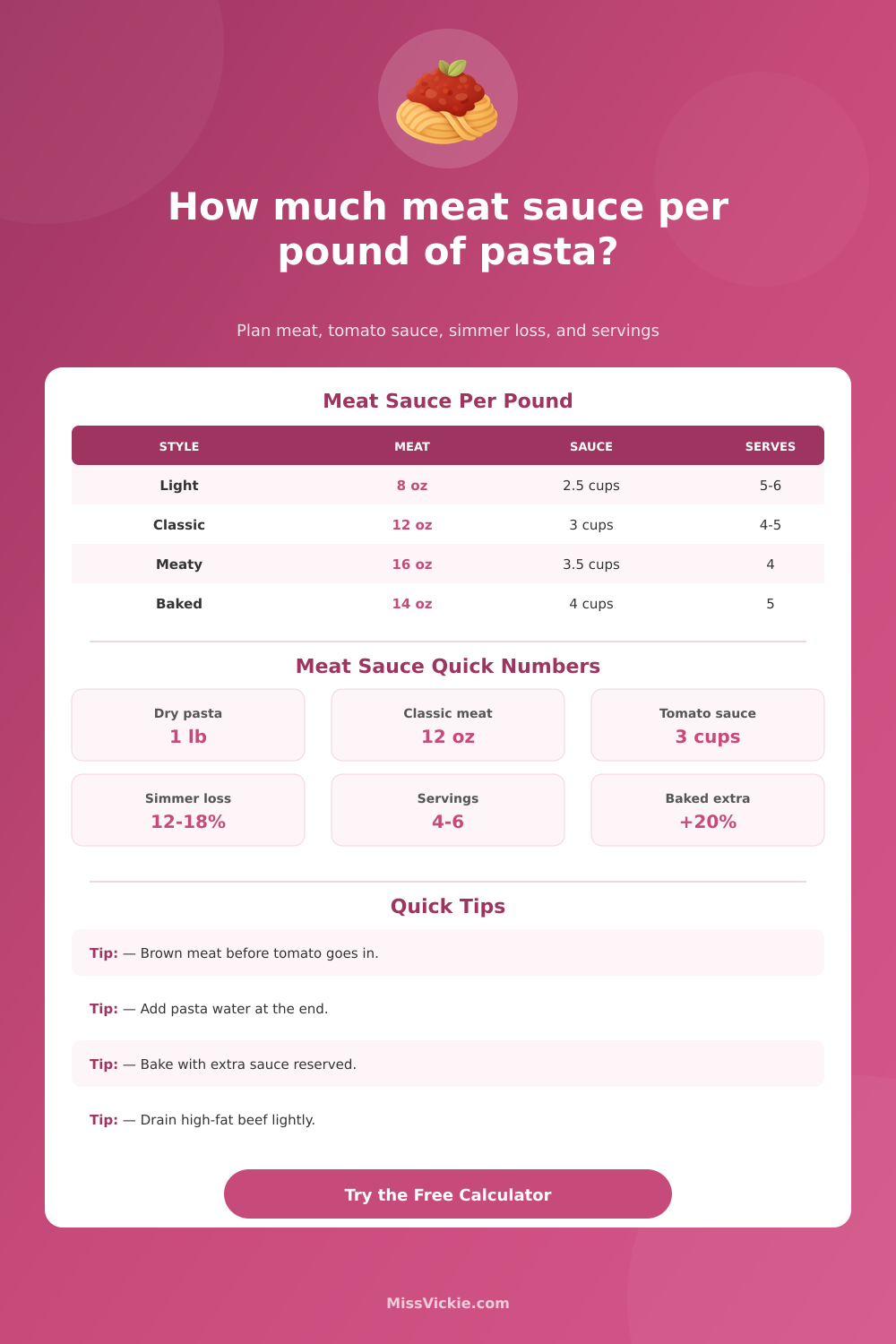
| Use Case | Raw Meat Per 1 lb Pasta | Tomato Sauce Before Simmer | Finished Sauce Goal | Best For |
|---|---|---|---|---|
| Light weeknight sauce | 8 to 10 oz | 2.5 to 3 cups | 2.5 cups | Long pasta, lighter dinners |
| Classic meat sauce | 12 oz | 3 to 3.5 cups | 3 cups | Spaghetti, penne, family meals |
| Meat-forward sauce | 16 oz | 3.5 to 4 cups | 3.5 cups | Rigatoni, shells, hearty portions |
| Baked pasta | 12 to 16 oz | 4 to 4.75 cups | 3.8 to 4.2 cups | Ziti, casseroles, buffet pans |
| Meat Type | Typical Fat | Cooked Yield From 16 oz | Sauce Character | Drain Note |
|---|---|---|---|---|
| 80/20 ground beef | 20% | 11.4 to 12 oz | Rich, beefy, glossy | Drain lightly if greasy |
| 85/15 ground beef | 15% | 12 to 12.8 oz | Balanced classic sauce | Usually keep a spoonful of fat |
| 90/10 ground beef or turkey | 7 to 10% | 12.8 to 13.6 oz | Lean, tomato-forward | Add olive oil if dry |
| Italian sausage | 22 to 28% | 10.8 to 12 oz | Seasoned, salty, robust | Drain more for baked pasta |
| Plant-based crumbles | 4 to 10% | 13 to 15 oz | Savory but less rendered fat | Add sauce moisture early |
| Add-In Or Method | Volume Added Per lb Pasta | Typical Cook-Down | Flavor Effect | Calculator Treatment |
|---|---|---|---|---|
| Onion and garlic | 0.4 cup | Moderate | Sweeter, rounder tomato | Adds small finished volume |
| Soffritto | 0.75 cup | Moderate-high | Classic Italian-American base | Boosts body after simmer |
| Mushrooms | 1 cup | High water release | Earthy, meatier texture | Adds volume, raises loss |
| Chunky vegetables | 1.25 cups | Varies by dice size | Vegetable-heavy sauce | Counts as chunky sauce bulk |
| Uncovered bake | No new volume | 15 to 25% extra loss | Concentrated, drier edges | Requires reserve sauce |
| Pasta Role | Dry Pasta Per Person | Finished Sauce Per Person | Raw Meat Per Person | Notes |
|---|---|---|---|---|
| Side dish | 2 oz | 0.35 to 0.5 cup | 1.5 to 2 oz | Works beside salad, bread, or mains |
| Standard dinner | 3 to 3.5 oz | 0.55 to 0.75 cup | 2.5 to 3 oz | Most family pasta nights land here |
| Hearty main | 4 oz | 0.75 to 1 cup | 3.5 to 4 oz | Good for rigatoni and extra meaty sauce |
| Buffet or baked tray | 2.5 to 3 oz | 0.65 to 0.9 cup | 2 to 3 oz | Hold sauce back for refreshing the pan |
Ground meat and tomato cooked into a quick, hearty pasta sauce per pound.
Milk, wine, aromatics, and long simmering make it richer and less tomato-heavy.
Tomato sauce without ground meat uses a different per-pound ratio.
Extra sauce keeps ziti and casseroles from drying out in the oven.
Use this calculator for tomato-based ground meat sauce. For traditional bolognese, plan a lower tomato ratio, more dairy or stock, and longer simmering.
Then there’s the pasta: a pound of dried spaghetti you purchased. Now you face it staring down at the ground beef in your cart, thinking how much is that? Too little, you think, and too much. The math isn’t really as simple as you thought. Raw meat shrivels in the pan and simmered sauces boil away. Suddenly you’re left with too little liquid for the pot or an overspill of watery goo that’ll leave you feeling as though you’ve just had a mistake for dinner instead of a meal.
That’s the catch: you’re playing with three highly variable factors, your pre-rendered meat’s weight, the pre-reduction volume of your sauce, and the pasta’s ability to retain moisture. Some pastas, such as tube shapes like penne and rigatoni, holds onto pieces of cooked meat better than long ones like spaghetti; meanwhile, other tube pastas gather pools of sauce that smooth noodle never could. That explains why switching pasta shapes and not adjusting the amount of sauce will result in an epic fail according to even a standard recipe.
How to Get the Right Amount of Meat, Sauce, and Pasta
Once you know which shape and how saucy you’d like things, plug your numbers into the calculator above. It’ll do the math for you, but knowing why these inputs affect your dish prevents making a blind guess.
Weight matter, especially in the pan. When ground beef is browned, it loses approximately fifteen to twenty percent of its weight because the fat melts off. Meanwhile, the label is talking about an eighty-five-percent-lean product. Lean turkey or chicken barely shrink at all. A recipe that calls for twelve ounces of meat won’t taste as rich if you substitute very lean ground; the sauce will be thin and pale. To achieve the same cooked consistency, you’ll need more by weight of raw meat.
Most home cooks don’t get that. They calculate based off the size of the package rather than the yield. And this is where the yield table on the page comes into play: It spells it out clearly how various meats behave under heat, so you can tweak your shopping list beforehand, not when you’re already cooking.
But there’s one other variable that seems arbitrary but is strictly physics: simmering time. Because most tomato sauces are mostly water, if they boil the liquid evaporates. Lose ten minutes on a weeknight supper and you might lose ten percent of your sauce volume. Spend an hour slowly reducing it for a Sunday meal and you’ll lose thirty percent or more. And then remember that the oven itself acts like a second simmer if you’re planning to bake the dish at some point later.
The baked dishes (casseroles and ziti) will suck up sauce from two directions during their baking, so they requires additional wetness compared to tossed pastas. To account for this, the tool allows you to choose whether you want to toss or bake, and choosing the latter bumps up the amount of sauce required to avoid dry edges on the finished casserole.
Adding vegetables adds bulk and yes, it also adds some water weight. Carrots and onions loses some of their water content while they cook down into the base. So when you add a cup of diced onions, your final sauce will not gain a whole cup of volume. It won’t. It’ll gain less. This is where the calculator includes cooking loss to treat vegetable add-ins as net contributors in terms of volume. It adds flavour and body, but it does not promise additional liquid.
The tricky part is figuring out servings. We tend to serve food by hunger level, not amount. A typical serving of dried pasta is about three and a half ounces (100g). That translates to about eight ounces (225g) when it’s cooked. Combined with six to eight ounces of sauce, you’ve got a well-balanced plate. To make leftover portion, scale up for a crowd, the math works in direct proportion. Twice as much pasta? Use twice as much tomato base and twice as much meat.
When it’s time to toss, the tool will tell you what to expect: How many finished sauces did you end up with, and does it need a splash of starchy pasta water to blend the acid and fat into a glossed-on coat? This last bit transforms distinct components into something coherent. Making meat sauce isn’t a science of following recipes so much as juggling density and moisture. It’s learning how your particular type of ground meat shrinks, and knowing how much liquid the pasta shape you like require. From there, it’s automatic.
There’s no guesswork about “will that be too watery?” Instead, you plan for “this amount of water, and this amount of shrinkage.” And you cook it until each bite offers both substance and flavor. You should of used the calculator first to avoid a mess.