Cheese Per Person For Charcuterie Calculator
Plan cheese for a charcuterie board by guest count, appetizer or meal role, cheese style mix, ounces per person, rind loss, vegetarian share, board duration, cut size, and refill buffer.
Choose a hosting setup, then tune the cheese-only details so the total stays separate from meats, crackers, fruit, and spreads.
Your Cheese Board Plan
Calculated cheese amounts will appear here.
Cheese Amount Breakdown
Style Mix Breakdown
These ranges count cheese only. Plan bread, crackers, nuts, fruit, meat, pickles, and spreads separately.
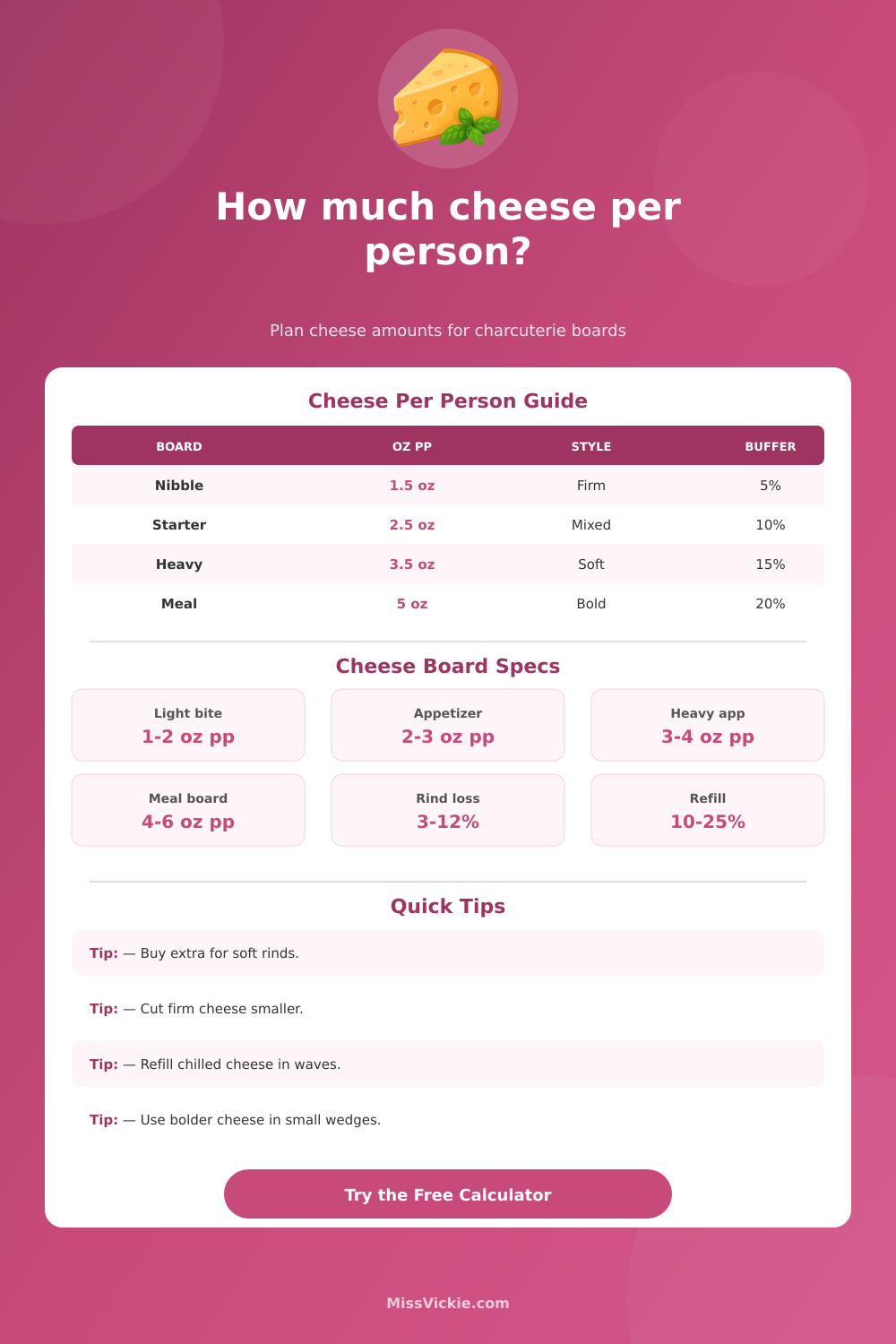
| Board role | Cheese per person | Best use | Refill note |
|---|---|---|---|
| Light nibbles | 1 to 2 oz | Before dinner with other snacks | Small backup wedge |
| Appetizer board | 2 to 3 oz | Classic charcuterie starter | Refill after 90 minutes |
| Heavy appetizer | 3 to 4 oz | Cheese is a main graze item | Stage one chilled refill |
| Meal-style board | 4 to 6 oz | Cheese carries the spread | Use several board waves |
| Cheese style mix | Firm | Semi-soft | Soft, fresh, blue |
|---|---|---|---|
| Balanced board | 35% | 30% | 35% |
| Crowd pleasing | 40% | 35% | 25% |
| Soft forward | 20% | 25% | 55% |
| Bold tasting | 45% | 20% | 35% |
| Cheese family | Typical yield | Serving cut | Planning note |
|---|---|---|---|
| Hard aged cheese | 92 to 97% | Shard, cube, slice | Small bites feel generous |
| Semi-soft cheese | 88 to 95% | Slice, baton, wedge | Trim sticky edges lightly |
| Bloomy rind cheese | 82 to 92% | Wedge, smear, spoon | Buy more for rind lovers |
| Blue or washed rind | 80 to 90% | Crumb, wedge, smear | Use as a flavor accent |
| Group size | Appetizer cheese | Heavy cheese | Meal board cheese |
|---|---|---|---|
| 8 guests | 1.25 lb | 1.75 lb | 2.5 lb |
| 12 guests | 1.9 lb | 2.6 lb | 3.8 lb |
| 25 guests | 3.9 lb | 5.5 lb | 7.8 lb |
| 50 guests | 7.8 lb | 10.9 lb | 15.6 lb |
Cheddar, manchego, gouda, parmesan, alpine cheese, and aged provolone slice cleanly and make piece counts predictable.
Havarti, fontina, young gouda, taleggio, and tomme give flexible wedges but need a little trim allowance.
Brie, camembert, goat logs, burrata, ricotta, and spreadable cheeses serve beautifully but need more rind and smear buffer.
Blue, gorgonzola, washed rind, and smoked cheeses are often served in smaller bites because the flavor is stronger.
When it comes to charcuterie, most folks is as chaotic as their vacation packing skills. Sure, you have a bunch of cheese because, hey, it’s impressive. But then you throw it together willy-nilly and just pray someone will get through it all before the brie gets melty.
Flavors aren’t typically the issue. Neither is selection. It’s about the math. And by “math,” I mean the intangible arithmetic: portion density, rind waste, and realistic grazing time (especially if there’s wine). Nailing it down prevents anyone from going hungry, but even better, it ensures you don’t drop a bunch of money on grub that winds up in garbage can.
How to Plan Your Cheese Board Like a Pro
It will do the calculations for you (above), but knowing what each question mean will help with shopping. Yield is probably the least understood variable. You’re purchasing weight that won’t get to anybody’s mouth. Trim off the dry edges, cut out wax coatings and thick rind on hard cheese; trim back the softening bloomy rind and account for smearing losses on soft cheese. Your board will appear stuffed at first, but dissapears in twenty minutes if you don’t think about difference between purchase weight and edible yield. By requesting particular loss percentages, the tool adjust for this and informs you of how many ounces to dish out, instead of how much raw product to purchase.
This brings us back around to texture of the cheese. It determines how much cheese go in each bite. Harder cheeses (think parmesan, manchego) is more flavorful but also denser, meaning guests take smaller portions of them compared than softer cheeses. Soft cheeses like goat log or burrata will be lighter and creamier, which encourages guests to help themselves to bigger bites. As a result, if your board is all soft cheese, it’ll get eaten TWICE as fast as a board filled with mostly hard cut.
The calculator breaks up the mix into these categories for this reason. There should of be a balance between the heavier, flavor-packed denser cheeses that hold down the fort and the creamier soft cheese that lend texture to the meal. If not, you’re going to end up feeding them too much cheese or burning through the good stuff way faster.
The other thing hosts entirely fail to consider: Time. Four hours of grazing looks nothing like an hour-long appetizer board. At a party, people nosh slowly (they dip their crackers), they chat, yet they add up over time. As such, you can’t simply purchase more cheese and dump it onto the board all at once if your event is four hours long. Why? Because it will get warmed, it’ll start to dry around edges, and the brie will fall apart.
Here’s where staging the service comes into play: Store backup servings somewhere else, cool them off, then restock the board each hour or so. This is why the tool even creates a buffer. It provides enough additional product to ensure that you’re serving something fresh-looking throughout, rather than inflating your first-grocery-list numbers.
You have another way to change how people see abundance: how you slice it. A pound of cheese looks like three when it’s cubed into tiny bits that cover the whole board. Wedges get smaller with every mouthful. Large ones can vanish fast even if each person’s portion isn’t huge. They’re taking fewer bites that weigh more. Cut small if you need the food to stretch further, or have a tight budget. Go big, mini-wedges or even bigger slices; if you’ve got to impress some serious cheese-heads who love to enjoy the total texture experience.
This is where the board’s role changes what people expect (see table above). And finally: who’s going? If most of your guests are vegetarian (or any other food restriction), that’s going to pull way more weight on the cheese side, as meat won’t be helping carry the weight. Likewise, if your party features a sit-down meal instead of just a pre-appetizer snack, you’ll need to accommodate for far more volume than you might expect.
This again means adjusting for these realities of what people like to eat so everyone goes home happy. It doesn’t have to be about rationing fun; it’s all about taking away the stress of running out. Once the math’s on your side, put down your watch and pick up the conversation with your friends.