Antipasto Per Person Calculator
Plan an antipasto board by guest count, appetizer or meal style, cured meat, cheese, olives, pickles, marinated vegetables, bread, event duration, vegetarian share, platter count, and refill buffer.
Choose a real hosting setup, then adjust the portions, duration, vegetarian share, platter count, and refill buffer to match your table.
Your Antipasto Plan
Calculated antipasto amounts will appear here.
Component Breakdown
Planning Details
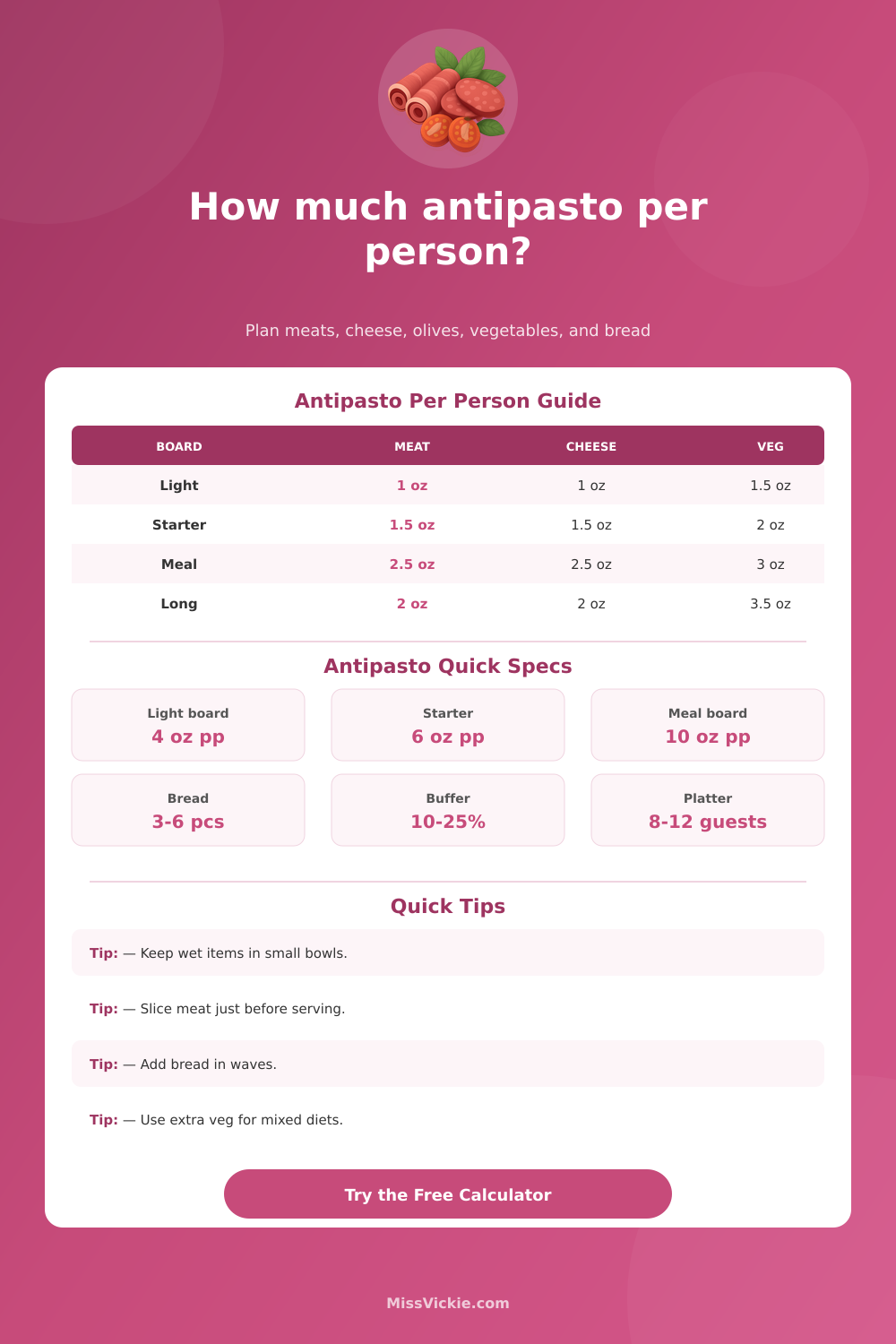
| Serving role | Total per guest | Meat | Cheese | Vegetables |
|---|---|---|---|---|
| Light pre-dinner bites | 3.5 to 4.5 oz | 1 oz | 1 oz | 1.5 to 2 oz |
| Appetizer board | 5.5 to 6.5 oz | 1.5 oz | 1.5 oz | 2 to 2.5 oz |
| Heavy appetizer | 7 to 8.5 oz | 2 oz | 2 oz | 2.5 to 3 oz |
| Meal-style board | 9 to 11 oz | 2.5 oz | 2.5 oz | 3 to 4 oz |
| Reception grazing | 6 to 8 oz | 1.5 oz | 2 oz | 2.5 to 3.5 oz |
| Component | Typical item mix | Per guest range | Best serving note |
|---|---|---|---|
| Cured meats | Salami, prosciutto, capicola | 1 to 2.5 oz | Fold thin slices for volume |
| Cheeses | Provolone, mozzarella, pecorino | 1 to 2.5 oz | Cut firm cheese into small bites |
| Olives and pickles | Olives, cornichons, peppers | 0.75 to 2 oz | Drain brine before plating |
| Marinated vegetables | Artichokes, mushrooms, peppers | 1.25 to 3 oz | Use bowls for oily pieces |
| Bread and crackers | Crostini, grissini, focaccia | 3 to 6 pcs | Refresh crisp items often |
| Guests | Starter total | Meal total | Suggested platters |
|---|---|---|---|
| 6 guests | 2.25 lb | 3.75 lb | 1 platter |
| 12 guests | 4.5 lb | 7.5 lb | 2 platters |
| 25 guests | 9.4 lb | 15.6 lb | 3 to 4 platters |
| 40 guests | 15 lb | 25 lb | 4 to 6 platters |
| 50 guests | 18.75 lb | 31.25 lb | 5 to 7 platters |
| Duration | Adjustment | Refill style | Board note |
|---|---|---|---|
| 1 hour | Base amount | Single display | Best for plated dinner lead-in |
| 2 hours | Add 5% | One small refill | Hold back bread and wet items |
| 3 hours | Add 10% | Two refills | Refresh cheese before it dries |
| 4 hours | Add 15% | Staggered refills | Use chill trays for perishables |
| 5+ hours | Add 20% | Backstock trays | Swap small platters often |
Salami, prosciutto, aged provolone, olives, artichokes, and crostini.
Roasted peppers, mushrooms, tomato salad, cheeses, olives, and extra crackers.
Moderate portions with tidy picks, firm cheeses, folded meats, and dry crackers.
Higher cheese, meat, vegetables, bread, and a larger refill buffer.
Food safety note: keep perishable meats and cheeses chilled before serving, and use smaller platters for long events so refills stay fresh.
Most home hosts try their best when making an antipasto board, but they don’t use enough math. You want your display to appear full, but fullness without math equals either emptiness (by hour two) or waste. How do you know what to serve? That’s the math: The number of people eating plus a little extra. Usually, it can be the difference between a smooth evening and a stressful one.
Before you ever leave house, have an idea of how much everyone will eat. When there’s no main course on the stove, it’s all too easy to underestimate how fast cured meats dissapears. Once you’ve determined whether it’s going to be meal replacing or just appetizers, the calculator does all the work (above). What kind of salami dont matter as much as that question. There is a huge difference between having people graze or nibble lightly at a cocktail party, and putting out something that could potentially fill them up if dinner gets delayed or becomes optional.
The Math Behind Perfect Antipasto Planning
Don’t assume food intake will be a straight line: As the evening progresses, after people have had some drinks, they will eat more. For example: Think about who will be in attendance;, a group of hungry college students isn’t going to need the same ration than a more proper dinner party with light noshing between courses. Can you accommodate vegans or vegetarians? That’s another important variable most people overlook until it’s too late: Vegetarian diners don’t just skip the meat; they load up on olives, marinated vegetables and, yes, cheese. If your spread doesn’t account for this switcheroo, the vegetarians will be left picking at crumbs while everyone else piles high there plates with prosciutto. This makes for an unbalanced experience… The whole point of the shared board is defeated.
The same goes for cheese. The hard cheeses… Aged provolone, pecorino, will stay intact longer than fresh mozzarella and other soft cheeses. While some may becomes soft after too much time on table. Here’s when platter quantity comes into play. Rather than one giant board that looks great at the start and begins to lose its luster as more people arrive, split things among multiple boards. You’ll be able to stash any excess items back in fridge until they’re ready to come out.
Crackers and bread are the unsung heroes of the antipasto realm. They soak up any extra oil and cut through salty flavors. However, they also get stale fast, especially when left on a table where people grab pieces. With everyone clamoring for something to pile their greens onto, running low on carbs is a serious risk. I have a bread count line item on my calculator. A smart play is to serve your bread in waves, not all at once. This ensures crispy textures and no sogginess, and makes the entire spread seem fresher as the night goes on. It is a small tactical move that has bigger impact on your guests’ taste buds.
This may be my favorite input of all time: The Buffer Percentage. Parties happen. People show up earlier than expected. A guest gets hungry and wants something else. By keeping 10-20% in your back pocket, you don’t have to frantically conceal an empty spot on the platter while everyone’s watching. This would of saved your sanity and avoid explaining away that “out of food” situation.
In the end, preparing well is all about setting (and meeting) expectations when it comes to being a good host. Every bit has been thought out but made to look effortless. You’ll know precisely what you’re serving in terms of number of cubes of cheese or slices of salami. Your timeline matches up with your guest count, so you can actualy enjoy the party instead of hovering by the kitchen door. This confidence turns an otherwise stressful chore of hosting a party into a truly fun event where conversation flows as easy as the food.