Sugar Per Gallon of Kombucha Calculator
Calculate kombucha sugar by batch gallons, black and green tea blend, target sweetness, starter tea ratio, fermentation temperature, SCOBY strength, first or second ferment, bottle size, and carbonation priming.
Choose a real kombucha setup, then adjust the gallons, tea blend, starter ratio, temperature, SCOBY strength, stage, bottle volume, and priming level.
Your Kombucha Sugar Plan
Set your batch details and calculate the sugar plan.
Batch Breakdown
Ferment Breakdown
| Batch Size | Base Sugar | Metric Sugar | Starter Tea | Tea Strength |
|---|---|---|---|---|
| 0.5 gallon test jar | 0.5 cup | 100 g | 0.8 to 1.6 cups | 3 to 4 bags |
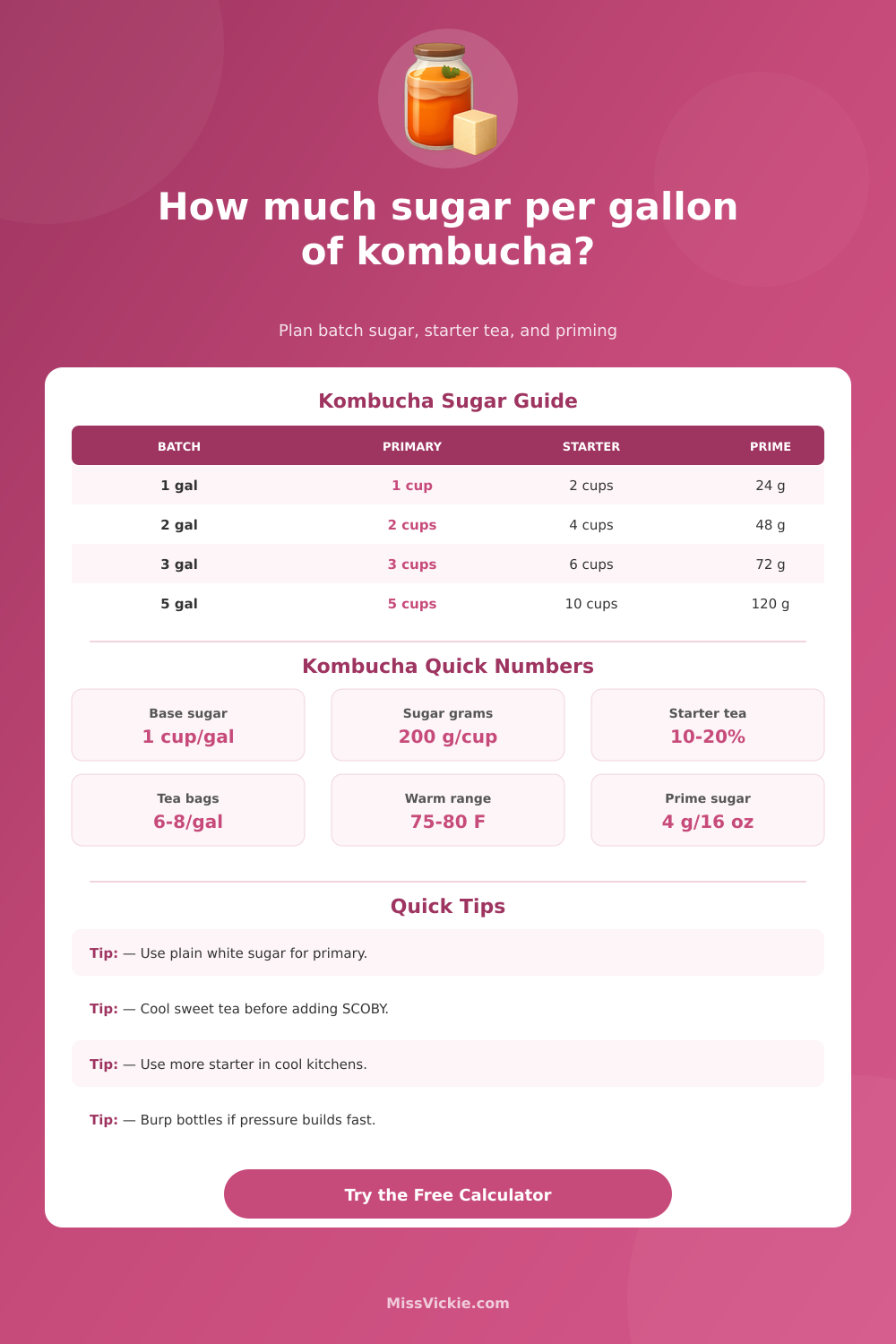
| 1 gallon home batch | 1 cup | 200 g | 1.6 to 3.2 cups | 6 to 8 bags |
| 2 gallon brew jar | 2 cups | 400 g | 3.2 to 6.4 cups | 12 to 16 bags |
| 3 gallon large crock | 3 cups | 600 g | 4.8 to 9.6 cups | 18 to 24 bags |
| 5 gallon party batch | 5 cups | 1000 g | 8 to 16 cups | 30 to 40 bags |
These are planning ranges for plain white sugar and brewed tea. Always add starter tea and SCOBY only after the sweet tea is cooled.
| Blend Style | Black Tea | Green Tea | Flavor Direction | Sugar Note |
|---|---|---|---|---|
| Classic kombucha | 70% | 30% | Full body, familiar tang | Use standard sugar |
| Bright green blend | 30% | 70% | Lighter body, grassy finish | Keep starter strong |
| Bold black tea | 100% | 0% | Malty, robust, tart | Good for longer ferment |
| Balanced split | 50% | 50% | Clean acidity, medium body | Standard range works |
| Continuous brew | 60% | 40% | Stable and rounded | Sugar the top-off only |
| Bottle Size | Low Fizz | Medium Fizz | High Fizz | With Fruit |
|---|---|---|---|---|
| 8 fl oz bottle | 1 g | 2 g | 3 g | 1 g |
| 12 fl oz bottle | 1.5 g | 3 g | 4.5 g | 1.5 g |
| 16 fl oz bottle | 2 g | 4 g | 6 g | 2 g |
| 24 fl oz bottle | 3 g | 6 g | 9 g | 3 g |
| 32 fl oz growler | 4 g | 8 g | 12 g | 4 g |
| Room Temperature | Ferment Pace | Starter Ratio | Taste Window | Adjustment |
|---|---|---|---|---|
| 64 to 68 F | Slow | 18 to 25% | 12 to 18 days | Use stronger starter |
| 69 to 74 F | Moderate | 15 to 20% | 9 to 14 days | Balanced planning |
| 75 to 80 F | Active | 10 to 18% | 7 to 10 days | Taste earlier |
| 81 to 84 F | Fast | 10 to 15% | 5 to 8 days | Watch acidity |
| 85 F and above | Very fast | 10 to 15% | 3 to 6 days | Cool the jar |
For longer, tarter batches where the culture has more time to consume sugar.
The standard home-brew baseline for one gallon of kombucha sweet tea.
Useful for gentler acidity or slightly cooler rooms with steady starter.
Best for short ferments that will be tasted and bottled earlier.
The amount of sugar in the first batch of brewed kombucha can be confusing. On one hand, you crave a healthy dose of probiotics. On the other, you don’t wish your kombucha to resemble soda. Before pouring in cups of white sugar into your jar of tea, who wouldn’t hold back? Less sugar must equal less sweet, right? A healthier concoction!
The problem is that this make no sense when you’re dealing with fermentation biology. Kombucha is not sweetened by adding sugar; it’s fueled by sugar. To make the booze, along with acids and carbon dioxide, the SCOBY (a symbiotic culture of bacteria and yeast) feeds on sugar. If you starve the culture, it will stall. If you overload it without adjusting the time or temp, you will turn your non-alcoholic drink into vinegar.
Why Kombucha Needs Sugar
You don’t want less sugar, you want to adjust the fuel supply so it matches the size of the culture and condition of the room. When you get this right, a sloppy science project becomes a dependable habit.
So how does it work? The math has been done for you by the calculator here on this page. That way you can put numbers into variables that affect how sweet (or not) you want your cider. More importantly, when brewing kombucha, there is other factors at play beyond volume. For instance, a gallon batch in the coolness of your basement will act different than one in the heat of your attic. There are also things like SCOBY strength to factor in, as well as how much or little sweetener you wish to use. All of these factors make the tool a way to eliminate guesswork and establish a baseline. Rather than pulling something out of thin air, you can begin with a calculated value.
You should also consider temperature. The warmer the room, the quicker the ferment. A culture working in an eighty-degree room chews through that sugar like it’s nobody’s business. It’ll do so even faster if you don’t adjust your recipe. Use the same volume of sugar as you would in a cooler (say, a sixty-five-degree) room. And there you have it! You’ve got vinegar by day seven.
Slow things down with cool temps, your batch will be sweeter, tangier, and retain those flavors longer. Similarly, starter tea regulate things. Not only does it preserve the culture, but it also affects how fast acidity level increases. If you want lower pH levels (more hostile to molds but good for your desired SCOBY), then use more starter tea. There’s a ratio calculator that will help you determine what size ratio of starter tea to water to shoot for in your kitchen. For example, if you’re keeping your brew room cooler, use a higher starter percentage so the bacteria gets a jumpstart and doesn’t stagnate.
This is the second ferment. Bottle priming has become an afterthought for so many brewers, they simply throw some sugar haphazardly into their swing-top bottles. The result? The carbonation is inconsistent. You’ve got some bottles that are fizzes and others that build up dangerous levels of pressure.
Primary sugar is different than priming sugar. The first is used for just one thing: To feed yeast in a closed environment with bubbles as the result. That’s where this tool comes in. It makes the math easy, it tells you exactly how much sugar (in grams) to add per bottle size based on how fizzy you want ’em to be.
While the type of tea does make some difference (more on that later), the blend matters less than most think. A stronger black tea gives the SCOBY plenty of tannin which helps build its structure. A lighter, greener blend will ferment quicker with a lighter body. You can mix and match until you get the right feel in the end. The calculator includes this in its calculations, allowing you to adjust for heavier blends of black or lighter blends of green at the start.
If you’d rather estimate by hand than use a scale, check out the reference table on the page which lists typical values so you can get an idea without measuring. For most home brews, the default would be about 200 grams (or approximately one cup) of sugar per gallon. That way you don’t have to worry about inaccurate measurements caused by loose vs. This is caused by packed sugar or the size of your measuring cups.
White granulated sugar is ideal. It’s all sucrose with no colors or minerals that might mess up fermentation or leave a mark on your SCOBY. It’s also very consistent, so you know what you’re getting every time.
In the end it’s all about rhythms, not precision. Of making kombucha. Find your own pace, one that fits your kitchen climate and your taste buds. Use the numbers as a kind of map; let your palate (and nose) be your compass. Take the calculated baseline as a starting place, then dive in and taste it early on, adjusting a bit from there.
When you realize that sugar isn’t simply sweetening what comes out the other end, but fueling the process itself, the nervousness dissipates. It dissapears, along with the sugar bowl. You should of welcomed the world of enjoying the brew.