Steak marinade coverage, balance, and timing
Marinade Per Pound Of Steak Calculator
Calculate steak marinade by weight, cut thickness, surface area, bag or pan coverage, acid percentage, oil, salt, sugar, tenderizing time, sear plan, and sauce reserve.
Pick a real steak scenario, then adjust the cut, pounds, thickness, coverage method, acid level, salt balance, and reserve sauce.
Your Steak Marinade Plan
Balanced marinade sized for steak weight, thickness, surface area, and method.
Full Breakdown
Needs about 20 percent less liquid because marinade hugs the steak when air is pressed out.
Needs extra liquid or frequent turning so the top surface does not dry out.
Good for even coating with a smaller batch, but keep tenderizing time conservative.
Best for tender cuts where surface flavor matters more than deep tenderizing.
| Cut | Base marinade | Acid range | Usual time | Best method |
|---|---|---|---|---|
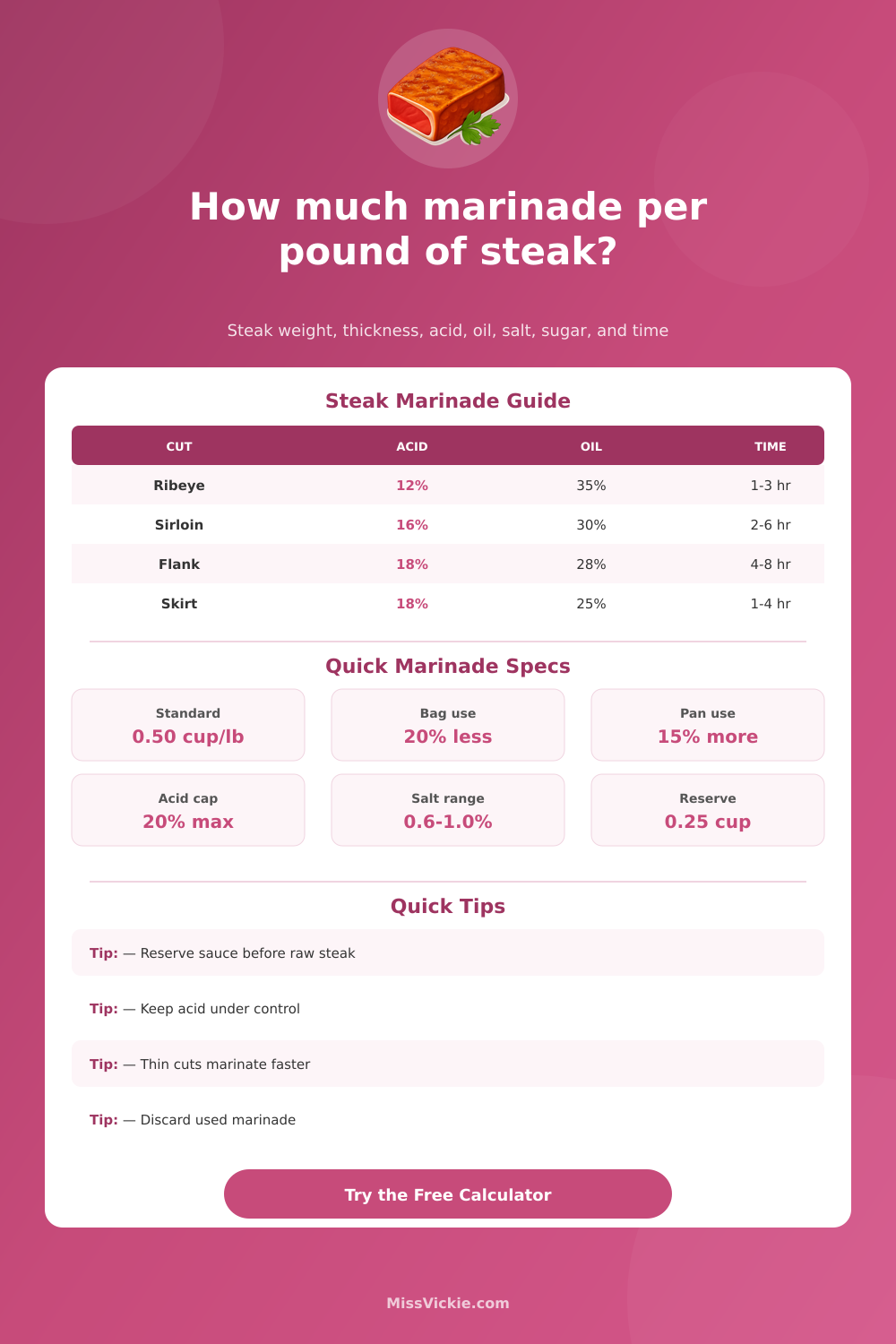
| Ribeye | 0.35 to 0.45 cup per lb | 8 to 14 percent | 1 to 3 hr | Brush or bag |
| NY strip | 0.35 to 0.50 cup per lb | 10 to 15 percent | 1 to 4 hr | Bag |
| Sirloin | 0.45 to 0.60 cup per lb | 12 to 18 percent | 2 to 6 hr | Bag or pan |
| Flank steak | 0.55 to 0.75 cup per lb | 14 to 20 percent | 4 to 8 hr | Bag |
| Skirt steak | 0.55 to 0.80 cup per lb | 14 to 20 percent | 1 to 4 hr | Bag |
| Tri tip | 0.40 to 0.55 cup per lb | 10 to 16 percent | 4 to 12 hr | Pan or bag |
| Filet mignon | 0.25 to 0.40 cup per lb | 6 to 12 percent | 0.5 to 2 hr | Brush |
| Chuck steak | 0.60 to 0.85 cup per lb | 12 to 18 percent | 6 to 24 hr | Bag |
| Coverage target | Liquid cue | Use when | Turning plan | Reserve sauce |
|---|---|---|---|---|
| Light coating | Thin shiny coat | Tender steaks | Turn once | Reserve 2 to 4 tbsp |
| Standard coverage | Coats all sides | Most grilling | Turn once or twice | Reserve 0.25 cup |
| Generous coverage | Extra pooling | Uneven pieces | Turn every few hr | Reserve 0.25 to 0.5 cup |
| Near-submerged pan | Half height or more | Shallow dish prep | Turn often | Reserve separately |
| Ingredient balance | Lean steak | Rich steak | Thin steak | Watch point |
|---|---|---|---|---|
| Acid | 12 to 18 percent | 8 to 14 percent | 10 to 18 percent | Too much softens edges |
| Oil | 25 to 35 percent | 20 to 30 percent | 20 to 28 percent | Blot before searing |
| Salt | 0.8 to 1.0 percent | 0.6 to 0.8 percent | 0.6 to 0.9 percent | Count soy sauce salt |
| Sugar | 0.3 to 0.8 percent | 0.2 to 0.5 percent | 0 to 0.5 percent | High heat can scorch |
| Finish plan | Before cooking | Sear note | Sauce rule | Best reserve |
|---|---|---|---|---|
| Hot grill | Drain and blot | Oil grates lightly | Discard used marinade | Brush near end |
| Cast iron | Blot very dry | Use high smoke oil | Boil if reusing | Pan sauce after sear |
| Broiler | Use shallow rack | Watch sugar closely | No raw drizzle | Serve on side |
| Skewers | Drain pieces well | Turn often | Reserve clean glaze | Brush last minutes |
Marinade… You dump leftovers into your marinating meat as a way of soaking in flavor, treating them like a black box. But it doesn’t work. Marinades is essentially surface treatments. Oil carries around aromatics. Acid helps break down surface fibers. That’s all nice but only if they can penetrates enough.
On thicker steaks, such as ribeye, it never happens. All you’ll get is a soggy outside. Or there will be nothing inside so it won’t even cook.
Why Marinades Do Not Work Deep Inside Meat
Enter the cut thickness & weight below and let calculator crunch the numbers. No more guesswork about how much coating is enough. Many people forget about surface area vs volume.
Think of thin skirt steak compared to a thick tri-tip: The acid doesn’t have anywhere to hide on that skinny piece of protein, so it needs far less time in marinade than a thicker cut. Leave a thin-cut in an acidic bath for too long and the outer layer of proteins will cook themselves into something closer to cooked tuna then beef. That is why this tool asks for thickness first; it adjust its suggested timeframe to avoid harming texture.
With thicker cuts, you can get away with more acid and longer periods of time (because there’s a lot more heavy meat there to absorbs the harsher flavors). Oil and acid: They’re not just ingredients… They’re also tools. Acid will tenderize surface of the meat by breaking down its proteins, but it will also change how those proteins reacts to heat.
If there’s too much acid, steak’s surface won’t have enough dryness to support Maillard reaction sear. Oil is a carrier for the spices, herbs, and garlic. Without it, those flavors would simply slide right off the steak. The right ratio keeps coating intact without setting grill on fire.
With help of the calculator, you can visualize that ratio through percentages (of acid vs. Oil). That way you don’t end up drowning your steak in vinegar, or floating it in a pool of olive oil.
Perhaps the most overlooked ingredient here is salt. Salt isn’t just a seasoning used after eating. In a marinade, it behaves similaraly to a brine and actually gets into meat itself. This helps keep things moist while it’s cooking and enhances the flavor from inside out.
But there is hidden salt already present in Worcestershire sauce, soy sauce, and even some tomato products. Without taking this into consideration, it’s easy to end up with an inedible piece of beef. The tool calculates total salt content (by weight). This lets you adjust for salty ingredients to ensure your food is perfectly seasoned without being overpowering.
But again: timing is the key part of any marinade approach. There’s a sweet spot where it adds flavor without compromising texture, beyond there, you’re into diminishing returns (and possibly even structure compromise). That’s what the table on the page spells out.
Different cuts react differently to acids. Ribeyes’ marbling allow them to absorb flavor for brief periods, while tougher flank steaks requires longer to tenderize. However, keep a sharp eye on those flank steaks so they don’t get overdone.
There’s no compromise here: safety is paramount. Bacteria in raw meat juice aren’t eliminated by a quick dip into the marinade. Set aside some fresh marinade before placing your steaks inside which you can then use as a basting liquid or a finishing glaze. Unless you’re boiling the marinade first for several minutes, you should of not double-dip with any marinade that came into contact with raw beef; doing so ensures health of your dinner companions, but also lets you reap the rewards of all your flavor-crafting labor.
Marinades are, at heart, an exercise in control. They’re not a free-for-all; it’s not dump-in-a-bag-and-cross-your-fingers time. Marinades is about understanding salt as a seasoning, oil as a carrier, and acid as a tenderizer. By sizing up your batches with the help of the calculator, you begin to create flavor rather than waste ingredients.
And what comes out is a juicy, properly seared steak that tastes like something worth all this effort. No need for more sauce. Just better sauce.