Salsa Per Person Calculator
Estimate salsa for chips, tacos, nachos, burrito bowls, and party bars using guest count, salsa style, tomato yield, heat level, texture, jar size, party length, refill buffer, cilantro, and onion.
🌶Salsa presets
Pick the closest situation, then fine tune the guest count, use, salsa style, texture, jar size, add-ins, and refill plan.
📝Salsa planning inputs
Salsa plan
The result includes finished salsa, per-person portions, jar count, tomato yield, add-ins, refill buffer, and bowl fill.
Full salsa breakdown
🥣Serving size quick cards
🍅Salsa style comparison
Blended red salsa serves easily with chips and stretches farther than chunky fresh salsa.
Chunky tomato, onion, cilantro, and lime. Plan more volume because guests scoop solids.
Tomatillos yield a bright sauce that works well for tacos, bowls, and enchilada bars.
More filling and thicker by the cup, useful when salsa doubles as a side salad.
📊Portion reference table
| Serving situation | Per person | Best texture | Planning note |
|---|---|---|---|
| Taco topping only | 2 tbsp to 3 tbsp | Medium or thin | Use smaller bowls so hot salsa stays controlled. |
| Chips before dinner | 1/4 cup to 1/3 cup | Restaurant or chunky | Add a refill buffer if chips are the main snack. |
| Game day dip table | 1/3 cup to 1/2 cup | Chunky or roasted | Long grazing makes refills more important. |
| Nachos or loaded fries | 1/4 cup | Thick drained | Watery salsa softens chips quickly. |
| Burrito bowl bar | 3 tbsp to 1/4 cup | Pico or verde | Offer a spoon and drain extra juice. |
| Potluck appetizer | 1/3 cup | Pico or roasted | Bring the last third chilled for later. |
🧺Tomato yield and add-in table
| Base ingredient | Approx yield | Typical drain | Good use |
|---|---|---|---|
| Roma tomatoes | 1.5 cups per lb | 8% to 12% | Pico, chunky salsa, roasted salsa. |
| Vine tomatoes | 1.25 cups per lb | 12% to 18% | Fresh salsa after seeding or draining. |
| Canned crushed tomatoes | 1.8 cups per lb | 3% to 6% | Restaurant-style blended salsa. |
| Fresh tomatillos | 1.35 cups per lb | 7% to 12% | Salsa verde and taco bars. |
| Cherry tomatoes | 1.45 cups per lb | 5% to 10% | Bright chunky salsa with less seeding. |
| Mango or pineapple | 1.6 cups per lb | 4% to 8% | Fruit salsa with tacos or grilled food. |
🫙Jar and container planning table
| Container | Holds | Portions at 1/3 cup | Best use |
|---|---|---|---|
| 8 oz half pint | 1 cup | 3 portions | Hot salsa, small refill, or tasting bowl. |
| 16 oz pint | 2 cups | 6 portions | Family taco night or small dip bowl. |
| 24 oz jar | 3 cups | 9 portions | Medium party refill container. |
| 32 oz quart | 4 cups | 12 portions | Potluck, taco bar, or game day table. |
| 64 oz tub | 8 cups | 24 portions | Large event backup kept chilled. |
🔥Heat, texture, and refill table
| Factor | Low | Typical | High |
|---|---|---|---|
| Refill buffer for quick meals | 0% | 10% | 15% |
| Refill buffer for long parties | 20% | 30% | 45% |
| Watery tomato drain loss | 8% | 14% | 22% |
| Chunky pico bowl headroom | 25% | 35% | 45% |
| Hot salsa portion reduction | 5% | 12% | 25% |
💡Two practical salsa tips
And then you decide to go all out and make your own salsa. It sounds easy enough, until you realize that homemade salsa doesn’t act like kind bought at the supermarket. It has more liquid, so it won’t be evenly distributed on a plate. When you serve a little bit onto each person’s plate, what seemed like a huge amount in the pot vanish in no time.
Most of us mess up here: we don’t distinguish between volume of food required for our kitchen versus how much will get eaten at a party. It all boils down to managing texture. Your homemade salsa lack the thickeners that commercial brands rely on for body. Fresh tomatoes also vary by season, since they’re mostly water, which means you’ll want to include that change in your plans, lest you end up with too little or a runny mess.
How Much Salsa to Make
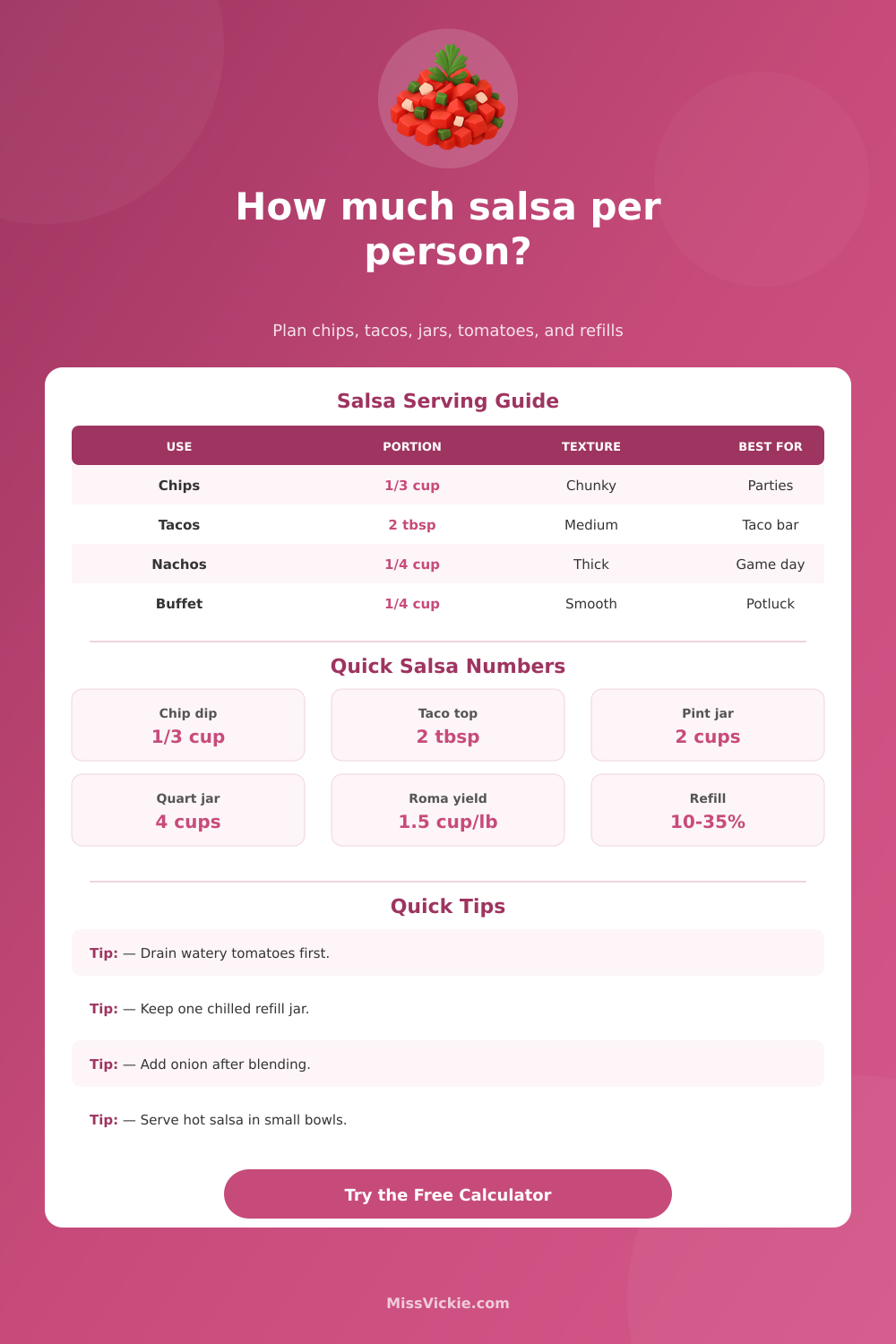
Guess how much people will eat. One-third of a cup per person should be safe for more casual uses (chips). However, if you think it will be used as a topping for tacos where it has to shares space with other items like cheese and meat, plan on roughly two tablespoons per person.
The math is different depending on what kind of tomato you use as a base. For example, roma tomatoes (which are typically used) contain more meaty flesh with less seeds, meaning they’ll yield about one and a half cups of usable product per pound of tomatoes. The resulting romas will be chunkier then those made with juicy vine-ripened ones. Vine-ripened tomatoes is messier but also more flavorful. If you prefer a thicker dip, be prepared to strain it for a minute first. Crushed tomatoes out of the can are consistent but won’t have that zing of brightness that fresh tomatoes do. Depending on what you choose, you’ll know if you are measuring out final product or weighing raw ingredients.
There’s even a calculator tool where you can pick your ingredient and let the thing do the work for you; no more guesswork, will this five-pound bag of tomatoes feed me ten people? Or twenty?
In a subtle but real sense, the hotter the sauce, the smaller the serving size: A hot (especially habanero- or serrano-based) salsa will be served in small amounts. Diners will take light dips and then wait for heat to hit them. The resulting naturaly pacing means your salsa lasts longer. In other words, with a very spicy batch, you may be able to feed as many folks with less volume than if you had served a milder batch. It’s a small behavioral variable, but one that makes a difference when you’re trying to save money or stretch your leftovers.
The amount of additional buffer you hold depends on the length of your party. If it’s a quick dinner under an hour, you need little reserve. If it is a casual afternoon snack, plan it differently based off how long it lasts. When guests talk, they do not notice the mindless dipping that leads them to scoop an extra amount.
Add a refill percentage onto your total. For a normal evening party, ten to fifteen percent will keep the bowl seeming full, whereas for a long event, you may want thirty percent more to hide emptiness. Whether or not you run out of anything, empty bowls makes for a lousy party look.
Common additions include cilantro, which is typically viewed as garnish, but adds lots of bulk. A cup of diced white onion will bump the finished product up noticeably, transforming a silky dip into chunkier one that fills more space in a serving dish. That’s good news for any host anxious about running out of food; the chunky version still looks like plenty, even if there may not be much there. The key: chill the salsa (to keep it crunchy) until just before serving. Bacteria grow on all those topping, and freshness doesn’t last long outside the fridge.
Organizing your time is the trick that turns haphazard hosting into laid-back entertaining. With a little planning, you don’t end up with too much sauce or no tomatoes… Or no place for either if they’re not canned in time. You should of planned ahead. It’s all about knowing what will fit on your plate (or platters), what’s inside it (your ingredients), and how long it takes (the clock). Get those three things right and the rest take care of itself.