Burger salt, spice ratios, patties, and sodium
Burger Seasoning Per Pound Calculator
Calculate burger seasoning by beef weight, patty count, patty size, fat percentage, cook style, mix-in or surface seasoning, rest time, and sodium target.
Choose a real burger scenario, then adjust salt percentage, pepper, garlic, onion, patty size, application style, rest time, and sodium limit.
Your Burger Seasoning Plan
Seasoning plan updates as you calculate.
Full Breakdown
Season the exposed surface as the ball hits the hot griddle.
Surface seasoning gives a clear crust and avoids overworked texture.
Slightly lower salt percent keeps a thick patty balanced.
Small patties need even seasoning and a light hand.
| Burger Style | Patty Size | Salt Range | Pepper Range | Best Timing |
|---|---|---|---|---|
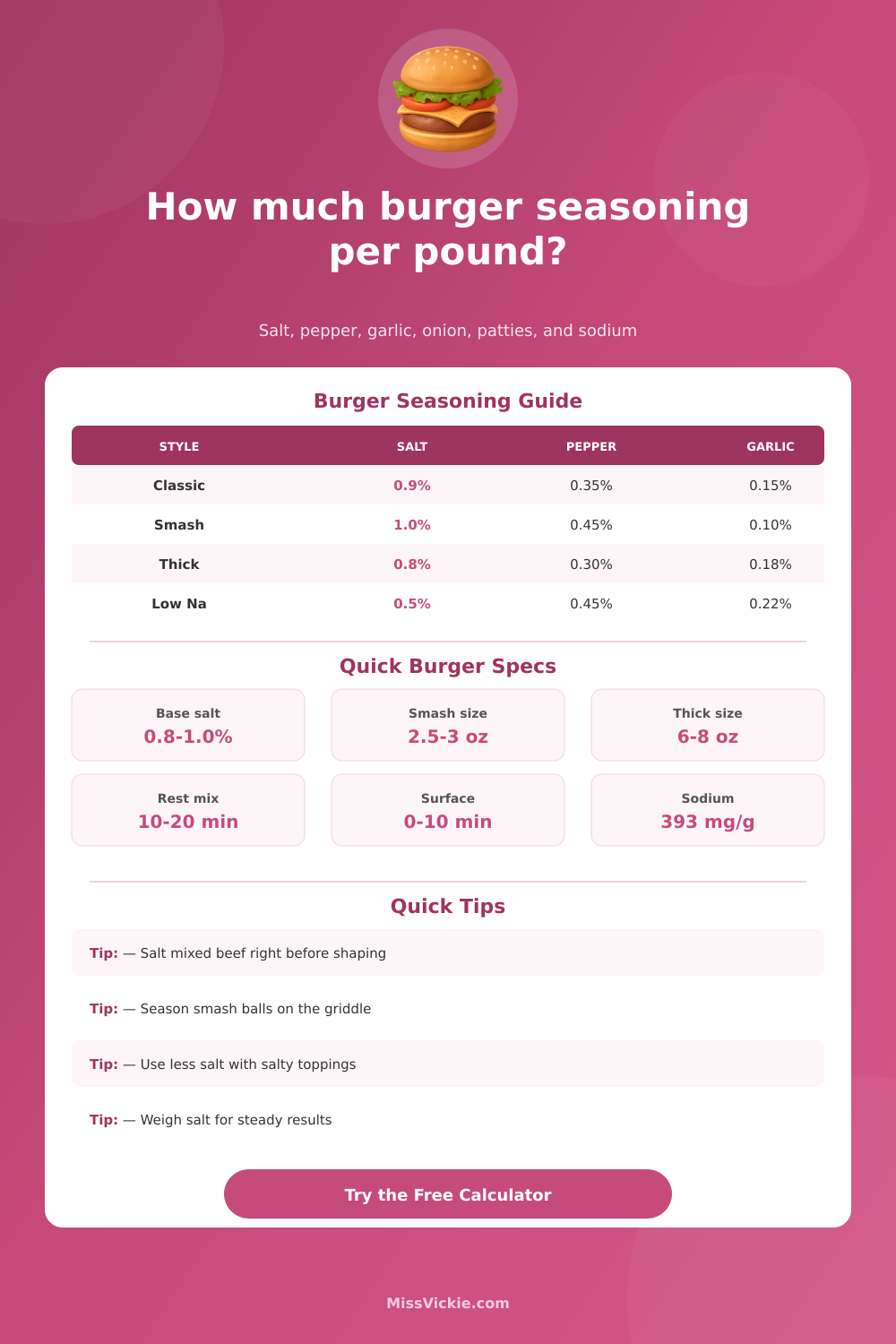
| Smash burger | 2.5 to 3 oz | 0.9% to 1.0% | 0.35% to 0.50% | Surface season right before smash |
| Classic burger | 4 to 5 oz | 0.8% to 0.95% | 0.25% to 0.40% | Season surface 0 to 10 min ahead |
| Thick pub burger | 6 to 8 oz | 0.7% to 0.85% | 0.25% to 0.35% | Season surface just before cooking |
| Lean burger | 4 to 6 oz | 0.65% to 0.85% | 0.30% to 0.45% | Mix gently, cook soon |
| Meat Weight | 0.7% Salt | 0.9% Salt | 1.0% Salt | Typical Patties |
|---|---|---|---|---|
| 1 lb / 454 g | 3.2 g | 4.1 g | 4.5 g | 4 quarter-pound patties |
| 1.5 lb / 680 g | 4.8 g | 6.1 g | 6.8 g | 6 classic patties |
| 2 lb / 907 g | 6.3 g | 8.2 g | 9.1 g | 8 classic patties |
| 3 lb / 1361 g | 9.5 g | 12.2 g | 13.6 g | 12 classic patties |
| Salt Type | Approx G Per Tsp | Best Use | Spoon Caution |
|---|---|---|---|
| Fine table salt | 6.0 g | Precise small batches | Dense, easy to overdo |
| Fine sea salt | 5.7 g | Clean everyday seasoning | Still close to table salt |
| Morton kosher | 4.8 g | Surface seasoning | Measure differs from Diamond |
| Diamond kosher | 2.8 g | Pinch seasoning | Needs more volume for same grams |
| Application | Texture Effect | Rest Window | When To Use |
|---|---|---|---|
| Surface only | Loose, beefy bite | 0 to 10 min | Smash, grill, pub burgers |
| Mixed in | More bound texture | 0 to 20 min | Meatloaf-style burgers or lean mixes |
| Half and half | Seasoned center and crust | 5 to 15 min | Thicker patties with mild toppings |
| Low sodium | Less salty bite | 0 to 10 min | Cheese, pickles, bacon, salty buns |
When your grilled burger tastes like boiled beef, it’s not likely due to bad meat (it’s probably due to bad math). Seasoning is chemistry, not art. To improve the flavor, salt needs to be dissolved in meat structure… but if too much moisture gets drawn out before the crust seals, it’ll make your burger dry instead. Balancing flavor and moisture are a delicate process.
While a dash or pinch might suffice for one hamburger, when cooking for a crowd or trying to nail a specific sodium value, it won’t cut it. The calculator take the guesswork out of this process. It converts style, fat content and weight into exact grams of each ingredient. Leave calculations up to it while you concentrate on the heat.
Why You Should Measure Your Burger Salt by Weight
But there’s another variable that will cause trouble, which is the salt percent by weight (vs. The weight of the meat). Because thin smash burgers expose a bigger surface area to atmosphere, they’ll lose moisture quicker, which can be countered by a larger amount of surface salt before toughness becomes an issue. On the other hand, a thicker pub patty need a deeper depth of cut, or the surface salting will make it hyper-salty around the edges but tasteless inside. By selecting your style, the tool sets ratio accordingly, so that interior makeup is compatible with how it will cook on the exterior.
A little shift in percentage go a long way to changing the end-bite. A big part of how well it seasons comes down to fat content. Since lean ground beef is already dry, aggressive salting pulls out moisture, resulting in a hard puck. Ground beef blends that are richer, with 20 percent fat or higher, can handle heavier seasonings. This is because fat not only carry flavors but also serves as a buffer. Depending on your fat content, this is what the calculator adjusts for.
To maintain the texture of burger, you have to go easy on the salt if you’re going with an especially lean blend such as extra-lean beef or turkey. Too many healthy burgers taste like cardboard because people ignore fat content. There’s another timing consideration: how the salt interacts with the meat. For many sausage varieties where you want a dense texture, this means mixing an hour or more beforehand.
Since burgers needs to be tender and loose, you don’t want to mix in the salt too soon; otherwise, the myosin gets extracted and you end up with a rubbery burger disc. On traditional grilling, it’s safer to just season the outside, as it will add flavor without tightening the grind. But when it comes to smash burgers, there’s no opportunity for surface salt to get deep into patty before the crust forms on contact with hot metal. Mix lightly, or perhaps just season top immediately before smashing. Your application choice determines how much seasoning goes where, the calculator displays amounts to match.
Many cooks overlook another layer: sodium. Table salt has approximately three hundred and ninety-three milligrams of sodium per gram. This adds up when young diners complain about overly-salty burgers, or when you or someone you care about is monitoring blood pressure. The tool estimates the sodium contribution from meat alone, excluding the bun, cheese, and sauces. A burger may be only moderately seasoned, yet push you past your daily limit without considering the added sodium hiding in pickle juice and processed cheeses. By knowing exactly how much salt is in patty, you’ll know how to top your burger off appropriately.
Commonly overlooked additions like garlic and onion powders differ from fresh aromatics because they don’t add any water and spread out evenly, which is ideal when making several patties. Garlic powder in particular has a tendency to get bitter and burn fast at high temperatures. To preserve the star of this dish, beef, the recipe calculator keep these proportions in moderation.
Intentional = Great Burger: Want great burgers? Get intentional about it. There’s no reason to wear a lab coat; getting this part right doesn’t require one. Don’t measure by volume (e.g. Teaspoons), that stuff fluctuates! Salt grains vary in size so a teaspoon of salt will be wildly inaccurate from batch to batch. Table salt is heavy & dense where kosher salt is light & flaky. The same spoonful of each gives very different results. Grams eliminate that variable.
Stress dissolves when you stop guessing and start measuring. Understand how your own kitchen works and you’ll have consistent flavor every time. Getting the right amount of salt isn’t magic. It’s just math that tastes good. You should of used a scale to be sure.