Broth Per Cup of Rice Calculator
Calculate broth per cup of rice by dry rice cups, variety, rinsed or unrinsed grains, cooking method, broth sodium, add-ins, desired texture, evaporation, rest time, and cooked yield.
Choose a rice setup, then adjust the cups, variety, rinse, pot method, sodium level, add-ins, texture, evaporation, and rest time.
Your Rice Broth Plan
Calculated broth amount and cooked yield will appear here.
Broth Ratio Breakdown
Batch And Yield Breakdown
| Rice variety | Base broth per cup rice | Cooked yield per cup dry | Broth note |
|---|---|---|---|
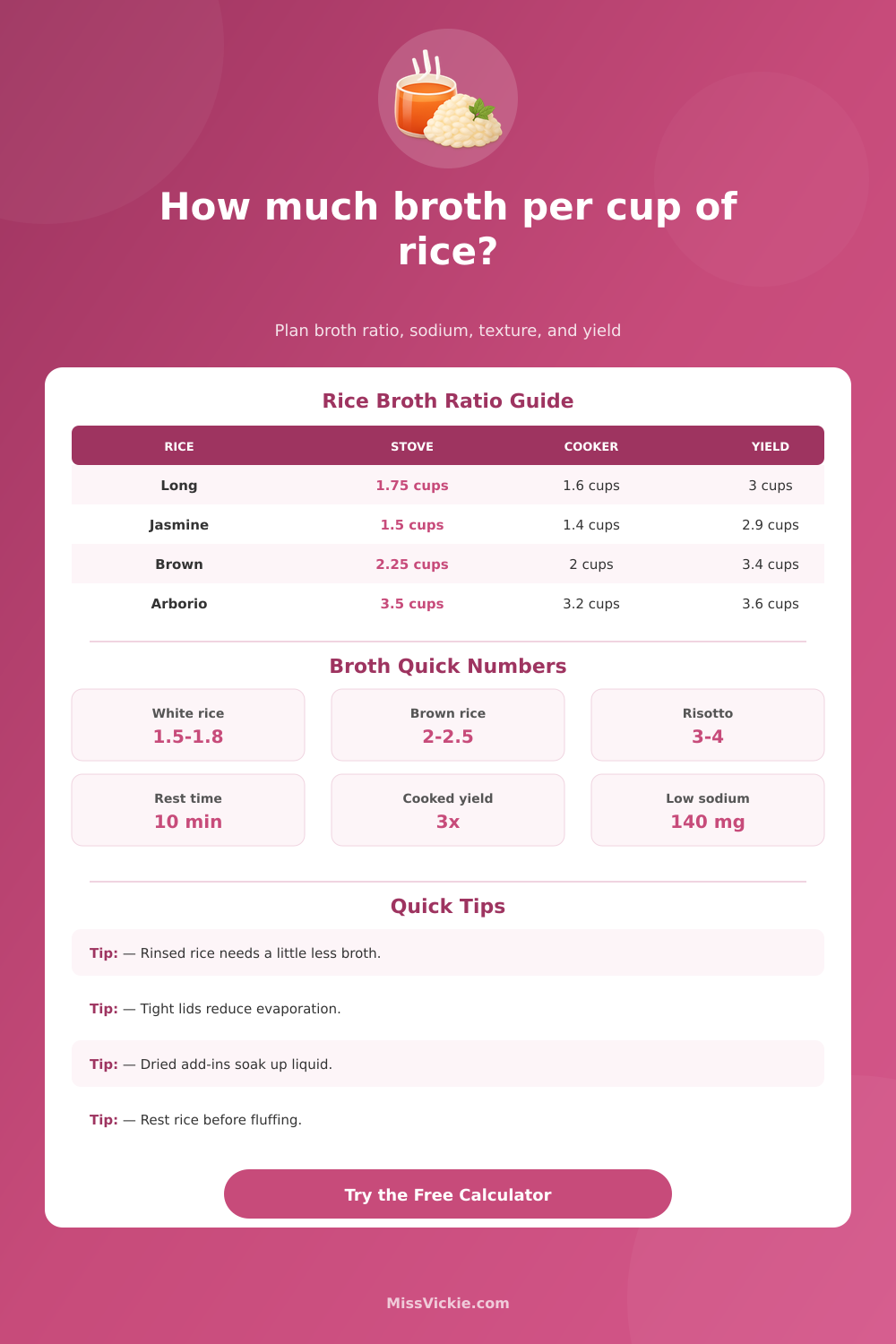
| Long-grain white | 1.75 cups | 3 cups | Classic fluffy absorption rice with chicken or vegetable broth. |
| Jasmine | 1.5 cups | 2.9 cups | Soft aromatic grain; too much broth can make it heavy. |
| Basmati | 1.5 cups | 3 cups | Rinsing and soaking help separate grains with less broth. |
| Medium-grain white | 1.6 cups | 2.8 cups | Moderate starch, useful for tender table rice. |
| Short-grain or sushi | 1.25 cups | 2.5 cups | Absorbs less liquid and stays clingy after resting. |
| Parboiled | 2 cups | 3.2 cups | Firm grains handle a little more liquid and longer simmering. |
| Brown rice | 2.25 cups | 3.4 cups | Bran layer needs more broth and time to soften. |
| Wild rice blend | 3 cups | 3.5 cups | Wild rice varies widely; keep extra hot broth nearby. |
| Arborio or risotto | 3.5 cups | 3.6 cups | Gradual broth addition creates a creamy, loose texture. |
These are practical kitchen starting ratios. Brand, age of rice, pan width, altitude, and burner behavior can shift the final broth amount.
| Cooking choice | Ratio effect | Yield effect | Best use |
|---|---|---|---|
| Covered stovetop absorption | Base ratio | Standard yield | Everyday rice cooked in a saucepan. |
| Rice cooker | Subtract about 0.1 cup | Even yield | Reliable batches with less steam loss. |
| Pressure cooker | Use lower ratios | Compact yield | Sealed cooking with very low evaporation. |
| Covered oven dish | Add about 0.15 cup | Slightly larger yield | Large trays and hands-off sides. |
| Toasted pilaf | Add about 0.1 cup | Separated grains | Rice browned in fat before broth. |
| Risotto-style gradual broth | Use 3 to 4 cups | Creamy yield | Arborio, Carnaroli, and loose rice dishes. |
| Firm texture | Subtract 0.1 cup | Lower yield | Separate grains for bowls and fried rice. |
| Soft texture | Add 0.15 cup | Higher yield | Tender rice for family dinners. |
| Brothy texture | Add 0.5 cup | Loose yield | Soupy rice, congee-adjacent bowls, or saucy sides. |
Typical sodium estimate per cup before adding table salt.
Good default when rice cooks down and flavors concentrate.
Can season rice fully, so taste before adding more salt.
Concentrated bases vary; use the package label when possible.
| Dry rice cups | Long-grain broth | Brown rice broth | Estimated cooked yield |
|---|---|---|---|
| 1 cup | 1.75 cups | 2.25 cups | About 3 cups white or 3.4 cups brown |
| 2 cups | 3.5 cups | 4.5 cups | About 6 cups white or 6.8 cups brown |
| 3 cups | 5.25 cups | 6.75 cups | About 9 cups white or 10.2 cups brown |
| 4 cups | 7 cups | 9 cups | About 12 cups white or 13.6 cups brown |
| 6 cups | 10.5 cups | 13.5 cups | About 18 cups white or 20.4 cups brown |
| 10 cups | 17.5 cups | 22.5 cups | About 30 cups white or 34 cups brown |
Most rice recipes is basically a science project with very vague instructions that do not consider your kitchen conditions. “Use 2 cups of water per cup of rice,” the package tells you; but what happens when they’re both older than you are? How much did you rinse off and/or toast in fat? Does your lid fit tightly or does steam escape from all sides? Broth instead of plain water makes cooking even more of a journey, as now not only does volume matter but also amount of sodium. A pot of low-sodium stock require treatment differently than a same-volume pot of high-sodium bouillon. The Rice Cooker Calculator takes all those factors into consideration (and adjusts) so that you do not end up with mushy rice or dry, crunchy, stuck-on-bottom grains.
So how do you start with whatever kind of rice? The answer is all about the ratio of liquid to dry grains. Brown rice (the kind that’s still got the fibrous outer layer called bran) need extra moisture. Long-grain white or basmati rice absorb less. Risotto rice (such as arborio) are an exception. It isn’t meant to absorb all the liquid at once; instead, you add a little gradually so all its starchy goodness can be released. This requires a very high ratio, such as three to four times as much broth by volume per cup of rice. And if your rice variety tend to get mushy easily (such as softer varieties like jasmine), you don’t want to go overboard since that will just weigh it down.
How to Cook Perfect Rice Every Time
The chart on the page shows that it all depends on what kind of rice you use; this is a starting point, but you should of also keep other things in mind. The math changes when you get into prep habits. To avoid clumps, some people rinse their rice, eliminating any excess surface starch. But doing so also makes grains just ever-so-slightly moist before they hit the heat. Rinse it well and make sure to drain it thoroughy. You may need a bit less of your base ratio’s broth. Letting your rice soak for 20 minutes shortens the cooking time, since the water is already inside the grain structure. Adjust amount of additional liquid accordingly. Most recipes skip this step altogether, assuming that a dry scoop straight out of the bag is equivalent to a soaked and drained mound. The result: inconsistant outcomes each and every time you cook.
But what about which pot to use? Because rice cookers seal well and hold onto most of their moisture, they often let you use slightly less liquid different than stovetop techniques. Lidded pans that don’t fit the rice snugly let too much steam out so account for some evaporation by adding more broth or water as a buffer. And then there’s the pressure cooker, which loses very little liquid at all (so it drops way down from this scale). For slightly firmer grains (that’ll also work as fried rice during the rest of the week), shoot for the bottom of suggested range here; for softer, comfort-food sides to accompany a family meal, err on the upper side to make each kernel melt in your mouth.
An extra factor is add-ins. Legumes and dried mushrooms (which are essentially sponges) soak up broth that would have gone toward hydrating rice. Fresh veggies give off their own liquid, too. Since it’s difficult to predict exactly how much liquid will be released, seasoned chefs often prepare a little extra hot broth on the side when they’re making an intricate risotto or pilaf. You never want your pan to look dry with ten minutes left at which point you’ll need to add more, but once the liquid is absorbed, there’s no taking it back. Adjusting for these variables ensures the finished product won’t be bland or suddenly dry out halfway through plating.
Rice cooking is another example where people forget about sodium. Regular broth (which can have almost eight-hundred milligrams of sodium per cup) make really salty rice when it reduces down and concentrates that flavor. Starting with lower-sodium versions gives you some control over the level of salt, so you only need to add additional seasoning after the dish is cooked. A lighter broth base also helps balance out any salty protein ingredients (like bacon or sausage), should you be adding them at the end of the process. The tool takes this into account, so you’ll get an idea of how salty your cooking medium will make final product without even having to light up the stove.
Perhaps the most under-rated move of all when making rice is to let it rest once it’s cooked. Letting the pot sit, covered on the counter for ten or fifteen minutes will allow the last of the steam to do its work steadily. What little moisture may be lingering will redistribute itself through the whole grain, avoiding sogginess at the bottom but also preventing overcooking at the top. Then fluff grains, but not until they have rested. This ensures they does not break as you tease them apart and helps them stay nice and textural.
Suddenly something good becomes something really special. Have the variables? Got the numbers? Now trust the process, and stop trying to micromanage the simmer.