Fruit Salad Per Person Calculator
Plan fruit salad for sides, dessert bowls, brunch buffets, kids cups, and potlucks using serving size, fruit mix density, trim loss, syrup, leftovers, bowl capacity, and chill loss.
🍉Fruit salad presets
Choose the closest serving situation, then adjust the guest count, fruit mix, trim, dressing, bowl size, and leftovers below.
📝Fruit salad inputs
Your fruit salad plan
The calculator sizes the finished servings first, then works backward through chill loss, dressing volume, fruit density, berry versus melon balance, trim loss, leftovers, and bowl headroom.
Fruit salad breakdown
📌Fast fruit salad rules of thumb
🍲Serving size reference
| Serving situation | Finished fruit salad per person | Best fruit mix | Planning note |
|---|---|---|---|
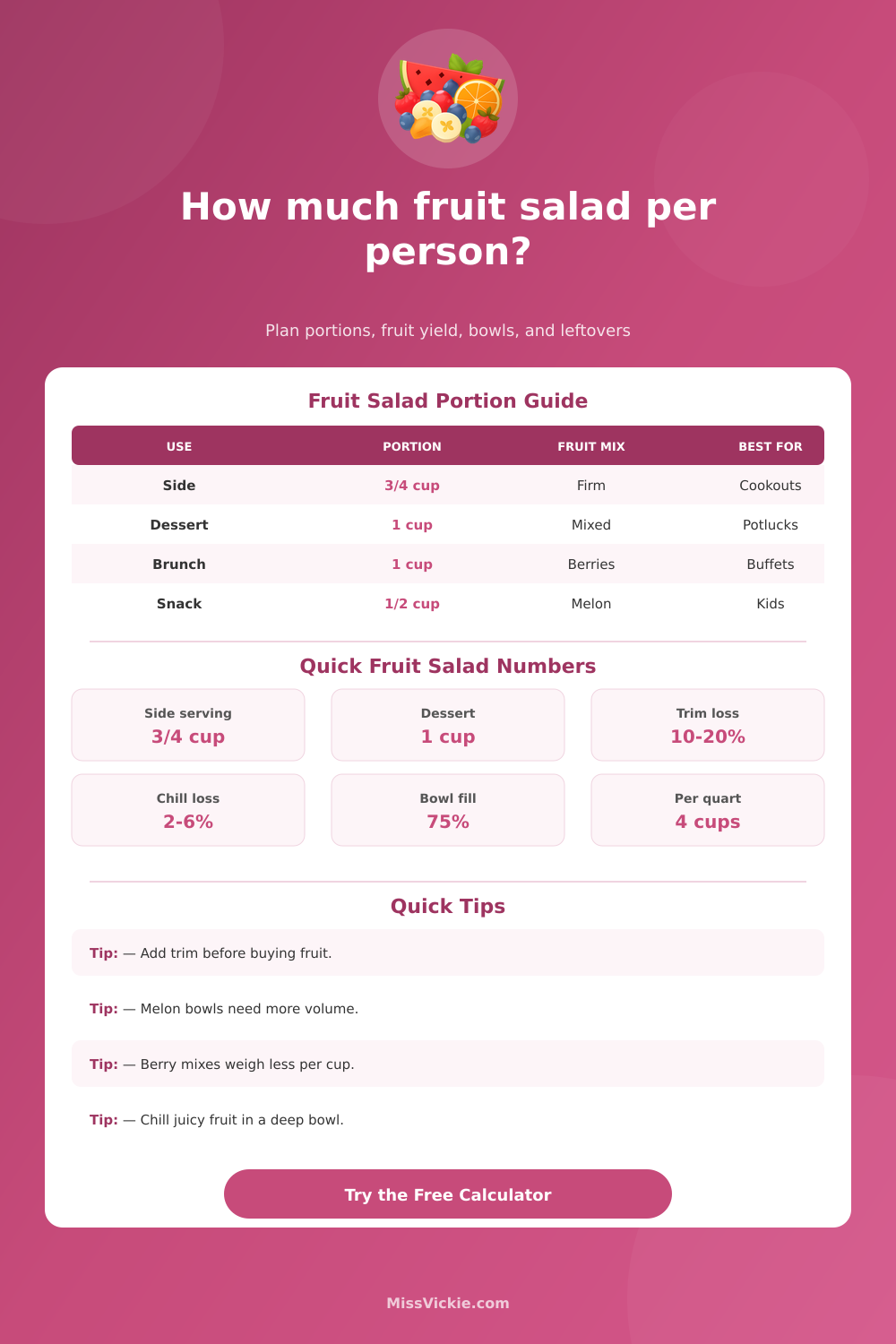
| Small snack cup | 1/2 cup | Melon, grapes, apples, berries | Works for kids, snack tables, or fruit alongside several other small bites. |
| Cookout plate side | 2/3 to 3/4 cup | Melon, grapes, pineapple, berries | Use when fruit is a fresh side next to grilled food, salads, and chips. |
| Classic side dish scoop | 3/4 cup | Balanced chopped fruit | A dependable portion for lunch spreads, family dinners, and casual parties. |
| Brunch fruit bowl | 3/4 to 1 cup | Berries, citrus, grapes, melon | Plan higher when fruit is one of the main light items on the table. |
| Dessert fruit bowl | 1 to 1 1/4 cups | Berries, tropical fruit, melon | Use when fruit salad replaces cake, pie, or another plated dessert. |
| Buffet with many dishes | 1/2 to 2/3 cup | Firm fruit that holds well | People sample smaller portions when the buffet has several salads and sides. |
| Meal prep fruit cups | 3/4 to 1 cup | Firm fruit and grapes | Avoid very soft fruit if cups must hold more than a day. |
⚖Fruit mix yield and density
| Fruit salad mix | Typical cup weight | Typical trim loss | Chill behavior |
|---|---|---|---|
| Balanced melon, berries, grapes, citrus | About 5.1 oz per cup | 12% to 16% | Moderate juice release after 2 to 4 hours. |
| Berry-heavy fruit salad | About 4.6 oz per cup | 5% to 10% | Light in the bowl but delicate; dress gently. |
| Melon-heavy fruit salad | About 5.6 oz per cup | 18% to 28% | Heavier, wetter, and more likely to leave juice in the bowl. |
| Tropical pineapple, mango, kiwi, banana | About 5.3 oz per cup | 14% to 22% | Juicy and aromatic; banana softens fastest. |
| Firm apple, grape, citrus, pear | About 4.9 oz per cup | 10% to 18% | Holds shape well for transport and meal prep. |
| Delicate berries, peach, kiwi, banana | About 4.7 oz per cup | 8% to 15% | Best assembled close to serving time. |
| Citrus, grapefruit, pineapple | About 5.4 oz per cup | 18% to 25% | Releases juice quickly; drain before serving if needed. |
A cup of berries often weighs less than a cup of diced melon because berries leave more air space. Melon is denser, wetter, and usually has more rind waste before it reaches the bowl.
The served bowl uses edible chopped fruit. The shopping weight needs extra for hulls, peels, cores, rinds, bruised pieces, and the small amount lost while tasting and tossing.
🧺Common group quantities
| Group size | Side serving, 3/4 cup | Dessert serving, 1 cup | Buffet serving, 1/2 cup | Typical bowl capacity |
|---|---|---|---|---|
| 4 people | 3 cups finished | 4 cups finished | 2 cups finished | 1.5 to 2 quarts |
| 6 people | 4 1/2 cups finished | 6 cups finished | 3 cups finished | 2 to 3 quarts |
| 12 people | 9 cups finished | 12 cups finished | 6 cups finished | 4 to 6 quarts |
| 25 people | 18 3/4 cups finished | 25 cups finished | 12 1/2 cups finished | 8 to 10 quarts |
| 50 people | 37 1/2 cups finished | 50 cups finished | 25 cups finished | 16 to 20 quarts |
🥣Bowl size and chill loss guide
| Planning factor | Low end | Typical | High end |
|---|---|---|---|
| Comfortable bowl fill | 65% | 75% | 85% |
| Quick chill loss | 1% | 2% | 3% |
| Overnight chill loss | 3% | 5% | 8% |
| Juicy melon or citrus drain | 3% | 6% | 10% |
| Dressed fruit headroom | 15% | 25% | 35% |
🍍Portion, density, and nutrition snapshot
Light, colorful, and delicate. Add dressing at the end to avoid crushing soft berries.
Heavier per cup and more watery. Plan extra bowl depth for chilled juice.
A practical middle estimate for melon, grapes, berries, pineapple, and citrus.
Good for transport because apples, grapes, pears, and citrus keep their shape.
📊Approximate nutrition per 3/4 cup
💡Two practical fruit salad tips
Chances are you’ve looked at a heap of fruit and asked: How many servings is this? That’s understandable; when you shop for whole fruit, you end up with fewer servings in your bowl than you might expect because of all the waste. Buy two big melons and a few pounds of strawberries, and then discover there isn’t sufficient volume to go around when your guests show up. It’s not that you can’t do the math; typically it’s that you miscalculate the volume (and therefore, the waste) of all those hulls, cores, rinds, and juicy pieces lost while sitting cold in the fridge.
After you plug in your guest count (how many people are coming) and your serving style, the calculator will run those numbers. It’s better than guessing. But it won’t help you host any better unless you understand what’s going on behind the numbers.
The Real Reasons for Fruit Waste
First, consider trim loss. Real-world physics happens when we go shopping. We’re buying about two pounds of inedible rind with each pound of red watermelon flesh that end up on our plate. Apples? Some weight is lost to bruised or core-filled bits. So the tool compensates by increasing the shopping list, ensuring that there isn’t an empty bowl at the end of the day.
One tricky element is density. Berries are light (because there’s space between each one), versus other fruits that pack it in; for example, a cup of diced melon is heavier then a cup of raspberries. That impacts everything from calculating the depth of your serving bowl to estimating how much liquid dressing you’ll use. Plop a heavy melon salad into a shallow dish and the resulting pool of juice will look sloppy fast. The table above explains why those berry-rich blends can feel lightweight, but they must sometimes be handled gently so they does not crush when tossed.
And so: Home cooks often go wrong here with chill time. Freshly cut fruit will maintain its shape for an hour or two. Once past that point, osmosis kicks in. Added honey syrup or lime juice pulls water from the fruit’s cells; naturaly sugars do as well. The result is a delicious syrup, but there is less solid fruit to show in the bowl. Plan for that when making this salad ahead: Prep it the night before for serving at brunch and factor in the drain-off. You haven’t lost any fruit, just changed how much empty space there should of been in your container.
Then there’s the environment of your meal. When you serve something like a fruit salad alongside a complete barbeque with burgers, fries, etc., then it has to fight for attention. In that scenario, diners will be likely to scoop up less. If the fruit salad is featured as the dessert at a potluck where it’s the sole sweet treat, it will become the star event. You don’t want to buy extra pounds of an overpriced berry if they’ll wind up sitting untouched while someone tucks into a hefty lasagna. Knowing what else will be offered allow you to adjust serving sizes to avoid waste.
And then there’s the audience. Will kids go for tart pieces of citrus or do they like their bites soft and sweet? Are your older diners looking for lighter food they can easily digest? With this tool you can adjust appetites based off those human factors. It’s a basic way of taking into account reality: we don’t all have the same serving sizes!
In other words, there is abundance but not excess. Enough fruit for you to feel generous, but not so much that nobody gets seconds because it’s all gone off by then. You can stop guessing when you make your grocery list if you minimize trim loss, maximize servings, and keep chilling time in mind. And the end result? You get a full-looking bowl that’s also bright-tasting, leaving plenty left over for a solo snack the following morning. What was once a chaotic shopping spree becomes a moddern methodical meal prep.