Fajita Seasoning Per Pound of Meat Calculator
Scale fajita seasoning by meat pounds, protein type, pepper and onion pounds, marinade or dry rub style, lime acid, cumin-to-chili balance, salt percent, heat level, skillet or grill method, and batch servings.
🫑Fajita batch presets
Pick a fajita scenario, then adjust the meat, vegetables, lime, spice balance, salt, heat, method, and serving count for your pan or grill.
⚖Meat pounds, vegetables, and servings
🌶Rub, marinade, lime, cumin, chili, and heat
Your fajita seasoning plan
The calculator will flag high salt, heavy acid, dry-rub timing, and vegetable-heavy batches.
Batch breakdown
📌Fajita seasoning reference cards
Balanced dry blend for chicken or steak before salt.
Classic pepper and onion load for hearty fajitas.
Bright finish for meat; use less for shrimp.
Cooked filling per person for tortillas or bowls.
📊Protein, vegetable, and seasoning tables
| Protein type | Base dry spice | Salt target | Lime guidance | Cooked yield |
|---|---|---|---|---|
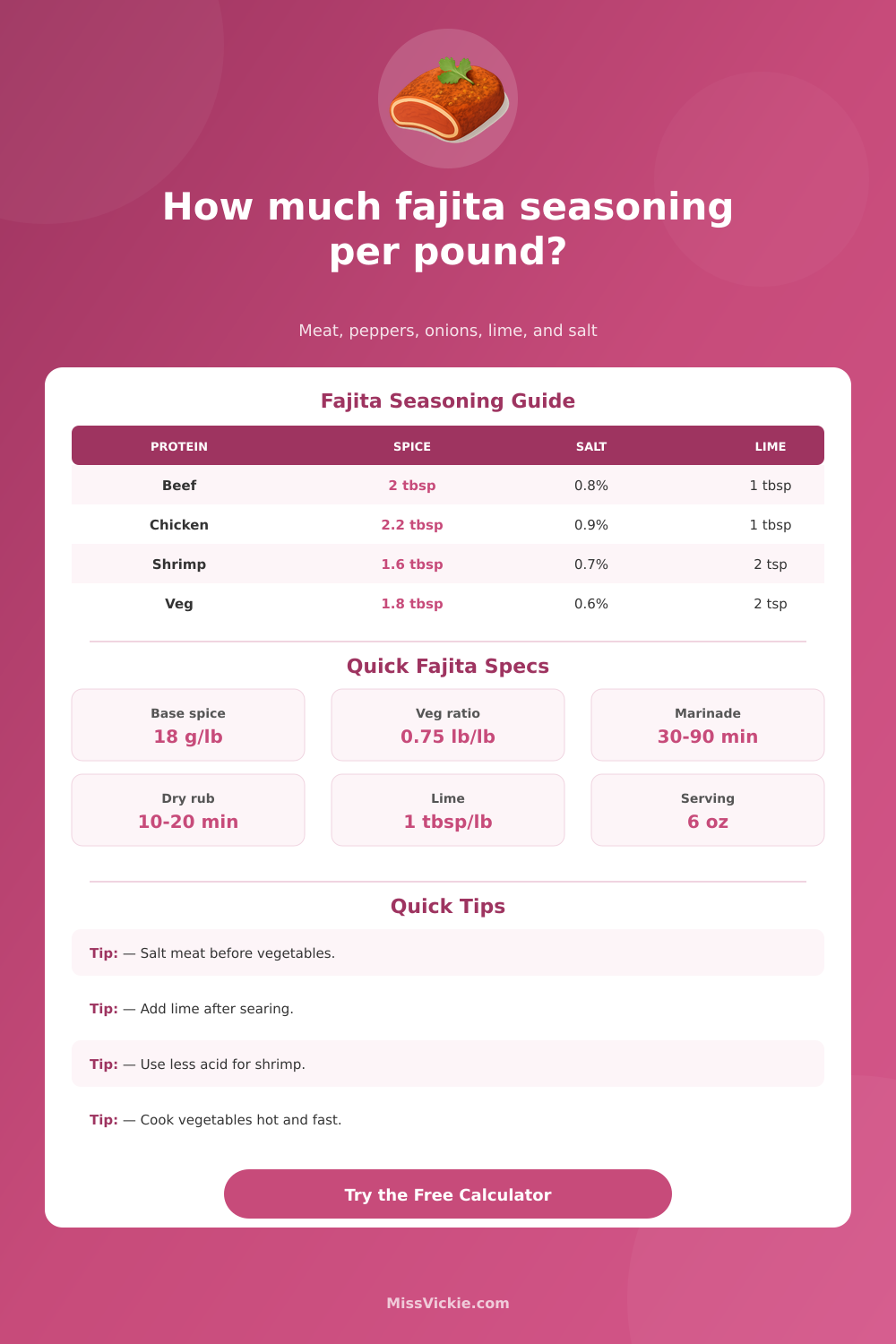
| Chicken breast or thighs | 18 to 20 g per lb | 0.8% to 0.95% | 1 tbsp per lb, short marinade | About 78% after searing |
| Skirt or flank steak | 17 to 19 g per lb | 0.8% to 1.0% | 1 tbsp per lb, up to 90 minutes | About 76% after slicing and searing |
| Shrimp | 14 to 16 g per lb | 0.6% to 0.75% | 2 tsp per lb, very short contact | About 82% after quick cooking |
| Portobello or vegetable fajitas | 15 to 18 g per lb | 0.55% to 0.75% | 2 tsp per lb, finish after browning | About 70% after moisture loss |
| Firm tofu | 16 to 18 g per lb | 0.65% to 0.85% | 2 tsp per lb, press first | About 80% after searing |
| Cumin and chili style | Chili powder share | Cumin share | Best with | Flavor note |
|---|---|---|---|---|
| Chili-forward | 42% of dry spices | 21% of dry spices | Chicken and pork | Redder, warmer, less earthy |
| Balanced | 34% of dry spices | 23% of dry spices | Most fajitas | Classic skillet aroma |
| Cumin-forward | 28% of dry spices | 28% of dry spices | Steak and mushrooms | Earthier and more savory |
| Smoky ancho | 30% chili, 12% smoked paprika | 24% of dry spices | Grill batches | Deeper charred flavor |
| Batch size | Raw protein | Peppers and onions | Dry seasoning | Expected servings |
|---|---|---|---|---|
| Small skillet | 1 lb | 0.6 to 0.8 lb | 2 to 2.5 tbsp | 3 to 4 servings |
| Family pan | 1.5 lb | 1 to 1.25 lb | 3 to 4 tbsp | 5 to 6 servings |
| Meal prep | 2.5 lb | 1.5 to 2 lb | 5 to 6 tbsp | 8 to 10 servings |
| Party grill | 5 lb | 3.5 to 4 lb | 10 to 12 tbsp | 18 to 22 servings |
Salt, spice, and yield values are kitchen planning estimates. Taste and adjust after cooking, especially when using salted stocks, bottled marinades, or pre-seasoned proteins.
💡Fajita seasoning tips
Keep dry rubs dry until the pan is hot. Water-heavy seasoning can steam the meat and prevent browning. If you want lime flavor without a wet pan, rub the spices first and squeeze lime over the finished fajitas.
Season vegetables separately. Peppers and onions shed moisture, so they need a lighter hand with salt and a little reserved spice near the end of cooking.
Watch acid contact time. Beef and chicken can handle a longer lime marinade, but shrimp can turn soft if it sits too long in citrus before cooking.
Use heat for flavor, not just fire. Chipotle, ancho, cayenne, and jalapeno powder change the dry blend differently, so adjust heat after choosing the cumin and chili ratio.
For fajitas: What’s the best way to season fajita meat? It take practice to know exactly how much acid, salt, and spice will be tolerated by the meat without overpowering it with sourness, saltiness, or heat. If it’s not seasoned enough, flavor won’t penetrate; if it’s overseasoned, then char is hidden behind a salty or sour punch.
Cooking method, vegetable load, quick rub vs. Using a longer marinade or different type of protein also impact the amount needed. If you’re like me, you put those ingredients into a marinade and then cook them some other way before stuffing them into the tortilla. But there’s no need to do that now because the calculator up top will do all of math for you, if you input just four pieces of information: The weight of your meat, the type of protein, amount of onions and peppers you intend to use, what kind of marinade you’re going to make, and finally, whether you’ll be grilling, frying, or baking the whole thing.
How to Season Fajita Meat Correctly
You also need to decide how much oil (or lime) go in the mixture, plus how salty you want it to be (expressed as a percent of original raw weight). These are variables that directly impact moisture retention, browning, and ultimately the flavor of finished filling when it reaches the tortilla.
Some proteins reacts better to certain seasonings than others. The mildness of chicken’s flesh and its porous exterior allow you to go slightly heavy-handed on both lime and salt. The skirt steak‘s liking for cumin and a bit more char calls for an earthier seasoning combination. Shrimp, with its delicate texture that goes soft fast, require less acid and less exposure to any liquid at all.
Vegetables give off their own liquid, so they generally requires less salt. They are usually seasoned later in cooking while the skillet remain hot enough to brown. It also depends on which type of seasoning you’re going for. A dry rub will leave surface dryer. A quick marinade coats everything without as much liquid overall, but you have to avoid adding lime at that point because it’ll mess with your sear. For thicker cuts you can go longer and get even deeper flavor, though this isn’t the move if you’re making mushroom or shrimp.
Based off your chosen method, the calculator tweaks how much oil, lime and spices it recommends so you don’t need to guess about proportions. It’s also because of the way it cooks: Just a touch of oil, to keep the spices clinging to meat and prevent sticking, is all that’s needed on a hot flat top or cast iron skillet. On the grill, a tiny bit of spice is lost to the grate; so there is a slight bump in the spice mix. When cooked on a sheet pan, the veggies spread out, changing how much moisture is released versus how much is absorbed; this affect how salty or steamy the dish becomes.
The rest is all about balance. Both veggies and meat will soak up salt; and it’s the total weight of those two things, plus target percentage, that determines how much goes into the mix. Add too little to your meats before adding the veggies, and despite getting the spice combination right, the final result could be flat. Put in too much early on, and the veggies will pull moisture, making it difficult to cook down the pan, and you’ll have to use a heavier hand throughout the recipe. That’s why the calculator displays the percentage and lets you choose between a lighter hand for meal preparation or a bigger punch for that next party-size batch.
And that’s what Lime does too: It brightens everything a little but doesn’t soften the meat. Use too much acid too soon and surface won’t brown right. Usually the cleaner move is to set aside the lime in the calculator and add most of it after searing.
The true test happens in the pan. After you’ve dialed in the number, taste one piece of meat, before adding any vegetables, and tweak the heat/salt if necessary. That’s when the tool realy works (pun intended); it helps get you to a good place, but the last bit is always done at the table, with your actual food in hand.
You should of tested the seasoning on a small piece first.