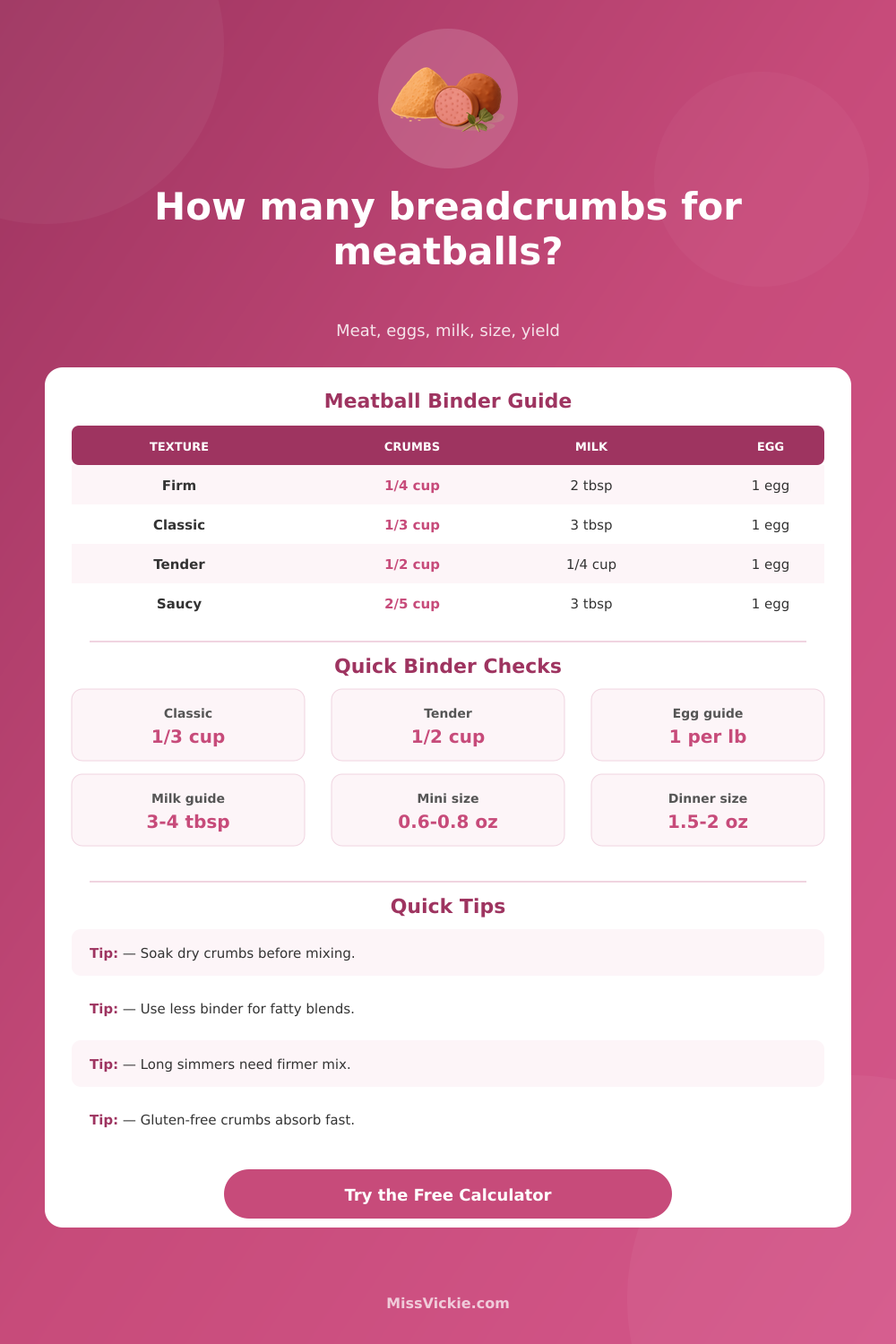
There’s a whole batch of meatballs riding on the right breadcrumb-to-meat ratio. Add too few crumbs and they’ll be loosey-goosey in the pan… Or dense as lead when simmered. Add too many and the meatballs becomes heavy with bread. You can’t fix them by simmering them longer.
The secret is staring you in the face: what happens when you combine those crumbs with liquid, eggs and ground meat? These are the meatball ingredients: • The crumbs is both a sponge and a binder. They soak up moisture from milk or broth, and they stick things together. That way, when the cooked meatballs come out, they don’t squeeze all their juices into the pan.
The Secret to Perfect Meatballs
Proteins and fats has different structures in various meats. A cup of crumbs will act very differently in a mix of 80/20 pork and beef then in lean turkey. With help of calculator, select the kind of meat and its fat level first, then get a starting suggestion.
And then there’s the matter of crumb style. A certain amount of plain, dry breadcrumbs will absorb some liquid slowley. Lighter panko require a larger volume to have the same binding power. Fresh breadcrumbs already carry moisture. Use less additional liquid, but also take care not to make mixture too soft. If you choose the type of crumb, calculator will adjust accordingly.
No more guessing when substituting what’s available in the pantry for what was called for in recipe. Use less additional liquid, but also take care not to make mixture too soft. If you choose the type of crumb, calculator will adjust accordingly. No more guessing when substituting what’s available in the pantry for what was called for in recipe.
Instead of replacing the crumbs with eggs and milk, they does their work together. A rough guideline: one egg per pound of meat. But remember: The more liquid you incorporate, the softer the crumbs get. This means they’ll be able to stretch out more. You don’t want your mixture so soft it breaks up on itself when you stir it and bubble it around as it simmers in sauce (unless you’re aiming for a long cook).
Meatballs that will be browned before they go into sauce can be looser and wetter due to shorter cooking time. Another variable in size is how large you want your meatballs. A larger meatball has a smaller percentage of its volume exposed to sauce and heat, therefore it can carry more moisture because the outer crust protects the middle during browning. A small meatball, with more surface area, need a firmer mixture that won’t cook out before the core is done. The calculator fits your desired end-size and yield and maintains equivalent binder quantities and final numbers.
There is also the variable of gluten-free substitutions. Wheat crumbs soak up moisture different than almond flour or even certified gluten-free oats. And gluten free panko, left to sit for too long pre-shaping, might turn into sand. Mixing times are no longer just a function off the clock. They’re also about rest time. A suggested rest period appears under the chosen crumb.
But realy, it’s about knowing how to read the combination before it enters the pan. You’re looking for something that feels joined together but not sticky. If you cook up a little test patty in a skillet, you’ll know if you need to add a splash more liquid or maybe another spoonful of crumbs. If you learn how much each ingredient changes the mix, adjusting as you go will became second nature rather than stressful.