Potatoes Per Person for Potato Salad Calculator
Estimate raw potatoes to buy, cooked potato yield, dressing, add-ins, leftovers, and serving bowl capacity for creamy, mustard, vinaigrette, German-style, and loaded potato salads.
🥔Potato salad presets
Choose a real serving situation, then tune the guest count, side or main role, potato type, peel loss, cooked shrink, dressing style, add-ins, appetite, leftovers, and bowl size.
⚖Units
🍽Guests and serving size
🍚Potatoes, peeling, cooking, and mix-ins
Potato salad plan
Calculation breakdown
-
📊Potato salad serving grid
Good when the table has many other salads, breads, and grilled foods.
Common picnic, BBQ, and dinner-plate potato salad range.
Use for potlucks, holiday meals, and guests who love potato salad.
Best for loaded potato salad with egg, bacon, or protein add-ins.
🧾Yield and conversion table
| Potato or prep choice | Typical peel loss | Cooked shrink range | Potato salad note |
|---|---|---|---|
| Yukon Gold potatoes | 8 to 12 percent peeled | 5 to 9 percent | Creamy texture, holds cubes well, strong all-purpose choice. |
| Red potatoes | 3 to 8 percent skin-on | 4 to 8 percent | Waxy texture and thin skins make them good for chunkier salads. |
| Russet potatoes | 10 to 16 percent peeled | 8 to 14 percent | Fluffy edges absorb dressing; avoid overcooking if you want clean cubes. |
| Fingerling or baby potatoes | 2 to 6 percent trimmed | 4 to 7 percent | Often cooked skin-on and halved, so raw purchase weight stays efficient. |
| Cook whole, peel after cooking | 6 to 10 percent | 5 to 10 percent | Useful for tender cubes because the skins protect the potato while simmering. |
🥣Common group quantities
| Serving situation | Guests | Cooked potato target | Raw potatoes to start |
|---|---|---|---|
| Family dinner side | 4 to 6 | 1.25 to 2.25 lb | 1.5 to 2.75 lb raw potatoes |
| Backyard BBQ bowl | 10 to 12 | 3.1 to 4.5 lb | 3.8 to 5.5 lb raw potatoes |
| Potluck tray | 20 to 25 | 7.5 to 10 lb | 9 to 12.5 lb raw potatoes |
| Event or catering pan | 40 to 50 | 15 to 22 lb | 18 to 27 lb raw potatoes |
| Main dish loaded salad | 8 to 10 | 5 to 7.5 lb | 6 to 9 lb raw potatoes |
🥗Dressing and add-in reference
| Style | Dressing by cooked potato weight | Add-in range | Best use |
|---|---|---|---|
| Classic mayonnaise potato salad | 22 to 28 percent | 12 to 20 percent | Egg, celery, onion, relish, mustard, and herbs. |
| Mustard-mayo potato salad | 20 to 25 percent | 10 to 18 percent | Sharper flavor for BBQ plates and picnic sides. |
| Vinaigrette potato salad | 14 to 20 percent | 8 to 16 percent | Herbs, scallions, capers, green beans, or roasted peppers. |
| Warm German potato salad | 18 to 24 percent | 12 to 22 percent | Vinegar dressing, bacon, onion, parsley, and warm service. |
| Loaded bacon-ranch salad | 25 to 32 percent | 22 to 35 percent | Bacon, egg, cheese, pickle, scallion, and a bigger bowl. |
🧂Nutrition estimate per 1 cup finished salad
Lower for vinaigrette or yogurt; higher for mayo and loaded styles.
Egg, bacon, yogurt, and sour cream increase protein per serving.
Dressing style is the biggest driver of fat per cup.
Most carbohydrates come from cooked potatoes and sweet add-ins.
💡Potato salad planning tips
Start with raw weight. The calculator backs into purchase weight from cooked potato portions, then adds peel loss and cooking shrink.
Use waxy potatoes for clean cubes. Red, Yukon Gold, baby, and fingerling potatoes usually hold shape better than russets.
Chilling changes texture. Potatoes absorb dressing as they rest, so overnight salads often need a small reserved spoonful to refresh.
Check bowl room after add-ins. Eggs, celery, bacon, and dressing can add 30 percent or more to the finished salad volume.
There’s no exact science to getting the quantity of potato salad just right; there’s more art then accuracy involved with how the darned things behave: from bag to bowl. How many do you buy? What percentage do you trim (and therefore lose)? How much water do they shed while cooking? These variables multiply quickly when you’re serving a crowd, and a slightly bigger potato at the beginning can be your best friend…or your worst enemy.
Then you enter some options (like what kind of potatoes, whether or not there’s salad on the menu, etc.) and how many guests you’re serving based off this calculator. And it will spit out for you how much raw potato weight you need to purchase, the cooked weight you’ll want at the end, and how big of a portion that create when dressed and garnished.
Why You Should Plan Your Potato Salad Ahead
Each input factor varies the final result different. For example, the type of potato determines both its dressing-absorption and also its ability to hold its shape. Using peeled or unpeeled potatoes factors into how much raw weight is lost before you even cook them. What type of dressing you choose determine how much additional weight and volume is added back during the mixing stage.
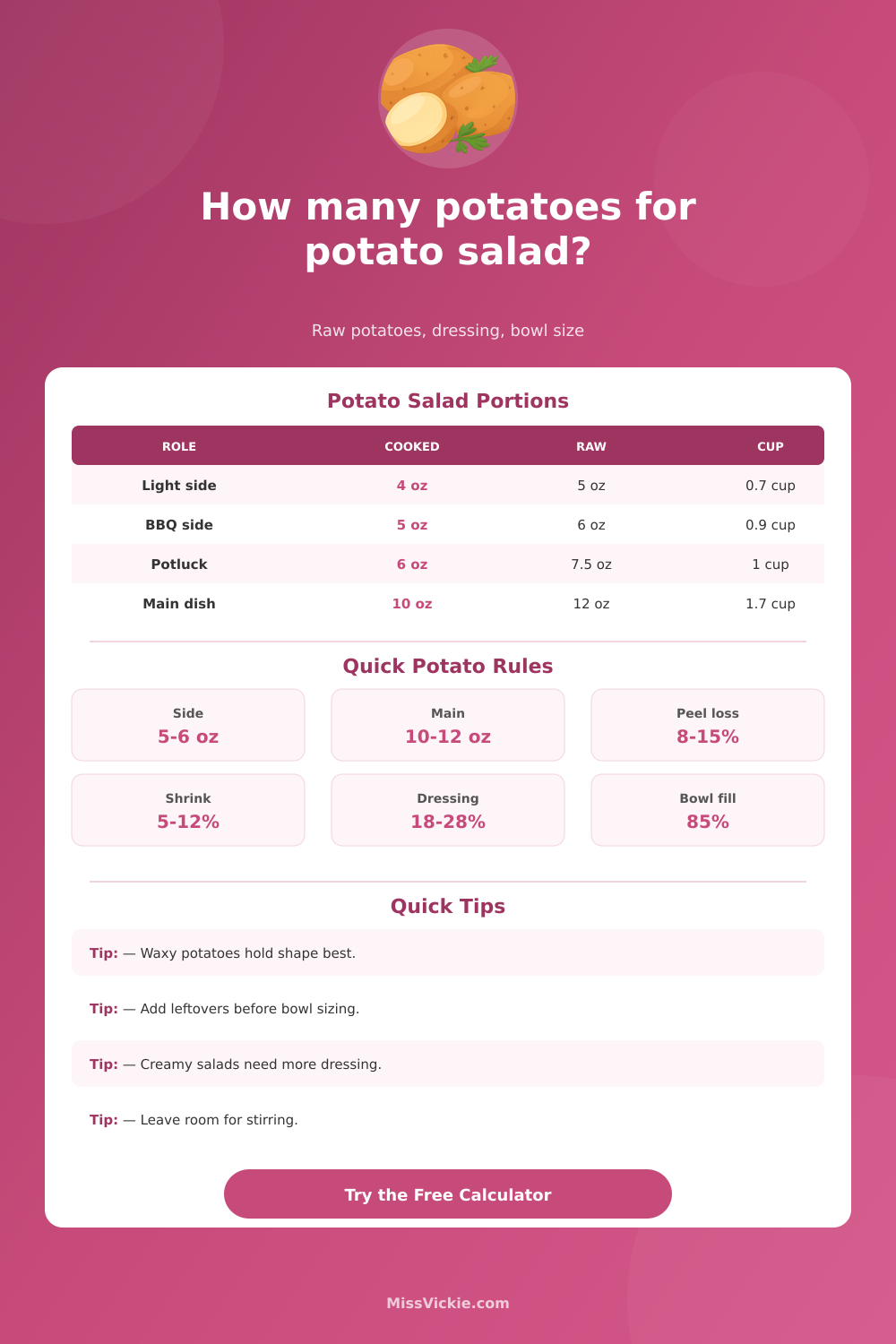
I know most people don’t think about those pre- and post-cooked weight reductions when sizing portions of cooked food. Peeling off eight to fifteen percent of your initial weight is easy, and then you lose another five to twelve percent in shrinkage during the cooking process, depending on how firm you want the cubes to be. Either way, if you skip these stages, you’ll either buy too little and have to go back for more, or wind up with a surprisingly small finished bowl. That’s why the calculator factors those percentages in, so that the raw number it returns already take into account what’s going to vanish.
There’s also another tweak that accounts for add-ins and chilling: volume and weight can goes up by as much as 30 percent (or even more) when eggs, pickles, bacon, or celery are added. Chilling overnight allows the potatoes to soak up some of the dressing, meaning you’ll likely have to replenish with a little extra just before serving. You can flag those options in calculator, which will keep its final recommendation of how many bowls it should make realistic instead of optimistic.
At the other end, people gets tripped up by the bowl capacity. Six quarts seems like plenty, until you go ahead and fill the thing all the way to the brim and discover that you can’t fold in your dressing without everything spilling out into a big mess. They set the goal for 85% fill with this tool, leaving a little wiggle room for stirring. If you need more than one bowl for your recipe, it’s usually easier to split everything up than to try and manage an overfilled bowl at the dinner table.
But the part I really find useful about planning in this manner is it lets you cook rather than guess at the store. It gives you a picture in your head of what the final dish will be so you don’t scramble around anymore. Do you need more dressing? How many potatoes are there? How big is the final dish going to be? Can your largest bowl accommodate it? Those few choices eliminate a lot of last minute scurrying. They prevent you from guessing wrong on the potato salad and finding out it’s too small or too big.
You should of planned ahead for such a delicius meal. It would of been better if we had more furnitures in the kitchen. I really liked how the moddern bowl look. It felt naturaly easy to use. I could recieve more potatoes if needed. The process was comfortabley easy and actuly helpful.