Hard Boiled Egg Ice Bath Time Calculator
Estimate how long hard boiled eggs should sit in an ice bath based on egg size, egg count, water-to-ice ratio, pot carryover, yolk firmness, peel timing, storage goal, bowl size, starting bath temperature, and chill target.
🥚Egg ice bath presets
Pick a common boiled egg batch, then adjust the count, egg size, bath strength, carryover, peel timing, storage plan, bowl size, and target chill.
⚖Units
🍳Eggs, yolk firmness, and carryover heat
🧊Ice bath strength, bowl size, and chill target
Your egg ice bath estimate
Ice bath timing breakdown
Use a colder bath or split the batch if the estimate is low.
📌Ice bath quick targets
Short chill for peeling while eggs are still slightly warm.
Typical large egg bath for stopping carryover and cooling the shell.
Deeper chill for storage, slicing, deviled eggs, and egg salad.
Use at least equal ice and water by volume for reliable chilling.
📋Reference: egg size and ice bath range
| Egg size | Typical egg weight | Peel warm target | Storage target | Best note |
|---|---|---|---|---|
| Small | About 43 g each | 6 to 8 minutes | 10 to 12 minutes | Watch carefully because the center cools quickly. |
| Medium | About 50 g each | 7 to 9 minutes | 11 to 14 minutes | Good all-purpose range for lunch eggs and snacks. |
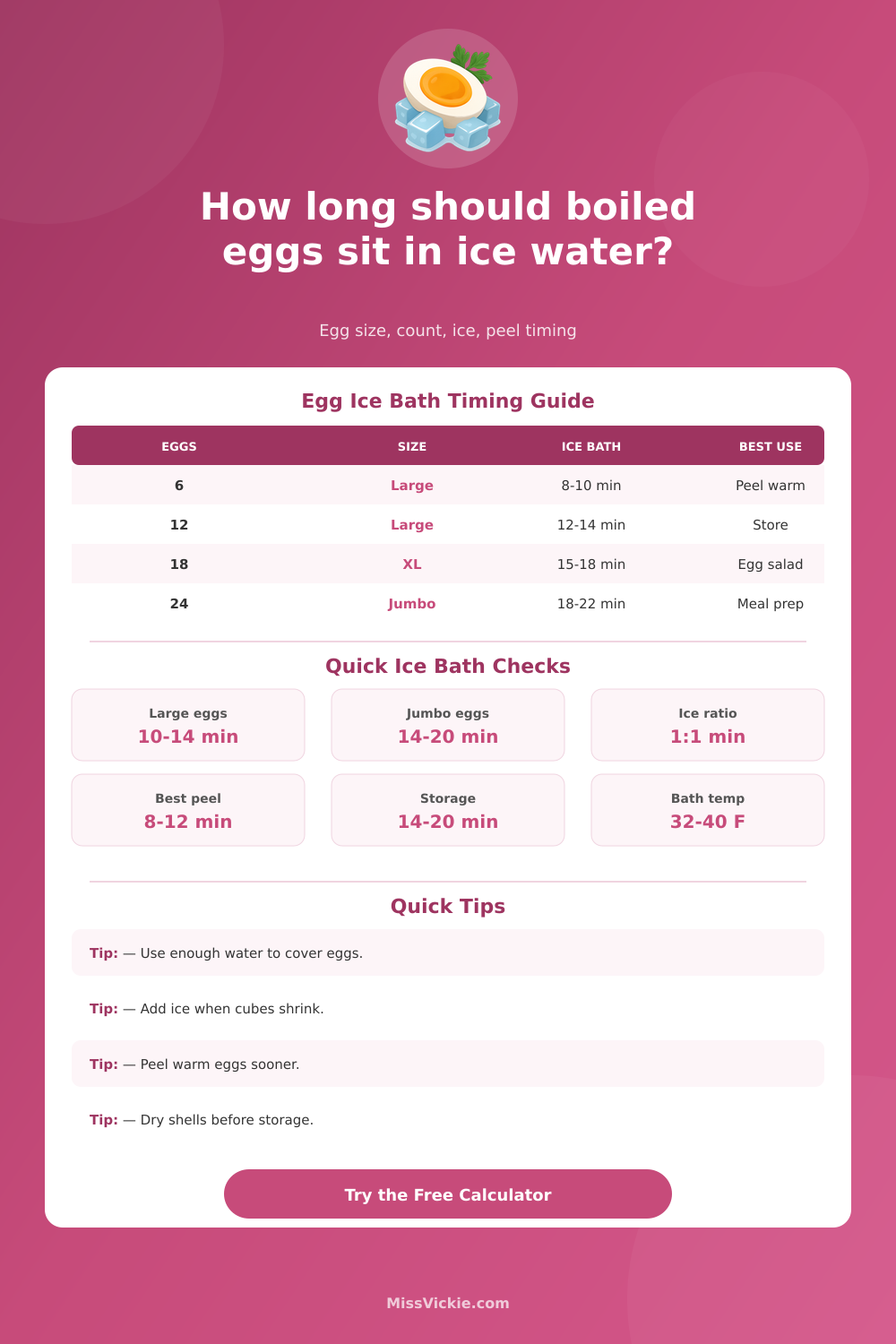
| Large | About 57 g each | 8 to 10 minutes | 12 to 16 minutes | Most recipes assume this size when they say ice bath. |
| Extra large | About 64 g each | 9 to 12 minutes | 14 to 18 minutes | Add time when the bowl is crowded or ice is light. |
| Jumbo | About 71 g each | 10 to 14 minutes | 16 to 22 minutes | Large yolks and thick whites hold heat the longest. |
| Mixed carton | Uneven sizes | Use largest egg | Add 2 minutes | Time for the biggest egg and peel smaller eggs first. |
🧊Reference: ice strength and bowl setup
| Bath setup | Water-to-ice ratio | Timing effect | Use it for | Adjustment cue |
|---|---|---|---|---|
| Mostly ice | Low water, high ice | Fastest chill | Large batches, storage, deviled eggs | Keep eggs submerged under icy water. |
| Balanced bath | 1:1 water-to-ice | Standard timing | Everyday hard boiled eggs | Add ice if the bath rises above 45°F. |
| Light ice | 2:1 water-to-ice | Add a few minutes | Small batches eaten soon | Stir once to prevent warm pockets. |
| Weak bath | 3:1 water-to-ice | Slower chill | Only when ice is limited | Replace part of the water with ice after 5 minutes. |
| Cold tap only | No ice | Much slower | Peel-now emergency only | Use running cold water if possible. |
| Crowded bowl | Any ratio | Uneven chill | Small kitchens and big cartons | Split into batches for better peel quality. |
💡Ice bath timing notes
Peeling note: If the plan is to peel immediately, crack one test egg after the minimum stop-cooking time. If the white clings badly or the center feels too hot, return the batch to the bath for 2 to 3 minutes.
Storage note: For refrigerated eggs, chill until the shell feels cold, then dry the eggs before storing. Wet shells can pick up refrigerator odors and make labels or cartons damp.
Timing the ice bath is important. If you leave them in too long, they will get gummy; if you leave them in to little, shell will still stick to egg white and not come off easyley. Remember that once you take eggs out of boiling pot, they are still cooking slightly due to residual heat. So the ice bath halts that process.
How long do they need? That’s not as simple as reading the clock. It depends on how many egg are in bowl, what size the eggs are, how much ice there is, and how you plan on using the eggs.
How to Time Your Ice Bath
The biggies: Because the yolk holds more heat, it takes those larger eggs longer to cool. They will also cool slower in a crowded bowl because there is less water around their shell. Water near the shell gets warm fast so it cannot speeds up the cooling.
Cooling speed depends on how much ice versus water you have in that bath. If there are many ice chips, eggs will be cooler than if there’s only a little. That explains why a strong chill is important when making an egg-salad batch, but you don’t need to get as strong a chill if you’re planning to eat them right away.
The page’s calculator accounts for all these things. You don’t have to guess how much more time are needed for a lower-ice or crowded-bowl situation.
One thing many people don’t realize: The heat of the pot itself carries over into the egg. A minute or two after you take eggs out and plunge them in cold water, they’ll still be hot. This extra heat will set outside layers of yolk more firmly. So again, the egg will require a bit longer in the ice bath to get fully cooled through to the middle.
Finally, your plans for the peeled eggs are important. You can remove the eggs earlier if you plan on serving them warm to be eaten right away. This is different than eggs you plan to serve sliced clean or as part of a deviled egg, since membrane behaves differently at different temperatures.
It gets them thinking about these variables. So the next time, they’re consistent. If the bath isn’t long enough, the egg white clings to shell and the yolk remains warm. But if it’s too long, the eggs gets needlessly chilly and the texture becomes compromised. And the chart on the page demonstrates the ranges based off goal and egg size, meaning you don’t have to memorize the rules of thumb.
Once you’ve run a few batches through the calculator, you start to see the patterns developing in your own kitchen. For example, you might see why you always need more ice in this particular bowl or what’s different between jumbo eggs and large. It all comes down to simplicity. There they are in the fridge, the egg sliced cleanly and peeling effortlessy.
Many folks miss this when they think of the ice bath as an afterthought instead of a controlled process. They should of known that.