Octopus Cooking Time Calculator
Estimate octopus timing from whole versus tentacles, raw weight, thickest arm diameter, fresh or frozen state, tenderizing method, simmer or pressure cooking, grill finish, water temperature, tenderness target, rest or chill time, and yield shrink.
🐙Octopus presets
Choose a realistic starting point, then tune the form, thickness, water temperature, tenderness goal, and finishing plan for your pot, cooker, or grill.
⚖Units
🔪Form, weight, thickness, and starting condition
🔥Cooking method, water temperature, grill finish, and rest
Octopus timing estimate
Adjust inputs to calculate.
Calculation breakdown
⏱Quick octopus timing guide
Best for whole octopus when you want control and clean skin.
Fast tenderizing for weeknight meals, with a shorter checking window.
Use after simmering or pressure cooking, just to char and reheat.
Whole, watery, or heavily charred octopus usually loses more weight.
📋Reference timing by form
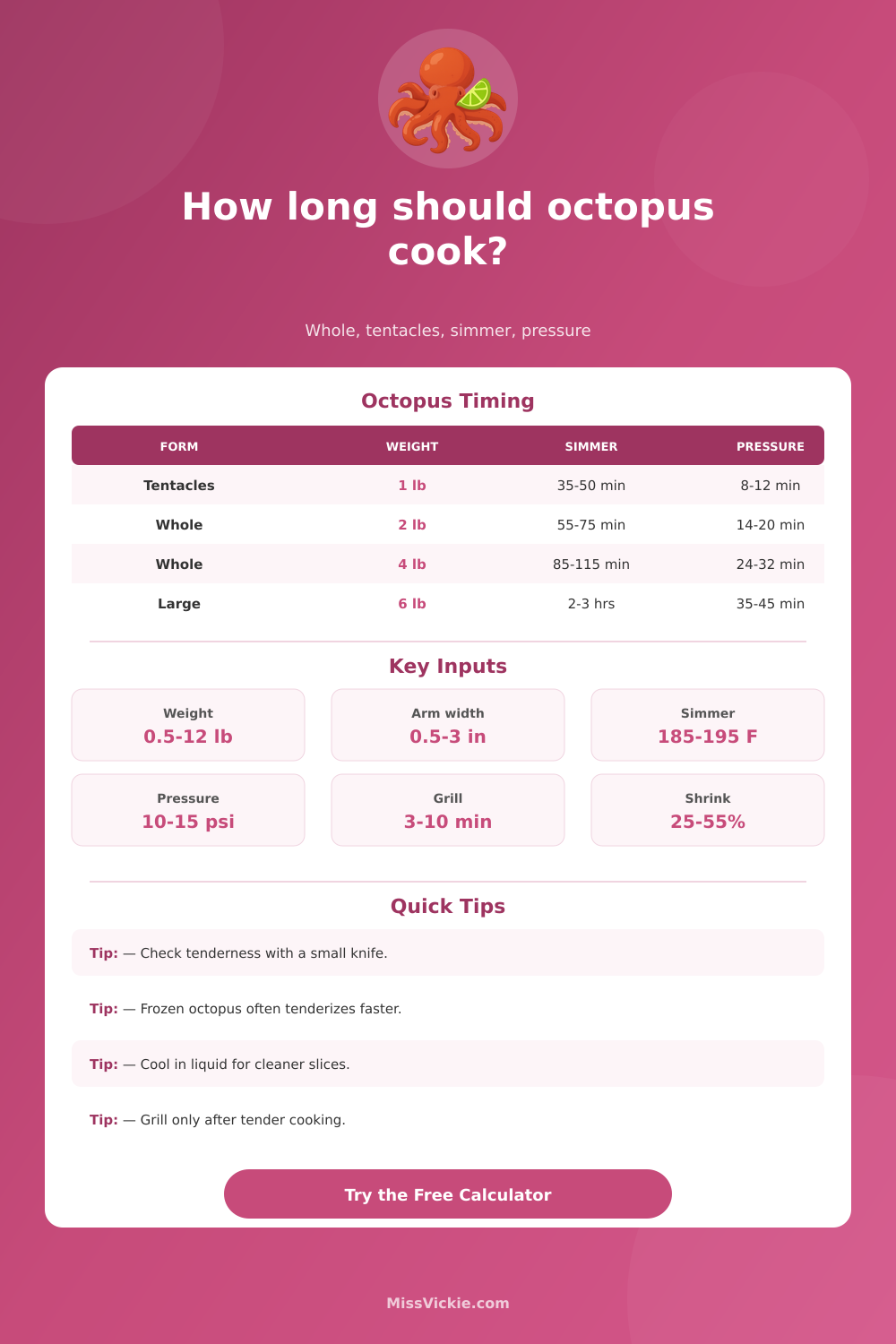
| Octopus form | Typical size | Gentle simmer timing | Pressure timing | Best use |
|---|---|---|---|---|
| Small cut pieces or baby octopus | 0.5-1.5 lb total | 20-40 minutes | 4-8 minutes | Salads, stews, quick appetizers |
| Separated medium tentacles | 1-3 lb total, 0.8-1.5 in thick | 35-65 minutes | 8-18 minutes | Grilled tentacles, tapas, rice bowls |
| Whole cleaned octopus | 2-4 lb, head attached | 55-115 minutes | 14-32 minutes | Classic simmer then chill or grill |
| Large whole octopus | 5-8 lb, thick bases | 2-3 hours | 35-50 minutes | Party platters, sliced salads |
| Already cooked chilled tentacles | Any size | Reheat 5-15 minutes | Avoid pressure | Fast grill, plancha, broiler finish |
💧Water temperature and tenderness cues
| Cooking environment | Temperature cue | Texture effect | When to use |
|---|---|---|---|
| Low poach or sous vide style bath | 170-180°F | Gentle but slower, skin stays delicate | Planned cooks with extra time |
| Gentle simmer | 185-195°F | Steady tenderizing with less surface damage | Whole octopus and grill prep |
| Fast boil | 200-212°F | Faster outside, higher skin-splitting risk | Only when closely checked |
| Pressure cooker | 10-15 psi | Fast collagen conversion, narrow finish window | Weeknight tenderizing |
| Hot grill or plancha | 450-600°F surface | Char and reheat, not raw tenderizing | Final 3-10 minutes after tender |
🍝Yield and serving estimates
| Starting octopus | Typical cooked yield | Serving estimate | Planning note |
|---|---|---|---|
| 1 lb separated tentacles | 8-10 oz cooked | 2 appetizer servings | Enough for a small salad or tapas plate |
| 2 lb whole cleaned octopus | 14-18 oz cooked | 3-4 appetizer servings | Good for a small grilled platter |
| 4 lb whole cleaned octopus | 1.8-2.4 lb cooked | 6-8 appetizer servings | Chill before slicing for neat rounds |
| 6 lb large whole octopus | 2.6-3.5 lb cooked | 10-14 appetizer servings | Allow extra checking time at thick bases |
| Cooked chilled tentacles | 85-95% after reheating | Use label weight | Main loss comes from char, trim, and slicing |
💪Cooked octopus nutrition snapshot
Approximate calories in a 3 oz cooked serving.
Lean seafood protein varies with moisture loss.
Most added fat comes from oil, sauce, or grill marinade.
Natural glycogen contributes a small carb amount.
💡Octopus cooking tips
Check by feel. Octopus is ready when a small knife or skewer slides into the thickest tentacle base with little resistance. A timer gives the window; tenderness gives the finish.
Grill after tenderizing. Raw octopus can tighten on the grill before the center softens. Simmer or pressure cook first, dry the surface, oil lightly, then char quickly.
Chill for slices. Cooling in the cooking liquid or chilling overnight firms the gelled collagen enough for cleaner slices and better grill handling.
Watch shrink. Large whole octopus, watery thawed octopus, and heavy char finishes lose more weight. Plan extra raw weight for a generous platter.
Octopus has very dense muscle that’s packed with collagen: if not cooked proper, it will be like chewing on a tire. To enjoy eating it, fiber have to be broken down by the use of heat. Cooked for too short a time and it will remain a rubbery mess; too long and meat will collapse into a dry stringy mess. Often this comes down to your own judgement about the raw piece in front of you.
The thicker parts of arm near its base and head take longer to cook since this is where heat has to penetrate slowest. If you cook whole head at once, it will take longer then just a single tentacle. So all you have to do is enter your true arm width and weight into the calculator above. It’ll figure out how long it should of be for you (and you don’t have to scale the times up or down yourself).
How to Cook Octopus Perfectly
Fresh octopus can start off a bit more firm and might require higher end of the time ranges. Frozen octopus will shave off a little time, since freezing and then thawing has already relaxed some of the fiber. Even beyond size, how do you cook it? Cooking times varies greatly depending on method used. A slow, gentle simmer keeps skin intact and allows you some control. Pressure cooking shortens the time but narrows the gap between perfect-tender and overdone. That’s why the water temperature setting is part of the tool.
Lower temperatures means a longer cook time but are more forgiving if your timing is off. Higher temperatures mean a quicker cook, but you will need to watch more closely when checking with your skewer or paring knife.
And here’s another factor: What kind of tenderness are you after? Some cuts wants to be firm on the grill; others work better when silky-saucy in a cold salad. Octopus should be well on its way to tenderness when it hits the grill. Raw chunks placed directly over high heat will tighten up, before the collagen can begin to melt. A brief sear (to give smoke and color) won’t unravel what’s been achieved so far.
When finished, don’t skip chilling (or even resting) just for convenience. Chilling allows residual heat to complete process of any stubborn thicker parts, and also firm up gelled collagen into something that slices cleanly.
The other real-world factor raised by this calculator is how much yield you will lose. Tenderizing an octopus causes a surprising amount of moisture loss; trimming it away or cooking it over a flame result in even more lost mass. Knowing how much food will shrink helps you buy just enough in the first place (so you don’t run short on a platter). For comparison’s sake, the page has a reference table of expected yields based off size.
This is what really works: think of that timer as a window instead of a finish line. Test thickest part first, pull a bit out earlier to get a feel for it, then go from there. You have an estimated start time based on what you input into the timer, then use a little attention and a small knife to make the ultimate call.