Stuffed Pepper Cooking Time Calculator
Estimate stuffed pepper bake time from pepper size and count, raw or cooked filling, meat type, rice moisture, oven temperature, sauce level, cheese topping, covered time, uncovered time, safe internal temperature, and desired tenderness.
🫑Stuffed pepper presets
Pick a common stuffed pepper setup, then adjust the actual pan, filling, sauce, cheese, and tenderness you want.
⚖Units
🍲Pan size, peppers, and filling
🔥Oven, sauce, cover, cheese, and tenderness
Stuffed pepper timing estimate
Timing breakdown
Compare your planned covered and uncovered bake against the calculated window.
📋Stuffed pepper timing reference
Medium whole peppers with warm cooked filling at 375°F.
Medium whole peppers with raw ground meat filling at 375°F.
Minimum internal target for raw beef, pork, lamb, or sausage.
Minimum internal target for chicken, turkey, leftovers, or mixed casseroles.
🌡Time by filling and oven temperature
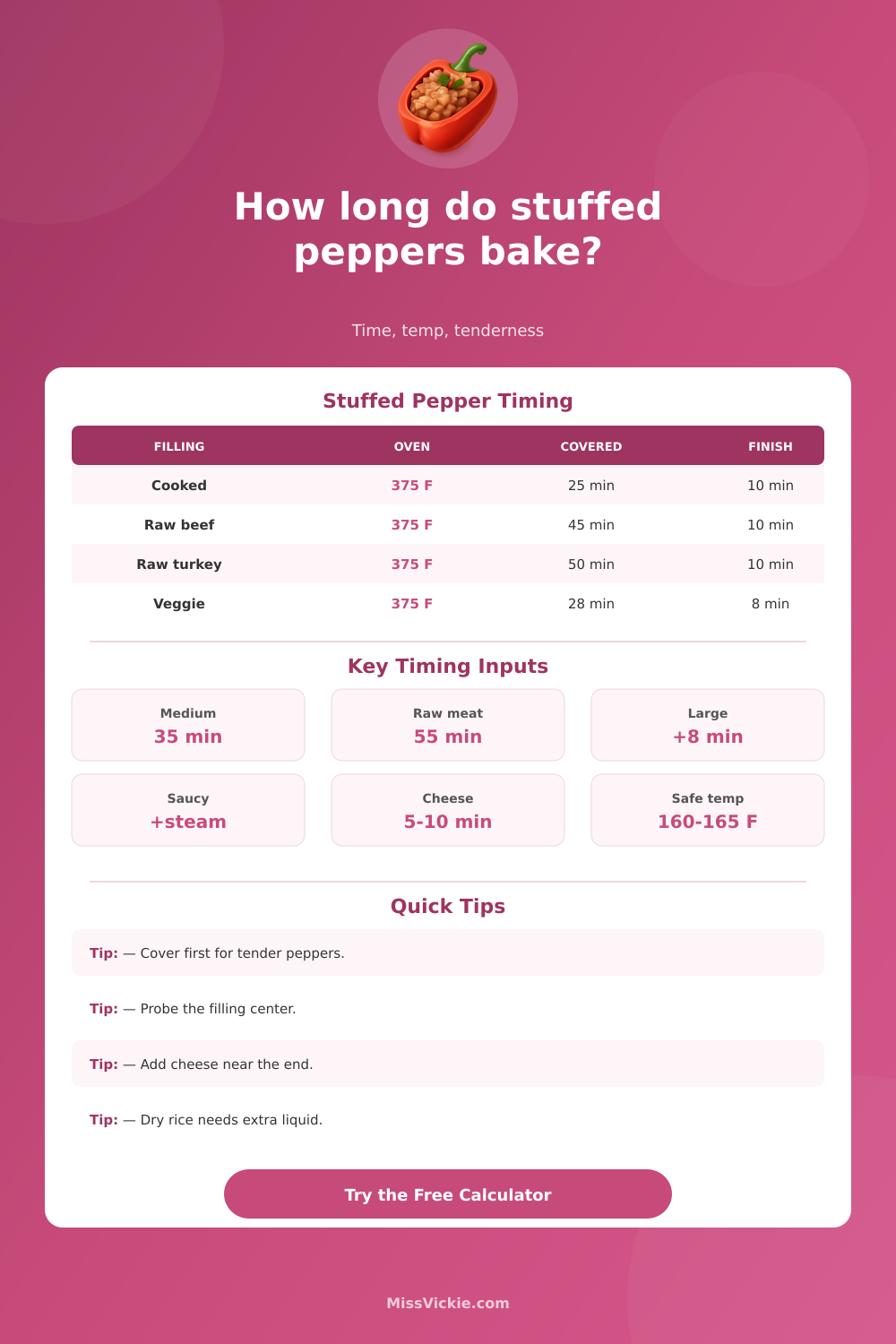
| Stuffed pepper setup | 325°F | 350°F | 375°F | 400°F | Internal check |
|---|---|---|---|---|---|
| Medium peppers, warm cooked beef and rice filling | 42 to 48 min | 38 to 43 min | 33 to 38 min | 30 to 35 min | 165°F if reheating cooked filling |
| Medium peppers, raw ground beef, pork, or sausage filling | 62 to 70 min | 56 to 64 min | 50 to 58 min | 46 to 52 min | 160°F in the center |
| Medium peppers, raw ground turkey or chicken filling | 66 to 76 min | 60 to 68 min | 54 to 62 min | 49 to 56 min | 165°F in the center |
| Vegetarian beans, grains, and sauce in medium peppers | 44 to 52 min | 40 to 46 min | 34 to 40 min | 31 to 37 min | Hot center, tender pepper walls |
| Large or jumbo peppers with dense filling | Add 12 to 18 min | Add 10 to 15 min | Add 8 to 12 min | Add 6 to 10 min | Probe the deepest pepper |
🍚Rice, sauce, cheese, and tenderness guide
| Factor | Timing effect | Liquid effect | Best covered approach | Finish cue |
|---|---|---|---|---|
| Cooked rice or moist cooked grains | Baseline | Use sauce for steam, not rice hydration | Cover until pepper walls begin to bend | Uncover when filling is already hot |
| Dry or mostly raw rice | Add 18 to 25 min | Needs extra sauce or broth in the filling | Keep tightly covered most of the bake | Check grain tenderness before cheese |
| Par-cooked rice, farro, barley, or wheat berries | Add 8 to 12 min | Benefits from a saucy dish bottom | Cover until grains no longer taste firm | Uncover for the last 8 to 12 min |
| Cauliflower rice or low-starch filling | Reduce 3 to 6 min | Can release water while baking | Cover briefly, then uncover to reduce | Stop before peppers collapse |
| Heavy cheese topping | Add 3 to 6 min finish | No extra liquid needed | Add after the safety temperature is close | Melted, bubbling, lightly browned |
💡Stuffed pepper timing notes
Probe placement: Insert the thermometer into the center of the densest stuffed pepper, avoiding the hollow wall and any cheese pocket.
Raw meat: Treat raw ground meat filling like meatloaf inside a pepper. Time helps, but the final internal temperature decides doneness.
Covered phase: Foil or a lid creates steam so pepper walls soften before the top dries out. Uncover late for sauce reduction and browning.
Rice moisture: Dry rice can stay crunchy in stuffed peppers unless the filling and pan carry enough liquid for the full covered bake.
To get stuffed peppers just right, you have to time things well. You want the pepper soft but not falling apart and you want the stuffing fully cooked inside. And you want the topping (sauce, cheese) to be done at the right time.
A lot of home cooks just guesstimate about when it’s ready for covering/uncovering. Too often, results is either mushy peppers or firm ones. Cooking time vary by ingredient. Leftover filling will cook faster than raw ground beef. If you’re using raw meat, be sure to monitor its temp; it hasn’t been cooked yet. Rice that’s dry pulls water out of the pan. Dry rice pulls moisture from the filling and the pan which is why it often stays crunchy unless you adjust the sauce level and covered time. Whole peppers will be slower to heat than halved ones.
How to Use the Stuffed Pepper Calculator
There are enough factors that a variable calculator tool exist. It handles all those variations for you and lets you forget about every possible combination.
“Then you cover it, and you get steam that goes in and tenderizes the walls of the peppers.” And there’s the other phase: when the steam is on. That’s the part when the peppers will be softened but not yet at a temperature they’re ready to eat. That’s when you uncover them, when the cheese is almost hot but not all the way through. If you add cheese too soon, it might be overcooked by the time everything else reach doneness. A lot of people actualy add their cheese during the last few minutes.
The process take into account the whole chain; rather than being an accident, this effect is a deliberate part of the finish once the dish is uncovered. The way it cooks depend subtly on how crowded the pan is. If the peppers are very close together, they will cook more slowly from the middle out. If they’re right next to each other steam gets trapped longer. Using a deeper casserole has this same effect. To cook faster, spread the peppers so that some of sauce shows between them. This allows the tops to get browner and makes them cook just slightly faster. The calculator use all these factors based off the type of pan you choose.
The other silent variable is temperature. Cooking at 350 degrees in an oven give it a gentle, even cook. That typically means a few minutes longer. At 400 degrees in the oven, it’s shorter overall. If you don’t cover long enough, the tops may get dried out. The tool changes its estimate based on your chosen temp. So no guessing… Just set it and go.
Time isn’t everything; don’t rely on it; use a thermometer to check the center of your filling. For raw meat fillings, make sure they reach an internal temperature of 160 degrees. Fillings with meat and poultry can be cooked to a safer 165 degrees. After that, you’re just working on looks and texture in the last few minutes. This is where the exposed stage gets its play.
That means you get consistently good results, with no undercooked filling and no overcooked peppers. With a little practice matching the time of your cover versus uncover to what’s inside, the peppers will be tender yet whole. The cheese will melt just in time. The rice/grains will be perfectly cooked. It’s the kind of small tweak that transforms an OK weeknight meal into a dependable one that never fails to require constant monitoring.
You should of used the calculator for better results.