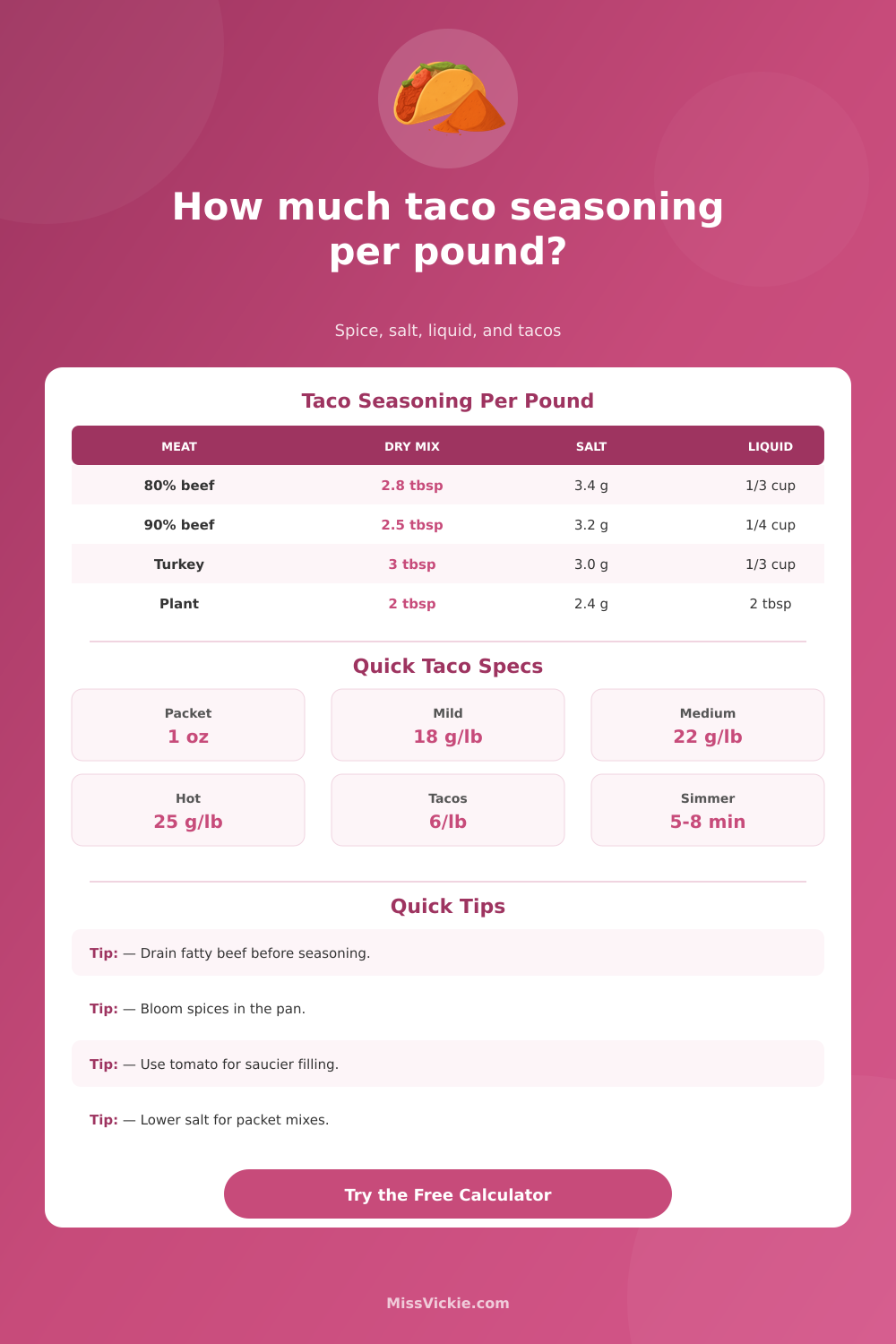
Taco Seasoning Per Pound of Meat Calculator
Scale homemade taco seasoning by meat pounds, meat type, fat percent, salt level, chili heat, cumin or smoke preference, tomato and water addition, packet equivalent, tacos served, sodium target, and batch multiplier.
🌮Taco seasoning presets
Choose a starting point, then adjust the meat fat, heat, salt target, simmer liquid, packet size, and taco count for the batch you are cooking.
⚖Meat pounds, tacos, and batch scale
🌶Salt level, chili heat, cumin, smoke, and liquid
Taco seasoning plan
Ingredient breakdown
Sodium includes estimated natural sodium in the meat plus added salt.
🧂Seasoning benchmarks
Most homemade taco mixes land here before extra reserve.
Use less for dry skillet beef and more for turkey or chicken.
A common packet is about 28 g and usually seasons 1 lb.
Depends on shell size, toppings, and how saucy the filling is.
📋Per-pound taco seasoning reference
| Meat type | Typical dry mix | Added salt range | Best liquid addition | Cooking note |
|---|---|---|---|---|
| 80/20 ground beef | 20 to 23 g, about 2.5 to 3 tbsp | 3.0 to 4.0 g salt | 1/4 to 1/3 cup water after draining | Drain excess fat, then bloom spice for 30 seconds. |
| 90/10 ground beef | 18 to 22 g, about 2.25 to 2.75 tbsp | 2.8 to 3.6 g salt | 1/4 cup water or tomato water mix | Needs less draining and a little less liquid. |
| Ground turkey or chicken | 22 to 27 g, about 3 tbsp | 2.6 to 3.4 g salt | 1/3 cup water, broth, or salsa | Lean meat benefits from tomato paste and a short simmer. |
| Ground pork | 21 to 25 g, about 2.75 to 3.25 tbsp | 3.0 to 3.8 g salt | 1/4 cup water plus optional tomato | Fat carries chili well; reduce cayenne if using chorizo spices. |
| Venison blend | 23 to 28 g, about 3 to 3.5 tbsp | 2.8 to 3.5 g salt | 1/3 cup tomato water or broth | Very lean meat needs moisture and a small fat addition. |
| Plant-based crumbles | 15 to 20 g, about 2 to 2.5 tbsp | Check package first | 2 tbsp to 1/4 cup water | Many crumbles are already seasoned and salty. |
Salt and sodium estimates use sodium chloride at about 393 mg sodium per gram of salt, plus a typical natural sodium estimate for raw ground meats.
🫙Flavor balance and packet conversion table
| Seasoning goal | Chili powder | Cumin and smoke | Liquid style | Packet comparison |
|---|---|---|---|---|
| Mild family tacos | Use mild chili powder and no cayenne | Balanced cumin, sweet paprika | Water or tomato paste water | Usually 0.65 to 0.8 packet per lb |
| Classic weeknight tacos | Medium chili powder with light cayenne | Equal cumin and paprika support | Tomato paste plus water | About 0.8 to 1 packet per lb |
| Smoky street-style filling | Blend ancho or chipotle with regular chili powder | Smoked paprika and extra cumin | Broth or tomato water | About 1 packet per lb, less salty |
| Saucy packet-style meat | Medium chili, paprika, garlic, onion | Moderate cumin, light oregano | Water plus cornstarch body | Close to 1 ounce per lb |
| Lower-sodium tacos | Boost chili, paprika, garlic, and lime at serving | Use cumin and smoke for depth | Tomato paste adds flavor without much salt | Often 0.55 to 0.7 packet by sodium |
💡Taco seasoning tips
Bloom before simmering: After draining beef, stir the spice mix into the hot meat for 20 to 30 seconds before adding water. That wakes up cumin, paprika, garlic, and chili powder.
Watch packet sodium: If you combine a store packet with homemade seasoning, enter the packet size and choose a lower salt level. Packet mixes often carry the salt and thickener already.
Match liquid to fat: Fatty beef needs draining and moderate water. Lean turkey, chicken, venison, or plant crumbles need more moisture so the spice coats instead of tasting dusty.
Scale the batch dry: For meal prep, mix a larger dry batch without tomato or water, then add liquid only in the skillet. Keep reserved seasoning unsalted if diners adjust salt at the table.
When it’s taco night, you’re not dumping a packet onto some browned meat and hoping for the best; you’re getting the seasoning just right. The amount of liquid, salt, and (if you use them) dry mix will change depending on the type of meat, the size of the batch, and whether you like your filling saucy or not.
This handy calculator takes care of that for you, taking in all of those variables so you don’t have to guess, which saves you from error if you choose to swap out the meat (beef vs. Turkey vs. You might swap out the meat for plant crumbles, or you might double recipe for guests. It uses fat % and weight. This is because both affect the amount of spice that clings to the meat. Also, both affects the amount of moisture left in the pan (after draining).
Why You Need This Calculator
The less fat there is, the less flavor it holds. Therefore, more moisture are required. You need extra moisture so the spices don’t taste dusty. In contrast, a fatty cut loses some adhesion during draining. Therefore, less fat = more spice seasoning overall. That’s why the calculator bumps up total seasoning as the fat goes down.
Salt Level (Bold/Packet/Target) This is for the same reason. Low-Sodium means a lighter mix. Bold means heavier. Packet style means heavy. The Sodium Target field make sure that the resulting # per taco falls within your target range.
The mix of flavors changes: Cumin and heat levels affect it. More smokiness mean more paprika and smoke notes. Milder chili powder (and less cumin) make a mild chile. What about broth versus tomato? That decision influences how much to add, and how long to let it all simmer. Tomato paste gives rich body; and also has sodium built in. Water will be lighter and can taste thinner if under-seasoned; it’s a cleaner flavor.
This is where the calculator come in, combining all those variables into one final number. No need to calculate them separately. The page includes reference tables illustrating what to expect for various types of meat. Generally, chicken and turkey will require more moisture (i.e., top of the dry mix range), because they has less fat to absorb flavor. Plant crumbles are at the low-end, as most varieties includes starch and salt.
The guidelines let you estimate a starting point based off your desired sodium level or batch size. From there, adjust the inputs accordingly.
People often treat every pound the same and just put in a whole packet regardless. And guess what? It’s going to be flat on some things, like a really lean piece of turkey. Or if there’s a lot of fat in your beef and you don’t drain it off, then all that dilutes the seasonings and they’ll taste greasy. That’s why we have that reserve percentage field. So you put in a little bit less and then after the first simmer you taste it. If it needs more, you can adjust it but not oversalt everything in the pan.”
But it’s when you have multiple versions of the same dish that cooking gets really rewarding. After making a recipe twice, three times, four times, there’s a pattern, and you start to recognize your own cooking patterns. Is your family okay with the slightly higher-salt setting? Does the lower-liquid version work better on a weeknight? The calculator takes the guesswork out. It becomes a pattern, not an accident.
You should of used it sooner to see how moddern recipes can vary. If you want the best results, you will recieve more compliments if you follow these steps naturaly. Just make sure you dont use too much salt for the beef or turkey.