Water Fix for Bread Dough Calculator
Correct bread dough hydration from baker's percentages using total flour weight, water already added, bread style, flour strength, whole grain level, preferment hydration, salt, oil, mixing stage, bassinage reserve, and kitchen humidity.
Load a common dough style, then adjust the flour, water, preferment, and room conditions to match the dough in your bowl.
Hydration Breakdown
Mixing Move
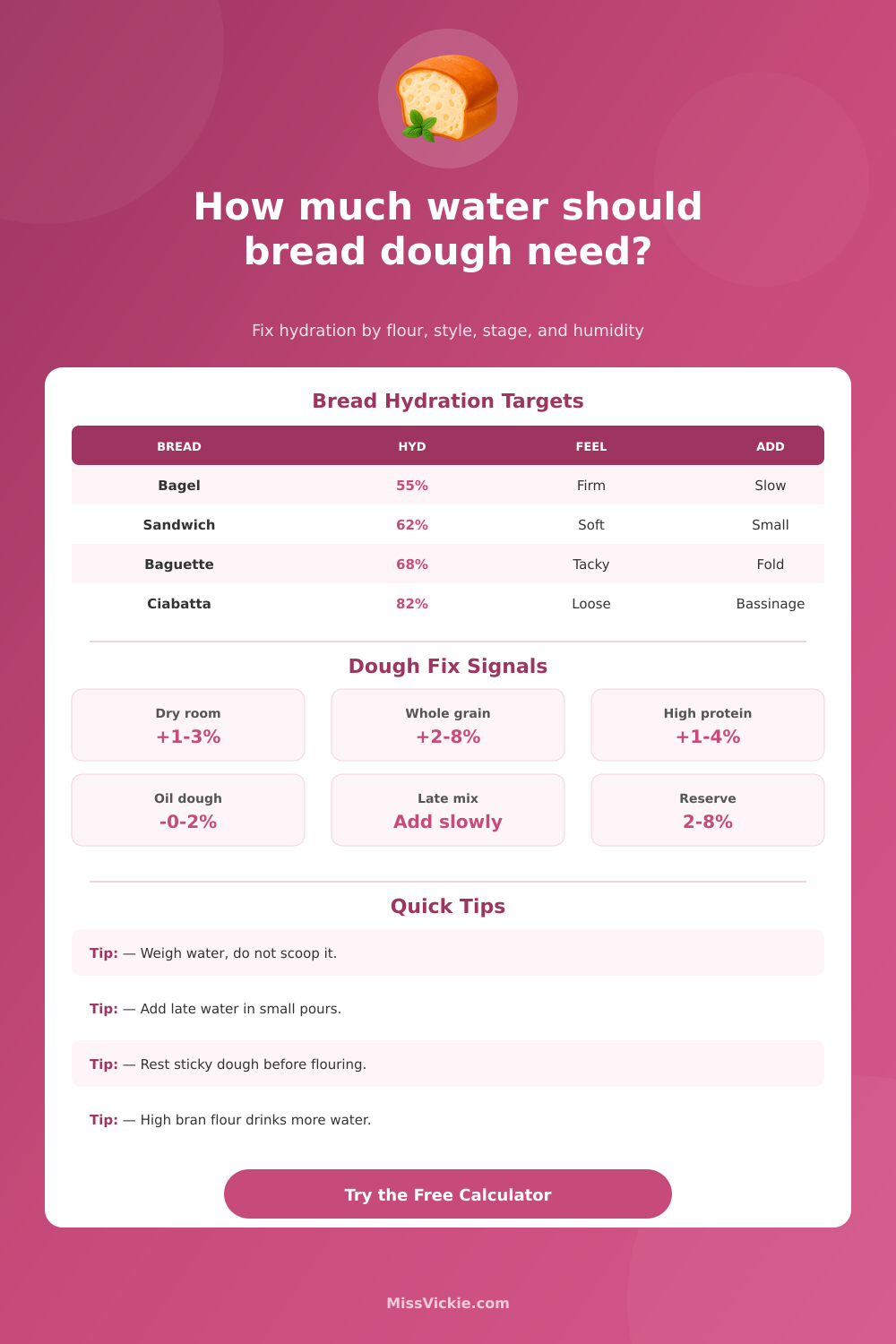
| Bread Style | Typical Hydration | Expected Dough Feel | Best Water Fix Method |
|---|---|---|---|
| Bagel or pretzel dough | 52-58% | Firm, dense, low tack | Add water only if dry patches remain after kneading. |
| Sandwich pan bread | 60-66% | Soft, smooth, lightly tacky | Add small splashes during early kneading. |
| Baguette or lean loaf | 66-72% | Tacky but foldable | Use folds and short rests before adding flour. |
| Country sourdough | 72-78% | Extensible, tacky, elastic | Bassinage after gluten begins to form. |
| Focaccia | 76-85% | Loose, shiny, very sticky | Add water gradually with wet hands and folds. |
| Ciabatta | 78-88% | Loose batter-like dough | Reserve water and add only after strength builds. |
| Factor | Low Setting | Higher Setting | Hydration Effect |
|---|---|---|---|
| Flour protein | Cake or soft flour | Bread flour or high gluten | Higher protein can absorb 1-4% more water. |
| Whole grain flour | White flour | Whole wheat, rye, bran | Bran-heavy dough may need 2-8% more water. |
| Preferment hydration | Stiff biga or levain | Poolish or liquid levain | Wet preferments raise the water already present. |
| Salt and oil | Lean dough | Enriched or higher salt | Oil softens feel; salt tightens gluten. |
| Kitchen humidity | Dry room under 35% | Humid room over 70% | Dry rooms usually need more water by feel. |
| Mixing stage | Just mixed | Bulk or shaped | Late water must be added in smaller increments. |
| Dough Condition | Water Gap | Correction Move | When To Stop |
|---|---|---|---|
| Dry crumbs after first mix | Under target by 3% or more | Add water in 1-2% flour-weight pours. | Stop when no dry flour remains. |
| Stiff during kneading | Under target by 1-3% | Wet hands, smear water over dough, then knead. | Stop when surface turns tacky and elastic. |
| Wet but not developed | Near target | Rest 15-25 minutes before adding flour. | Stop when dough strengthens through folds. |
| Soup-like after bassinage | Over target by 3% or more | Add flour only if folds cannot build structure. | Stop once dough can hold a fold line. |
| Already shaped | Any gap | Avoid major water additions; mist surface only. | Stop before the shaped skin tears. |
Maybe you’ve looked down on the counter as a firm dough fails to cohere, or an overly moist one slid off the bench. The truth is there’s not always just one magic water number to get it right. Many other factors already in the bowl determines how much a dough can absorbs; understanding these factors help you get the water amount right.
The first thing most folks don’t think about is the flour itself. Flour with higher protein levels has stronger gluten structures that holds onto more water while avoiding tears. Another issue is that whole grain flours takes time for the water to soak into their bran and germ. What feels like the perfect dough when you mix it might become realy tight once it rests. And that’s why one batch of the same recipe will be different then the last; the flour in your bin may have changed.
Why Dough Hydration Varies
Even then, when you start mixing, each preferment has its own water added. Far wetter ones like a poolish or liquid levain contribute far more water than something stiffer like a biga. However, that still contributes to the overall hydration. Not taking into account that contribution mean you’re running after an unrealistic hydration target for the eventual mix.
On the other hand, oil and salt go the other way: The former coats protein, limiting how much water it can absorbs; the latter tightens gluten. Changing either one even slightly shifts how your dough feels more than many recipes admit.
Everything is also affected by quiet room conditions. Humidity slows down evaporation; a dry kitchen saps moisture off the top of the dough.
What to do next depends on where you are in your process and when you first detect an issue. Early on, add water freely. After bulk fermentation begins, the same move weaken structure rather than fixing things.
After plugging in what’s currently in there (your flour weight, the volume of water and variables that actualy affect absorption), the calculator does all the work for you; returning not just the amount to add immediately but also a recommended reserve amount that will prevent over correcting the other way. And then below it are the reference tables that put your additions into perspective: How much more did you need? Was your dough still sticky like before or was it bordering on becoming more like a batter?
Bakers learn this hard truth with their first couple batches, though. Yes, it’s about the numbers. But it’s also about the practice of paying attention to the relationship between flour, stage, and environment. When you begin to pay attention to these interactions, instead of just checking them against the calculator, the calculator shifts from being a crutch to something that confirms or corrects your own findings. This is when occasional good loaves becomes dependable.