Buttercream for Cupcakes Calculator
Estimate frosting for mini, standard, or jumbo cupcakes using cupcake count, swirl height, piping tip style, buttercream density, color batches, tasting waste, transport reserve, and serving plans.
Choose a real cupcake scenario to load count, swirl, tip, color divisions, and reserve settings instantly.
Buttercream Breakdown
Color Batch Portions
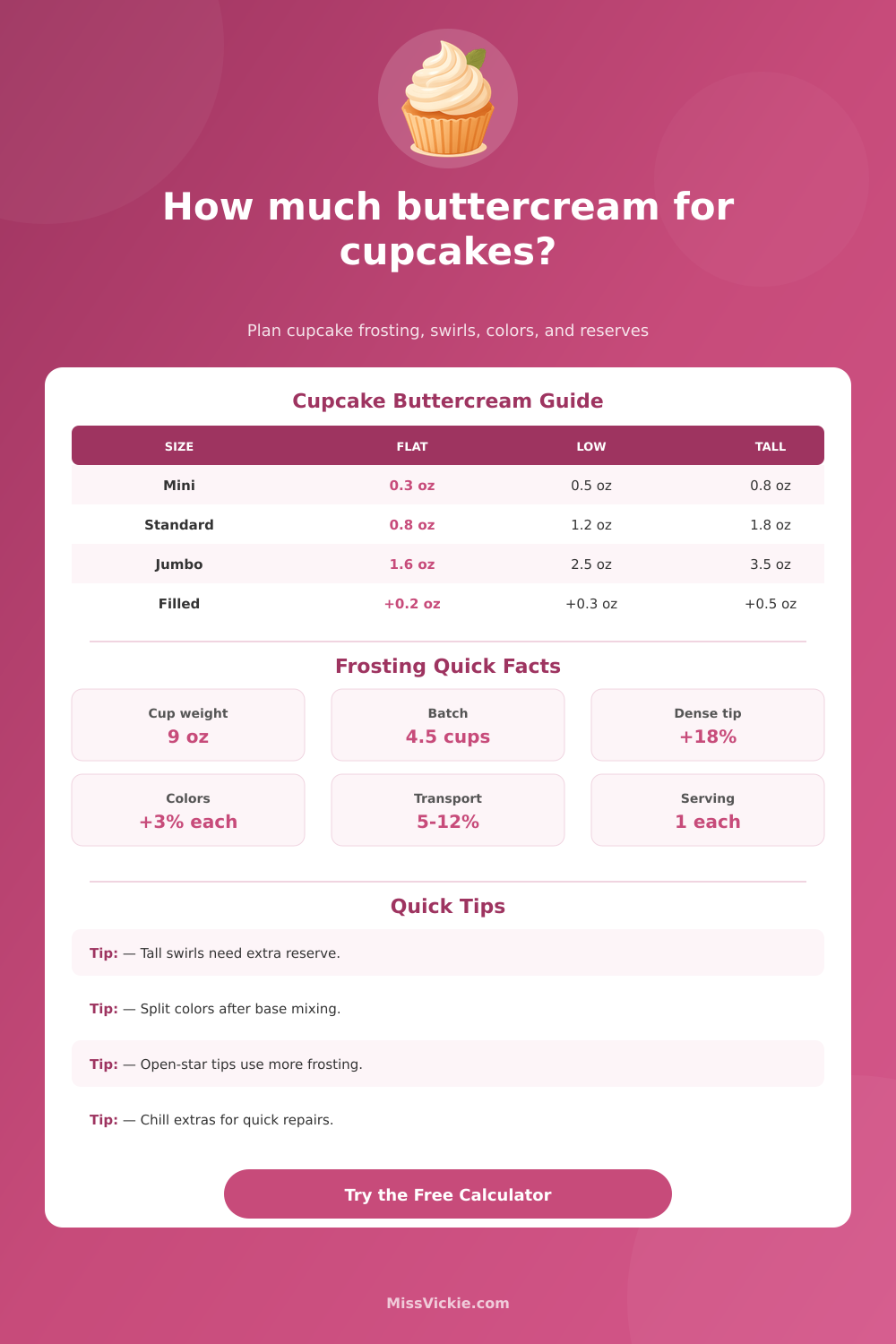
| Cupcake Size | Flat Finish | Low Swirl | Tall Swirl | Best Use |
|---|---|---|---|---|
| Mini cupcake | 0.25 to 0.35 oz | 0.45 to 0.60 oz | 0.70 to 0.90 oz | Sampler boxes, dessert bars, kids parties |
| Standard cupcake | 0.70 to 0.90 oz | 1.10 to 1.35 oz | 1.60 to 2.00 oz | Birthdays, trays, bakery case displays |
| Jumbo cupcake | 1.40 to 1.80 oz | 2.30 to 2.80 oz | 3.20 to 3.90 oz | Dessert plates, gift boxes, special orders |
| Filled cupcake | Add 0.15 to 0.25 oz | Add 0.25 to 0.35 oz | Add 0.40 to 0.55 oz | Cored centers, jam pockets, extra frosting caps |
| Choice | Typical Effect | Calculator Factor | When It Matters |
|---|---|---|---|
| Plain round tip | Smooth coil, compact volume | 0.96x | Great for lower swirls and clean domes |
| Open star tip | Classic ridged bakery finish | 1.08x | Uses more frosting than a smooth round tip |
| French star tip | Many ridges with airy edges | 1.14x | Helpful for dramatic tops and tall spirals |
| Petal or ruffle tip | Overlapping ribbons | 1.22x | Needed for flower, ruffle, and border-heavy cupcakes |
| Swiss meringue buttercream | Softer and less dense per cup | 8.0 oz per cup | Use a firmer chill before transporting tall swirls |
| Crusting buttercream | Dense, stable, slightly heavier | 9.6 oz per cup | Good for warm rooms and boxed delivery |
| Color Plan | Portion Pattern | Extra Loss | Best For |
|---|---|---|---|
| Equal color portions | Even split across all colors | 3% per extra bowl | Team colors, basic party themes, matching trays |
| Main color plus accents | 70% main, small accents | 4% per accent color | Flowers, names, sprinkles, small contrast details |
| Ombre gradient portions | Largest batch stays pale | 3.5% per shade | Pastel sets and graduated display trays |
| Two-tone bag loading | Paired colors in each bag | 5% for bag loading | Striped swirls and split-color piping bags |
| Reserve white plus colors | Hold 15% untinted | 2% plus extra bowls | Last-minute shade fixes and event repairs |
Until your first bag of buttercream goes empty during middle of decorating a batch of cupcakes, it’s a guessing game on how much to use. You have to decide whether you’re splitting the batch into multiple colors, which piping tip you’ll use, how tall you want the swirl, and how large the cupcakes is. The possibilities adds up quickly, and each decision alters how much frosting you’ll end up using. And slight miscalculations results in extra bowl of hardened frosting to throw out or late-night trips to the grocery for an additional bag of butter.
Once you plug in your ingredients (count, size, swirl style, tip, density, plus any other allowances like for transport or tasting), the calculator do the rest. The key is knowing how those inputs translate to real world. Swirl height is a direct multiplier: bigger swirls has more frosting atop them. Tip matters because an open star tip produce more surface area than a plain round tip which makes for more ridges. And density matter too, whipped buttercream weigh less per cup than denser buttercreams.
How to Know How Much Frosting to Use
Cupcake size are the starting point, since a jumbo holds much more then a mini. Color divisions add another layer, as each comes with tiny losses from scraping, remixing, and so on. Transport reserve and tasting waste is just realistic buffers to make sure you’re not caught short at the event.
If you bake lots of fancy-looking cakes with tall swirls and multiple colors, many bakers don’t realize that those little fractions adds up fast. Having one extra batch of color add a few more percent total, while tall swirls on regular-sized cupcakes can easily mean close to double amount of frosting compared to a plain cake with smooth sides. This is all laid out on the page’s reference table, by height and size so you can get a feel for the scale without having to mix anything first.
From there, number from the calculator will tell you if you should of round up to next quarter cup, or mix a whole other batch, depending on your comfort level with leftovers. This is all well and good on paper, but the real benefit is seeing how your results matches your plan. For example: if I’m icing two-dozen standard cupcakes that’ll have a classic tall swirl of frosting, and I want to use two different accent colors on half of them, I can see what happens to total impact of my tip, height, and color loss; allowing me to determine ahead of time if I should double the initial recipe or not, or just whether this recipe is enough for everything.
I also track how many times I stack cupcakes in a box for transport. This help me avoid wasting damaged tops while still having a few cup left, all without needing to mix up another whole batch. It also alters the decoration process itself. Knowing exactly what ratio of colors you will need for each batch allow you to divide them to match. It lets you have a little untinted left over in case things don’t work out just right.
It also let you know exactly how many cupcakes each batch will yield. You won’t be running around like a chicken with its head cut off at the last minute because there’s not enough icing or there’s too much. The art is being able to interpret the inputs as a description of your particular event, rather than just an abstract number. You have to trust that the calculator will translate it all into one trustworthy total before you even crack open the first bag of powdered sugur.