Vanilla Extract in Buttercream Calculator
Calculate vanilla for buttercream by finished batch weight, buttercream style, butter amount, powdered sugar weight, vanilla strength, competing flavors, salt, alcohol tolerance, color sensitivity, and servings.
Load a common frosting batch, then adjust the butter, sugar, flavor strength, color target, and serving count before calculating.
Buttercream Vanilla Breakdown
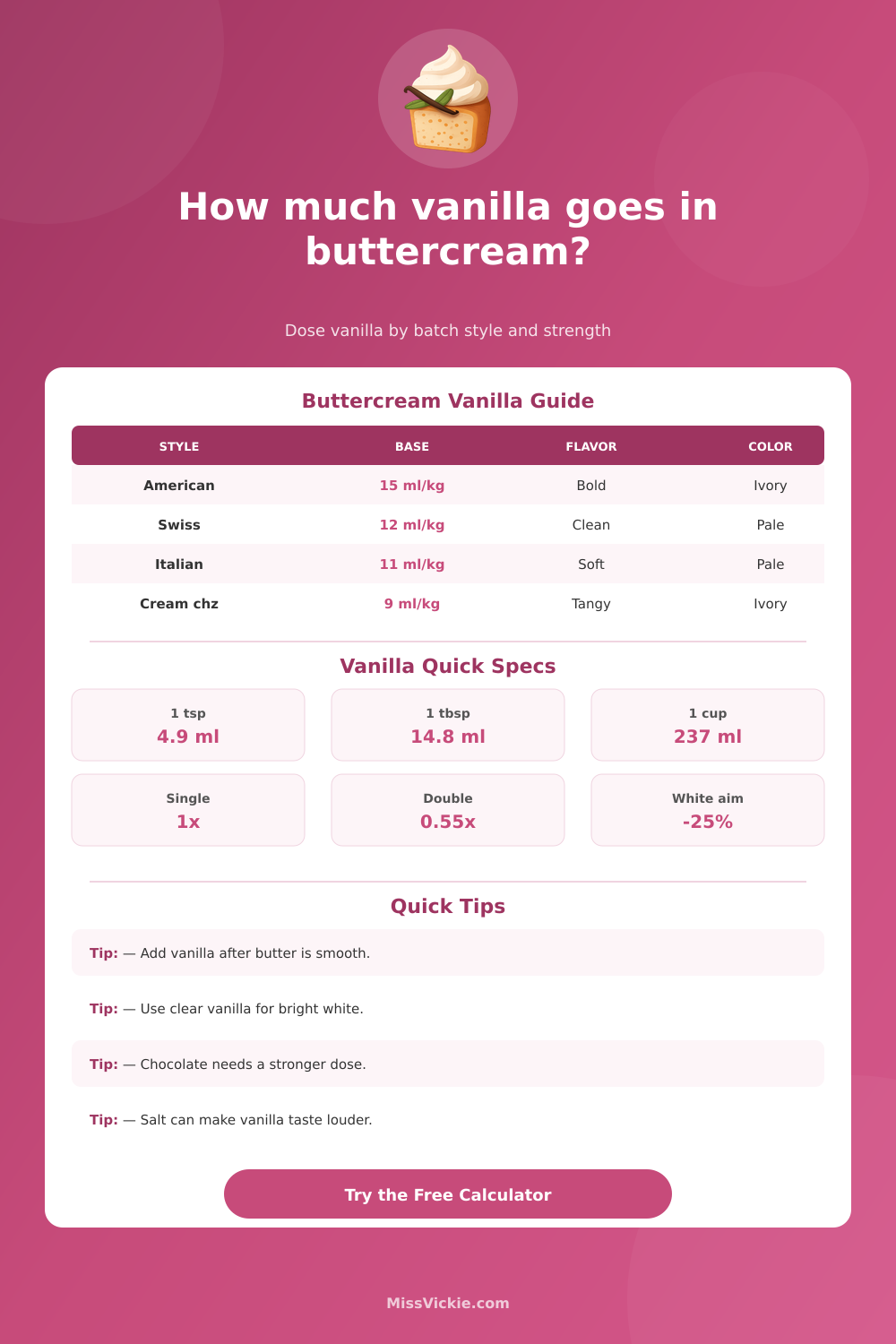
| Buttercream Style | Starting Vanilla | Why It Changes | Best Use |
|---|---|---|---|
| American buttercream | 13 to 17 ml per kg | Powdered sugar mutes aroma, so a higher dose tastes rounded. | Cupcakes, sheet cakes, piped borders |
| Swiss meringue buttercream | 10 to 14 ml per kg | Lower sweetness and high butter make vanilla taste cleaner. | Layer cakes, smooth finishes, florals |
| Italian meringue buttercream | 9 to 13 ml per kg | Silky meringue carries extract well without needing as much. | Wedding cakes, warm kitchens, detailed piping |
| Cream cheese buttercream | 7 to 11 ml per kg | Tangy dairy amplifies vanilla but can show alcohol quickly. | Carrot cake, red velvet, spice cake |
| Ermine buttercream | 7 to 10 ml per kg | Cooked flour base has a mild custard note and softer sweetness. | Vintage layer cakes, delicate fillings |
| Crusting shortening buttercream | 15 to 19 ml per kg | Neutral fat and heavy sugar usually need a stronger aroma. | Decorated cookies, outdoor cakes, shaped piping |
| Vanilla Type | Use This Much | Color Effect | Flavor Note |
|---|---|---|---|
| Single-fold pure extract | 100 percent of calculated dose | Light ivory tint | Standard rounded vanilla with familiar extract aroma. |
| Double-fold extract | About 55 percent of calculated dose | Similar tint, less liquid | Useful when buttercream is already loose or alcohol-sensitive. |
| Vanilla bean paste | About 85 percent of calculated dose | Visible bean specks | Rich custard impression, excellent when specks are welcome. |
| Clear imitation vanilla | About 105 percent of calculated dose | Best for bright white | Sweeter bakery-style aroma with very little color shift. |
| Vanilla powder | About 20 percent of liquid dose by weight | Usually pale | Good for dry mixes or stiff piping buttercream. |
Use a restrained dose if the frosting is piped high on small cupcakes.
A classic home batch usually lands near 2 to 3 teaspoons of extract.
Fill, crumb coat, and finish with a balanced vanilla presence.
Scale by weight, then hold back a little for final flavor correction.
Buttercream’s a tiny detail that goes a long way: get your vanilla wrong on you, and the rest doesn’t matter. Too little vanilla will leave frosting tasting flat; too much, and it’ll fight with the other flavors different than support them. It sounds easy to judge the balance between the two, but judging by the butter, sugar, and style of frosting is not as simple as it appears because they all pulls the flavor in opposite directions at once.
This is what most bakers learn from trial and error: They bake by the book with a classic recipe for American buttercream. Taste it. Think that it lacks something, so they throws in an extra teaspoon of vanilla. But they don’t calculate how much vanilla is already in there, nor how much sugar or butter are still in the mixing bowl. Because those are unplanned additions, the vanilla flavor is weak in some spots but strong in others.
How to Get the Right Amount of Vanilla
Once you plug the amount of butter, the weight of your sugar, the weight of your finished batch, and which kind of buttercream youre making into the calculator above, it do the math for you. It calculates if you need to adjust for needing a bright white color, other flavors competing for attention, or what kind of vanilla you used.
The type of buttercream also plays a role (more than you’d think). American buttercream is loaded with powdered sugar which dulls the smell, so it needs a bit more extract. Italian and Swiss buttercreams is lower in sugar and higher in butter, so we can use less extract and get a cleaner taste. Cream cheese falls between two because the tartness of the cheese already boosts the vanilla flavor. Generally speaking, using less are better and will taste balanced. To account for this, the tool starts with a unique rate for each kind of buttercream, then adds the other factors based off that.
And then there is the color/strength tradeoffs: More flavorful ingredients like double-fold extract and vanilla bean paste contribute more bang for the buck in terms of flavor per unit volume, but they’ll also darken a white frosting (and maybe even add some speckles). Clear imitation vanilla maintains brightness while demanding that you use a little more volume to get as much punch. You can choose from those options directly on the calculator, which will reflect your goal for how it looks as well as how it taste.
It is easy to forget about salt level and alcohol tolerance until there is an issue. Vanilla tends to be a bit rounder and fuller with just a touch of salt; too much salt can create a sharpness in your extra extract. For those serving guest or children sensitive to the taste of raw extract, alcohol tolerance settings is important. Rather than leaving this up to trial and error, the tool will cap off based on those preferences.
Now that’s where the real value comes into play; change a variable and observe the resulting adjustment in recommended dose. Switch from plain cake to chocolate? The dose increases. Increase the sugar ratio? The suggested dose goes up again. Change your tolerance from standard to very low? Dose decreases to maintain a clean flavor. Once variables are entered, these adjustments occurs automatically.
This doesn’t mean no more tasting. It just means that you have a solid baseline for your starting point. It also takes into account the big picture factors of what’s in your recipe. That’s often all it takes: A quarter teaspoon or a couple drops to make up your mind, and would of helped if you used less.