Cornstarch replacement for sauces, fillings, and cold mixes
Xanthan Gum to Cornstarch Substitute Calculator
Convert a recipe's original cornstarch amount into a careful xanthan gum starting dose, with adjustments for liquid volume, heat, acidity, sugar, target thickness, mixing method, and over-thickening risk.
Xanthan gum does not behave like cornstarch. It thickens without boiling, hydrates quickly when dispersed well, and can turn stringy if the dose is too high for the liquid volume.
Cornstarch Slurry
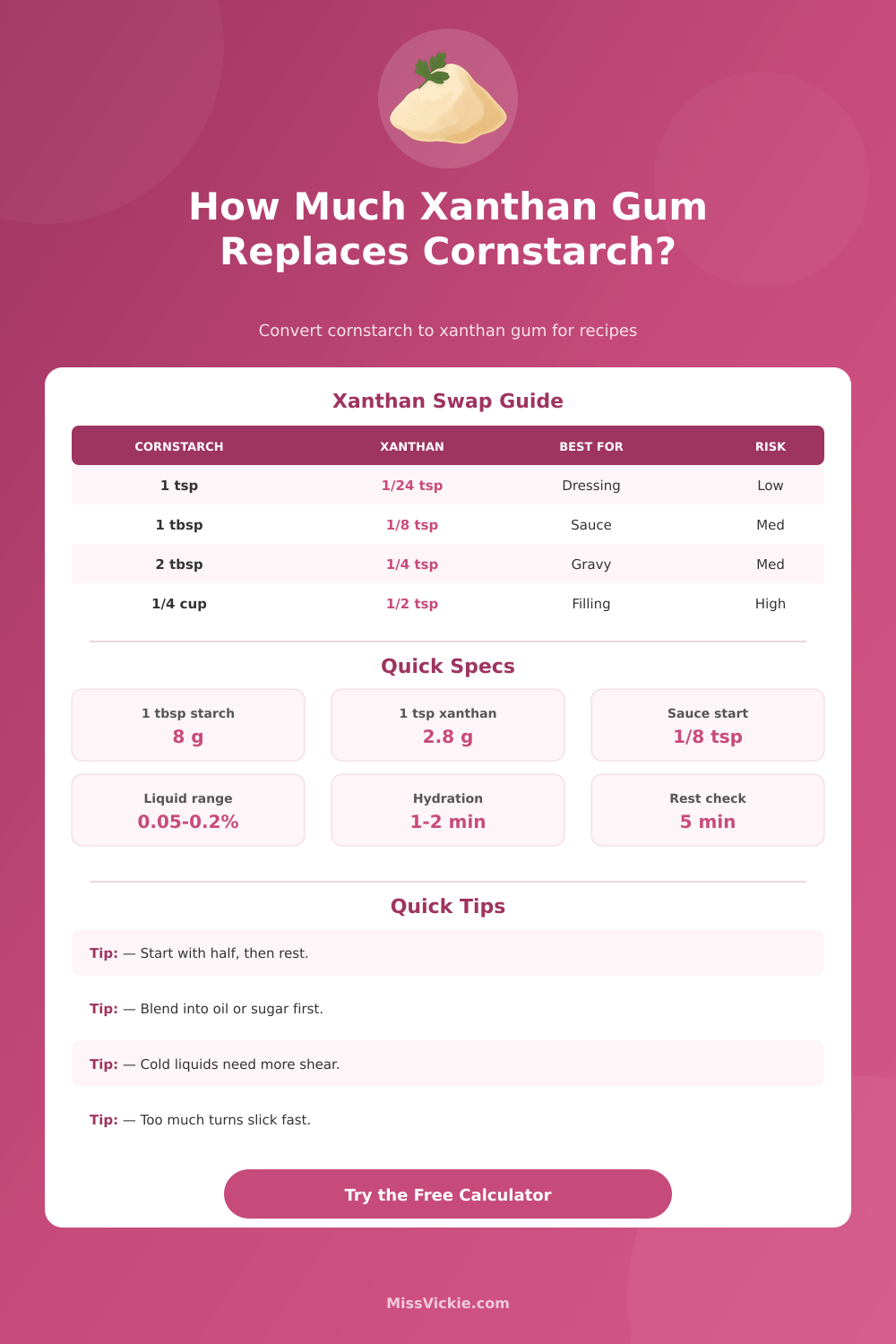
8 g / tbsp
Needs heat and time to swell. Gives sauces an opaque, soft, familiar body.
Xanthan Gum
2.8 g / tsp
Thickens hot or cold liquids at tiny doses. Best added gradually with strong mixing.
Typical Swap
1/8 tsp
A common start for replacing 1 tablespoon of cornstarch in a sauce or gravy.
Texture Risk
Fast rise
Extra pinches can change a sauce from glossy to elastic, so small additions matter.
| Original Cornstarch | Approx Cornstarch Weight | Cautious Xanthan Start | Full Sauce Range |
|---|---|---|---|
| 1 teaspoon | 2.7 g | 1/48 teaspoon | 1/32 to 1/24 teaspoon |
| 1 tablespoon | 8 g | 1/16 teaspoon | 1/12 to 1/8 teaspoon |
| 2 tablespoons | 16 g | 1/8 teaspoon | 1/6 to 1/4 teaspoon |
| 1/4 cup | 32 g | 1/4 teaspoon | 1/3 to 1/2 teaspoon |
| 1/2 cup | 64 g | 1/2 teaspoon | 2/3 to 1 teaspoon |
| Recipe Type | Xanthan Behavior | Usual Target | Practical Note |
|---|---|---|---|
| Gravy or pan sauce | Glossy body | 0.10% to 0.16% | Blend after reducing so the dose matches final volume. |
| Stir-fry sauce | Clings quickly | 0.08% to 0.14% | Add before the final toss to avoid gummy patches. |
| Fruit filling | Sets softer | 0.12% to 0.22% | Expect less cloudy gel and more glossy hold. |
| Cold dressing | Needs shear | 0.05% to 0.12% | Blender mixing prevents specks and fish-eye clumps. |
| Pudding or custard | Slick if high | 0.05% to 0.10% | Use a small dose with eggs, dairy, or starch-free custards. |
| Desired Viscosity | Xanthan by Liquid Weight | Texture Cue | Good Uses |
|---|---|---|---|
| Lightly coats spoon | 0.04% to 0.08% | Thin gloss | Vinaigrettes, light pan sauces, drizzles |
| Classic sauce thickness | 0.08% to 0.14% | Soft coating | Gravy, stir-fry sauce, soups |
| Thick gravy or filling | 0.14% to 0.22% | Slow flow | Fruit sauces, glazes, hearty gravies |
| Spoonable, gel-like hold | 0.22% to 0.35% | Heavy cling | Specialty fillings, low-carb gels, no-bake sauces |
| Mixing Method | Clump Control | Best Step | When to Use |
|---|---|---|---|
| Immersion blender or blender | Very high | Blend 30 to 60 seconds | Cold sauces, dressings, smooth gravies |
| Disperse in oil first | High | Stir into fat, then liquid | Dressings, pan sauces, glazes |
| Whisk with sugar first | High | Mix dry, then rain in | Fruit fillings, sweet sauces, syrups |
| Hand whisk directly | Moderate | Sprinkle slowly | Warm gravies and small batches |
| Sprinkle into vortex | Moderate | Whisk hard while adding | Soups, broths, larger pots |
Use xanthan gum if you prefer not to use cornstarch because dish would require heating or you don’t like the look of a cloudy broth. But be aware that these two thickeners behaves differently. While cornstarch must be simmered and swells up over time, xanthan begin thickening instantly when introduced to any amount of liquid and keeps getting thicker as it does so. It’s why a straight-up one-to-one swap isn’t always successful.
For a better idea, try using a thickener calculator that takes into account other details about your recipe. The tool help you decide how much and what kind.
How to Use Xanthan Gum Calculator
First, it takes into account the volume of liquid. Xanthan gum work as a percentage of total weight of your liquid. If you have a lot of liquid in one big pot and less in a smaller one, the same amount of powder will make one dish gluey and the other still thin. Other variables include the acidity level and sugar content of whatever is being thickened; both influence behavior of the gum in the mix. For example, the starting dose might be slightly higher on citrus dressings and fruit fillings then on just plain stock gravy.
Temperature matter, too. Stir cold liquids more thoroughy to help break up any little lumps formed when powder touches the cold liquid. These lumps won’t dissolve completely. The last variables is ones people tend to discount: the method of mixing, which can make all the difference. Breaking up any lumps by pre-mixing with some sugar or oil will help prevent clumping. In haste, it’s tempting not to bother.
When using this calculator, it take into account your mixing method, and adjusts the initial suggestion accordingly to account for how well the powder will actualy hydrate. And finally, there is risk tolerance. Do you desire something closest to cornstarch? Or do you aim to be just under the line where the sauce goes slick?
After the tool says it’s finished, include the low end of range. Whisk or blend well and let sit for five minutes. After first mixing, xanthan gum keeps thickening. What you taste at this point isn’t the full thickness of the sauce. If it seems too runny, add the rest gradually instead of all at once.
The primary benefit of this swap: flexibility. For example, you can make no-cook salsas and other thickened vinaigrettes that don’t require the stovetop. The result? A glossy sauce, rather than an opaque one. It results in a glossy sauce, not one that is opaque with cooked flavor.
But there’s a catch. Too much xanthan gum (a dose here) can create an elastic consistency. That’s where the risk comes in. Start conservatively; let it sit for a moment so you can check texture before it sets.
But there are some common errors where users eye-ball xanthan gum as if it were a dry ingredient. A quarter tsp doesn’t seem like much; until you dissolve it into one cup of liquid. Then your sauce won’t pour. You should of known that. The calculator fix this mistake by linking the dosage to both the specific amount of liquid and the type of recipe you are making.
Yet it still defers the decision-making process to you. After waiting five minutes and adding your initial dose, you’ll know if you need to add more powder, or if you’ve hit the right consistency. That’s the sweet spot for practical use in a kitchen, getting precision but also the opportunity to taste. Now you have the chance to use a cold thickener, without having to worry about the surprise of jelly-like, loose sauce instead of something closer to gravy.