Fried Chicken Dredge Planner
Seasoning in Flour for Fried Chicken Calculator
Scale seasoned flour by flour weight, chicken weight, salt percent, spice blend, dredge loss, double-dredge style, brine salt offset, heat level, and batch count.
🍳Start With a Fried Chicken Scenario
Presets fill practical restaurant and home-cook dredge setups, then the calculator compares your flour bowl against estimated pickup and discard.
⚖Units and Batch Size
🍗Chicken and Flour Inputs
🧂Salt, Spice Blend, Brine Offset, and Heat
Seasoned Flour Breakdown
📊Fried Chicken Flour Benchmarks
📘Pickup, Salt, and Dredge Reference
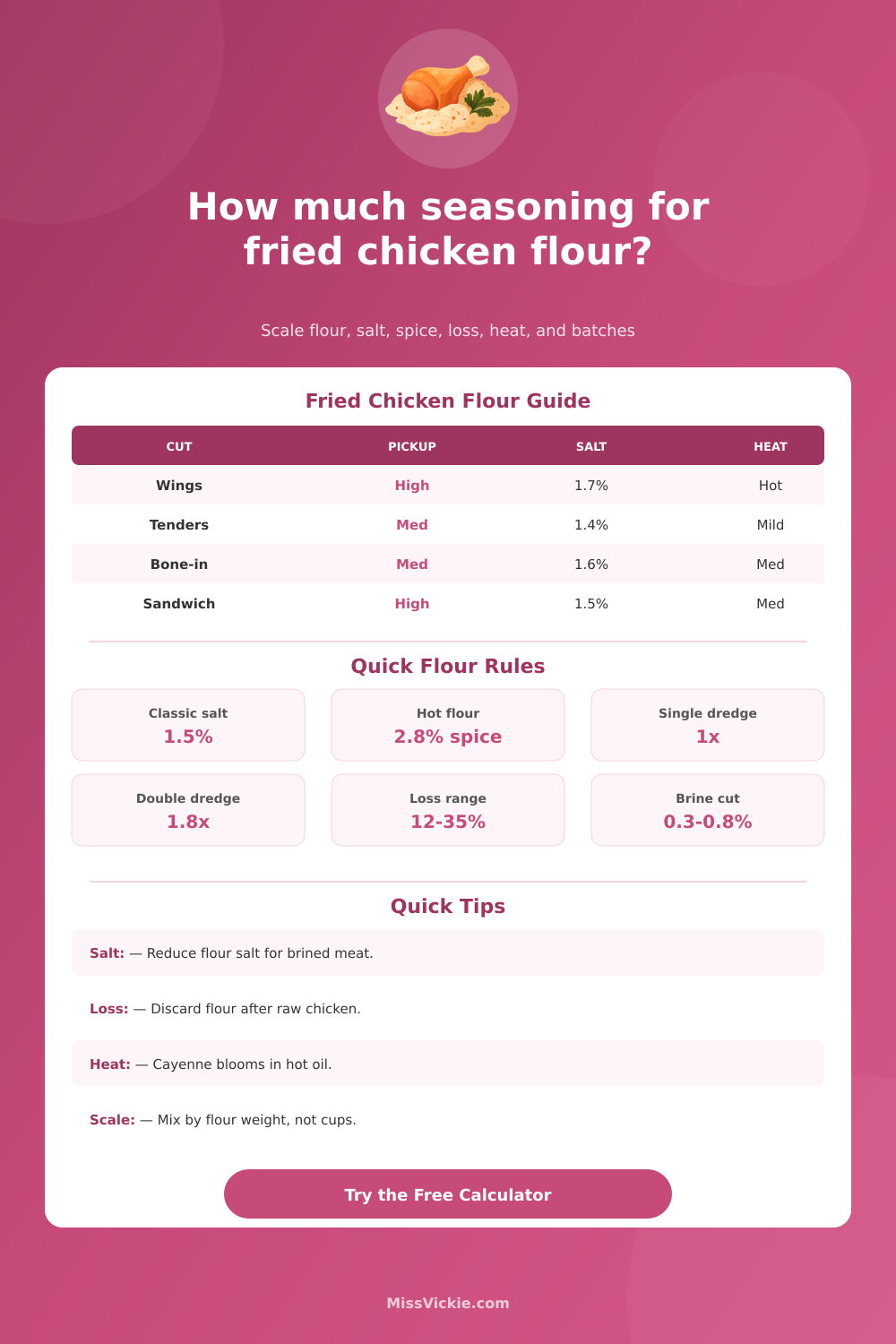
| Chicken style | Typical flour pickup | Good salt range | Best dredge note |
|---|---|---|---|
| Bone-in mixed pieces | 42 to 52 g per lb | 1.4 to 1.8 percent | Rest after dredging for stronger crust adhesion. |
| Wings and flats | 58 to 70 g per lb | 1.5 to 2.0 percent | Higher surface area needs more flour and more pepper. |
| Chicken tenders | 38 to 48 g per lb | 1.2 to 1.5 percent | Keep salt gentle because thin meat seasons quickly. |
| Sandwich fillets | 50 to 62 g per lb | 1.3 to 1.7 percent | Double dredge creates a thicker, craggier sandwich crust. |
| Popcorn chicken | 70 to 88 g per lb | 1.2 to 1.6 percent | Small pieces carry a lot of coating, so salt lightly. |
| Flour base | Approx cup weight | Crust behavior | Seasoning note |
|---|---|---|---|
| All-purpose flour | 120 g per cup | Classic crisp crust | Balanced with 1.4 to 1.8 percent salt. |
| AP plus cornstarch | 118 g per cup | Lighter and crisp | Use a touch more pepper because starch mutes spice. |
| Self-rising flour | 125 g per cup | Puffed crisp crust | Reduce added baking powder and check salt already present. |
| Rice flour blend | 150 g per cup | Very crisp, pale | Needs assertive spices because flavor is cleaner. |
🫙Spice Blend Targets
Paprika, garlic, onion, black pepper, and a little cayenne.
Paprika, garlic, thyme, oregano, cayenne, and white pepper.
Deep paprika and pepper base meant to support hot oil paste.
Garlic, onion, celery seed, parsley, thyme, and black pepper.
💡Seasoned Flour Tips
Kitchen estimates vary with moisture, resting time, flour brand, and how hard each piece is pressed into the dredge. Use the calculator as a batch planning guide and season cooked chicken to taste.
Seasoning the flour are a critical step in the frying process as the seasoning in the flour will ultimately determine the flavor of the crust that forms around the chicken. Using too little salt in the flour will create a crust that lack flavor. Using too much salt in the flour will create a crust that taste too salty.
The flour is, therefore, an active ingredient to be seasoned as the flavor must be provided to the chicken after it has been fried in the oil. The cut of the chicken will impact how much flour will adhere to the chicken and how much seasoning is required. For instance, chicken wing and popcorn chicken pieces will have more surface area than a chicken thigh will have, so more dredge will be required for the wings and popcorn chicken pieces.
How to Season Flour for Fried Chicken
Additionally, because the dredge will be required in larger amounts for chicken wings and popcorn chicken pieces, the cook must adjust the ratio of salt and heat in the flour for those chicken pieces. Lastly, chicken sandwich fillet will be larger and flatter than other cuts of chicken, so the fillets will require a specific amount of coating to allow the fillet to remain stable while the chicken is eaten with a bun and sauce. The moisture level of the chicken will impact how much flour will stick to the chicken.
A piece of chicken that is dry will allow for less flour to adhere to the chicken than a piece of chicken that has been dipped in buttermilk will allow. Additionally, some chef will utilize a double dredging method which will allow for more coating to adhere to the chicken. The benefit of using this method is that it will create a thicker and craggier crust.
The disadvantage of using this method, however, is that there will be a loss of flour when the chicken is double dredged, which you should of accounted for in the calculation of the amount of flour to be used in the recipe. The salt percentage of the flour is a measurement that many cooks will calculate incorrect. The salt percentage is based upon the weight of the flour, not the finished piece of chicken.
Furthermore, the salt percentage does not take into account the amount of salt that is present in the brine or pickle soak in which the chicken was soaked. If the chicken was seasoned in a brine or pickle soak, less salt will be added to the flour as the salt content from the brine and flour will combine to form the total salt content of the finished chicken product. Additionally, care must be taken with the type of flour that is used with the chicken recipe.
Self-rising flour contains both salt and leavening agent which will alter the total salt content of the flour altogether. As with salt, the logic for spice blends is that they change the flavor of the flour. The classic Southern spice blend uses paprika and garlic.
For Nashville-style spice blends, though, the recipe uses more paprika and black pepper to allow for the cayenne pepper to be more effective in the hot oil. A calculator can assist you in choosing different spice blends. Additionally, the calculator allow you to add cayenne pepper as a separate percentage of the spice blend.
You will need to account for overage with spices when using the spice blend to season the chicken. Some of the spice will stick to the scale, and some of the spice will remain in the flour bowl after seasoning the chicken. Dredge loss is something that every chicken fryer eventually experience.
Once flour has touched raw chicken, that batch of flour can no longer be used for frying another batch of chicken. The calculator can show the percentage of the margin of flour that will be lost to this process. This margin percentage will help you determine whether or not you have enough flour to cook the entire batch of chicken that you plan to prepare.
If you do not account for the loss of flour that touches chicken, the fried chicken will have patchily coverage of flour. Depending upon the type of flour that you use to coat the chicken, the seasoning requirements will change. Flour made from rice will crisp different than flour that is made with all-purpose flour.
Additionally, rice flour will mute the flavors of the spices more than all-purpose flour will. For these reasons, you may need to adjust the percentage of spices that you use if you would like to use rice flour. Cake flour will produce a tender crust on the chicken.
The problem with using cake flour, though, is that the crust may taste under-seasoned if you use the same percentage of spices as all-purpose flour. Weigh out your flour first. Then calculate the percentage of salt and spices that will be used in the seasoning of the chicken.
Do not use a spoon to season the chicken with salt and spices; use the calculator to determine the amount of salt and spices that will be used. After using the calculator to determine the amount of spices that will be used, taste the seasoned chicken to ensure the flavor is correct. If the flavor is not correct, adjust the seasoning percentage for the flour for the next batch of chicken to be prepared.