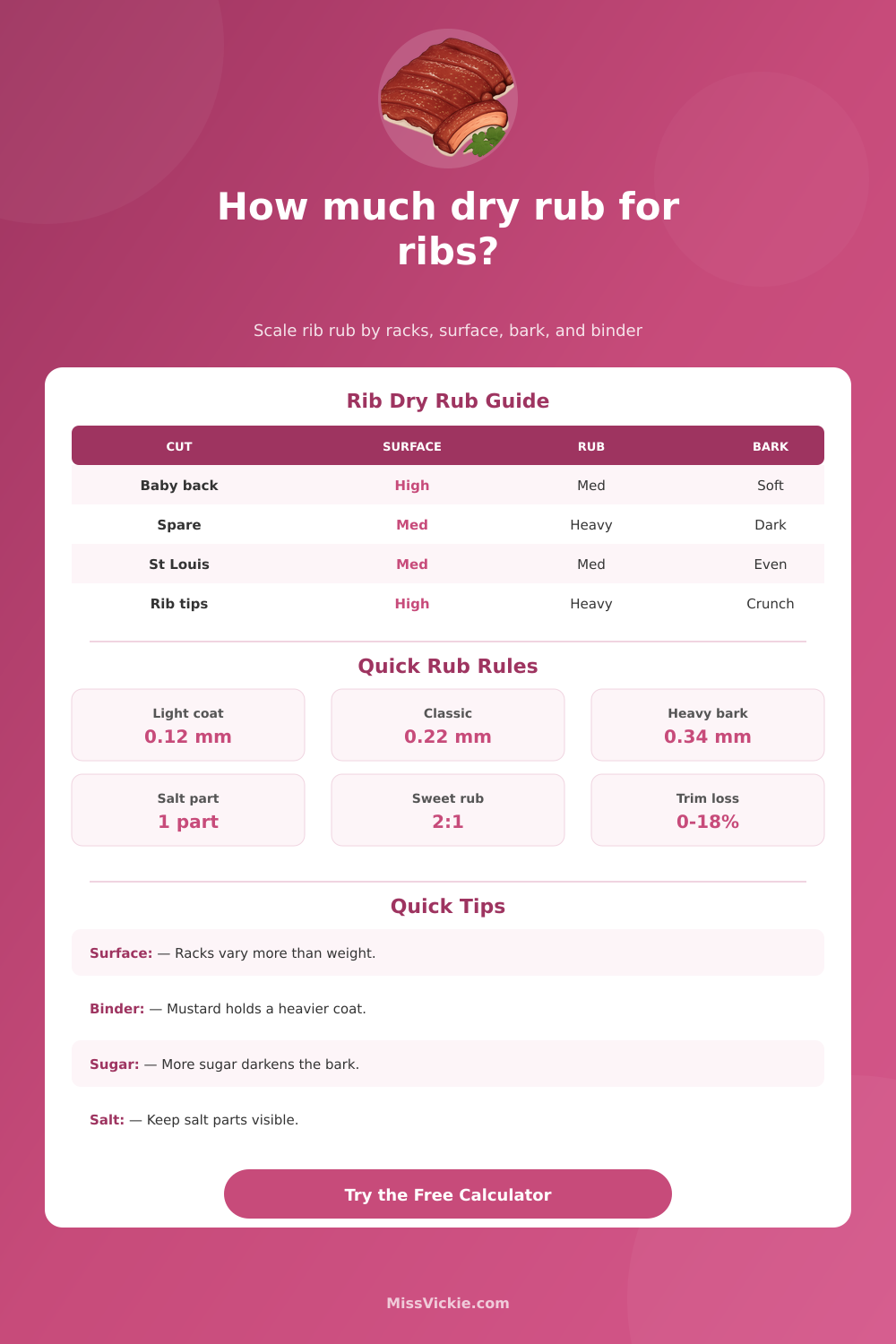
Rack count, rib weight, surface area, rub thickness, bark, binder, trim loss, and sugar-salt math
Dry Rub for Ribs Calculator
Estimate how much dry rub to make for baby back ribs, spare ribs, St Louis ribs, rib tips, or country-style ribs using cut-specific surface area, post-trim weight, binder tack, bark target, and sugar-salt-spice balance.
Start with a real rib setup, then tune rack count, average rack weight, surface-area method, rub thickness, bark target, binder, trim loss, and sugar-to-salt ratio.
Rib Rub Breakdown
Sodium estimate assumes the salt portion is sodium chloride and that a rack yields about three servings. Actual sodium varies with how much rub remains after cooking and slicing.
| Rib Cut | Typical Rack Weight | Surface Estimate | Trim And Rub Note |
|---|---|---|---|
| Baby back ribs | 1.75 to 2.75 lb per rack | About 145 sq in per lb | Curved bones create high surface for the weight; a medium coat usually looks full. |
| Whole spare ribs | 3.5 to 5.5 lb per rack | About 118 sq in per lb | More flat meat and flap trimming; rub by post-trim weight for steadier salt. |
| St Louis cut ribs | 2.5 to 3.75 lb per rack | About 128 sq in per lb | Even rectangle makes both-side coating easy and competition bark more predictable. |
| Rib tips or riblets | 1 to 3 lb per tray | About 170 sq in per lb | Small edges need a heavier total rub because every piece has exposed sides. |
| Beef plate short ribs | 4 to 7 lb per rack | About 86 sq in per lb | Thick beef ribs use less rub per pound but more coarse pepper and savory spice. |
| Coat Target | Thickness | Approx Rub Feel | Best Use |
|---|---|---|---|
| Light dusting | 0.10 to 0.15 mm | Meat still shows through the rub. | Baby backs, no binder, lower salt rubs, or sauce-finished ribs. |
| Classic BBQ coat | 0.18 to 0.25 mm | Even color, fine spice layer, modest shaker loss. | Most spare, St Louis, and baby back cooks. |
| Heavy bark coat | 0.28 to 0.38 mm | Visible granules with a thick dry surface. | Dark bark, mustard binder, longer smoke, or rib tips. |
| Layered competition coat | 0.32 to 0.48 mm | Two-stage seasoning look with edge emphasis. | Presentation racks where every face needs color. |
| Rub Style | Sugar To Salt | Spice Share | Flavor Direction |
|---|---|---|---|
| Balanced BBQ | 1.2 to 1 | Medium paprika and chile | Sweet enough for pork ribs without hiding smoke and pork flavor. |
| Memphis sweet | 1.8 to 1 | Paprika-forward | Reddish bark, good with mustard binder and moderate heat. |
| Texas savory | 0.35 to 1 | High pepper and garlic | Better for beef ribs, spare ribs, or cooks where sauce adds sweetness later. |
| Low sugar smoke | 0.2 to 1 | Chile, pepper, herbs | Less darkening and less sweetness for longer cooks or hotter pits. |
| Sweet heat | 2.2 to 1 | Moderate chile | Sticky dark bark when paired with a tacky binder and spritz control. |
Use a lighter coat and rest the ribs until the rub sweats in.
Holds a classic or heavy coat without tasting mustardy after cooking.
Adds tack with tang and works well for savory pepper bark.
Grabs more rub but pushes bark darker and sweeter.
| Batch | Rib Setup | Classic Rub Needed | Practical Mixing Note |
|---|---|---|---|
| Small dinner | 2 baby back racks | About 80 to 110 g | One shaker cup is usually enough with a little extra for edges. |
| Family cook | 3 St Louis racks | About 160 to 210 g | Mix in a bowl, then fill a shaker to avoid clumps. |
| Backyard party | 6 spare racks | About 420 to 560 g | Split sweet and savory batches if some ribs will be sauced. |
| Rib tip tray | 5 lb rib tips | About 170 to 235 g | Small pieces have more exposed edges, so total rub runs high. |
| Beef ribs | 2 plate racks | About 150 to 230 g | Use more pepper and less sugar than pork rib blends. |
Applying an correct amount of dry rub to ribs requires an understanding of how the amount of dry rub will impact the texture and flavor of the ribs. If a person applies to little dry rub to the racks of ribs, the bark will be pale and thinly. If a person applies too much dry rub to the ribs, the salt in the dry rub will overpower the meat, and the sugar in the rub will burn on the ribs before they is fully cooked.
In order to avoid these outcomes, a person must apply a dry rub until the ribs are coated in an amount of dry rub that is appropriate for the cut, size, and duration that the ribs will be exposed to heat. The amount of dry rub to applying to ribs is related to the surface area of the ribs. It is possible for a baby back rack and spare rack to weighs the same amount.
How Much Dry Rub to Use on Ribs
However, racks of ribs has different amounts of surface area. Spare racks have more flat surface area for the dry rub, but spare racks also have more flap and skirt that the cook will remove when preparing the ribs. Additionally, baby back racks is naturaly curved so that there is more bone visible on those racks of ribs.
The surface area for each cut of ribs is not the same, so a person should consider the surface area of the ribs when determining how much dry rub to use. The calculator for dry rub accounts for these aspect of the ribs and calculates the amount of dry rub that is appropriate for the rack of ribs that will be cooked. Another consideration for dry rub is the use of a binder to assist with the dry rub adhering to the racks of ribs.
The most common binder used is mustard. A cook uses mustard because it becomes tacky and adheres to the ribs good and has no noticeable flavor after the ribs are cooked. A binder can be avoided if the person applies the dry rub lightly to the ribs and the racks are allowed to sit long enough for the salt to draw moisture for the ribs.
However, a binder will be required if the ribs will be smoked for long periods of time or if the dry rub contain a significant amount of sugar. The sugar in the rub will need time to dissolve and darken, so a binder will aid in the dry rub staying in place on the ribs. The calculator for dry rub accounts for the need for a binder in the rub.
The ratio of sugar to salt in a dry rub will impact the outcome of the ribs. Memphis-style dry rub recipes contains more sugar than Texas-style rubs. The excess sugar will create a darker and stickier bark on the ribs.
However, if there is too much sugar in the dry rub, the salt will lose it’s flavor with extended cooking. Texas-style dry rubs has a different ratio of sugar to salt different than Memphis-style dry rubs. Texas-style dry rubs contain more black pepper, garlic, and less sugar.
This rub works better on beef ribs because beef ribs contains more fat. The calculator will split the total weight of the dry rub according to these components once a person has chosen the dry rub style that they would like to use. Trim loss is another aspect of ribs and dry rub that must be considered.
Trim loss is the percentage of meat and fat that is removed from the rack of ribs while preparing them for cooking. A rack of ribs may lose twelve or fifteen percent of its weight during trimming. Since the salt load in the dry rub will be calculated according to the weight of the ribs after trimming, the trim loss must be accounted for in the initial calculation of the dry rub.
The surface area of the ribs will also change after trimming the rack of ribs. The calculator will recalculate the amount of dry rub need once the percentage of trim loss is entered into the calculator. It is also possible for a person to season racks of ribs differently.
Some racks of ribs will be lightly coated in dry rub because they will be coated in sauce later in the cooking process. Other ribs may be coated in a heavier dry rub that contains extra sugar for the bark to darken and a tackier binder to adhere to the ribs. These different scenarios can be compared in the calculator.
The calculator provides a person with the number they need to decide whether the amount of dry rub that will be used is appropriate for the recipe for ribs. Additionally, once a person has determined the amount of dry rub that is needed, they may want to measure it once and use that amount for the next batch of ribs to season. Unless the bark turned out differently than the batch of ribs prepared before, the amount of dry rub should of been the same for the next batch of ribs.