🥧 Canned Pie Filling for a Pie Calculator
Estimate how many cans of pie filling to use from pan diameter, crust depth, can size, filling style, fruit density, top crust pressure, thickener adjustment, overflow headroom, and servings.
Use the inside diameter and the actual fill depth from the bottom crust to the rim. The calculator reserves headroom so the filling can bubble without flooding the crust edge.
Full Breakdown
Maximum visible mound when no upper crust presses down.
Moderate displacement with vents for bubbling syrup.
Lower fill line protects sealed crimps from overflow.
Crumbs absorb syrup and need space above fruit.
Common Pie Sizes
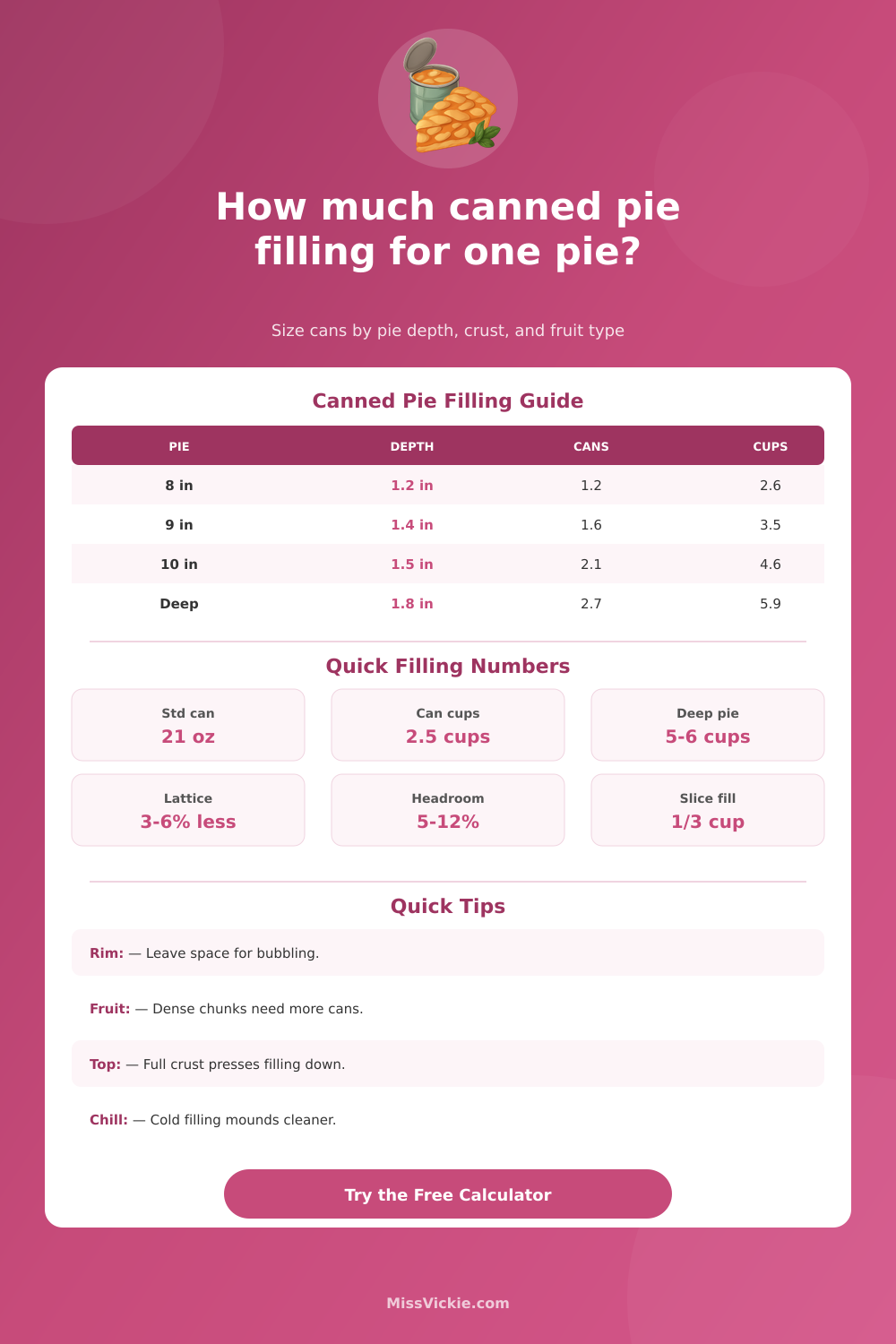
| Pie | Depth | Filling | Cans |
|---|---|---|---|
| 8 inch regular | 1.15 in | 2.4 to 2.8 cups | 1 to 2 |
| 9 inch regular | 1.35 in | 3.2 to 3.8 cups | 2 |
| 9 inch deep | 1.75 in | 4.4 to 5.2 cups | 2 to 3 |
| 10 inch deep | 1.85 in | 5.4 to 6.3 cups | 3 |
Filling Type Factors
| Filling | Oz/Cup | Texture | Note |
|---|---|---|---|
| Apple | 8.7 | Chunky | Needs mound space |
| Cherry | 8.4 | Round fruit | Good with lattice |
| Blueberry | 8.8 | Small fruit | Can bubble high |
| Lemon | 9.2 | Smooth | Fills evenly |
Can Size Conversions
| Can | Approx Cups | Best For | Use |
|---|---|---|---|
| 15 oz | 1.8 cups | Small pie | Top-off can |
| 20 oz | 2.35 cups | Standard pie | 2 cans |
| 21 oz | 2.45 cups | 9 inch pie | Common size |
| 30 oz | 3.5 cups | Deep dish | Large can |
Top Crust Allowance
| Top | Reduce | Vent | Best Fill |
|---|---|---|---|
| Open | 0% | Open | Soft mound |
| Lattice | 4% | High | Level rim |
| Full crust | 7% | Slits | Below rim |
| Crumb | 5% | Steam gaps | Loose top |
Calculator estimates are based on common canned filling densities and round pie cavity volume. Brands vary in fruit-to-gel ratio, so use the result as a filling plan and adjust visually before sealing the crust.
A pie crust have a specific amount of space within the crust for the filling to occupy. The amount of space the filling will occupy is within the curved crust of an pan. The volume of the crusts takes into account the space that the bottom crust will take up, the space that the top crust may take up, and the amount of space that must remain within the pie crust for the pie filling stay within the crust.
The pie calculator will calculate the number of can of fruit based on the diameter and depth of the pie crust pan. The pie calculator will allow you to determine the number of cans of fruit needing to fill the crust without guesswork. People typicaly attempt to guess the number of cans of fruit needed to fill the pie crust.
How Many Cans of Fruit Your Pie Needs
A standard 21-ounce can will hold approximately two and a half cups of fruit. You must calculate the number of cups of fruit that the pie crust can hold before the fruit pie filling reaches the edge of the crust. The pie calculator will calculate the number of cups of fruit needed for your pie crust based on the crust and fruit type.
The density of the fruits will change the way that the fruit fill the pie crust. For instance, light pieces of fruit will allow for more syrup to be added into the crust than chunkier pieces of fruit. Using the pie calculator will allow you to flag the different densities of fruit so that the pie does not sink in the oven.
The type of crust that you use for your pie can change the amount of filling that your pie crust can contain. For instance, an open crust will allow for a soft mound of fruit to be added to the pie crust, but a double crust will require you to add the fruit to the crust in such a way that it does not spill over the crimped edge of the crust. A lattice crust will allow steam to escape from the pie and will require a certain amount of the pie crusts to be displaced from the amount of a solid crust.
The pie calculator will account for these differences in volume when determine the amount of fruit to use in your pie. Other considerations for your pie recipe include the thickener that is to be added to your pie filling and the amount of overflows that will be created by the pie. Thickeners will allow your pie to hold its shape when baked.
Overflow will prevent the syrup from boiling over the edge of the pie crust. Eight to ten percent of the pie crust should remain empty of filling so that the syrup does not boil over the edge of the pie. If juicy fruits is to be used in the pie, more space must be provided within the pie crust for the juice.
The number of servings that your pie will provide will help to determine the amount of filling that will land on each slice of pie. The pie calculator can determine the amount of filling that will land on each slice so that you can decide how many cans of fruit to open based off the outcome of the pie calculator. The pie calculator will return a number of cans of fruit that will fill the crust to your liking.
This number can be used as a plan to prepare your pie. For instance, if the calculator determine that two cans of fruit are needed but only one and a half cans are available, the pie can be shallower than it would of been with two cans of fruit. If three cans of fruit are needed to create a deep-dish pie, it is best to purchase the fruit before beginning to bake the pie.
Some common mistake with the pie calculator include using the outside measurements of the pie crust pan instead of the inside measurements. To prepare the pie correctly, input the inside measurements of the crust and the type of crust that will be used when inputting the numbers into the pie calculator. If the number of cans of fruit to be used in the pie is not calculated correctly, the outcome of the pie may have incorrect amount of the filling.
Getting the number of cans of fruit correct will allow cooks to bake there pies correctly and remove the guesswork from the baking of fruit pies.