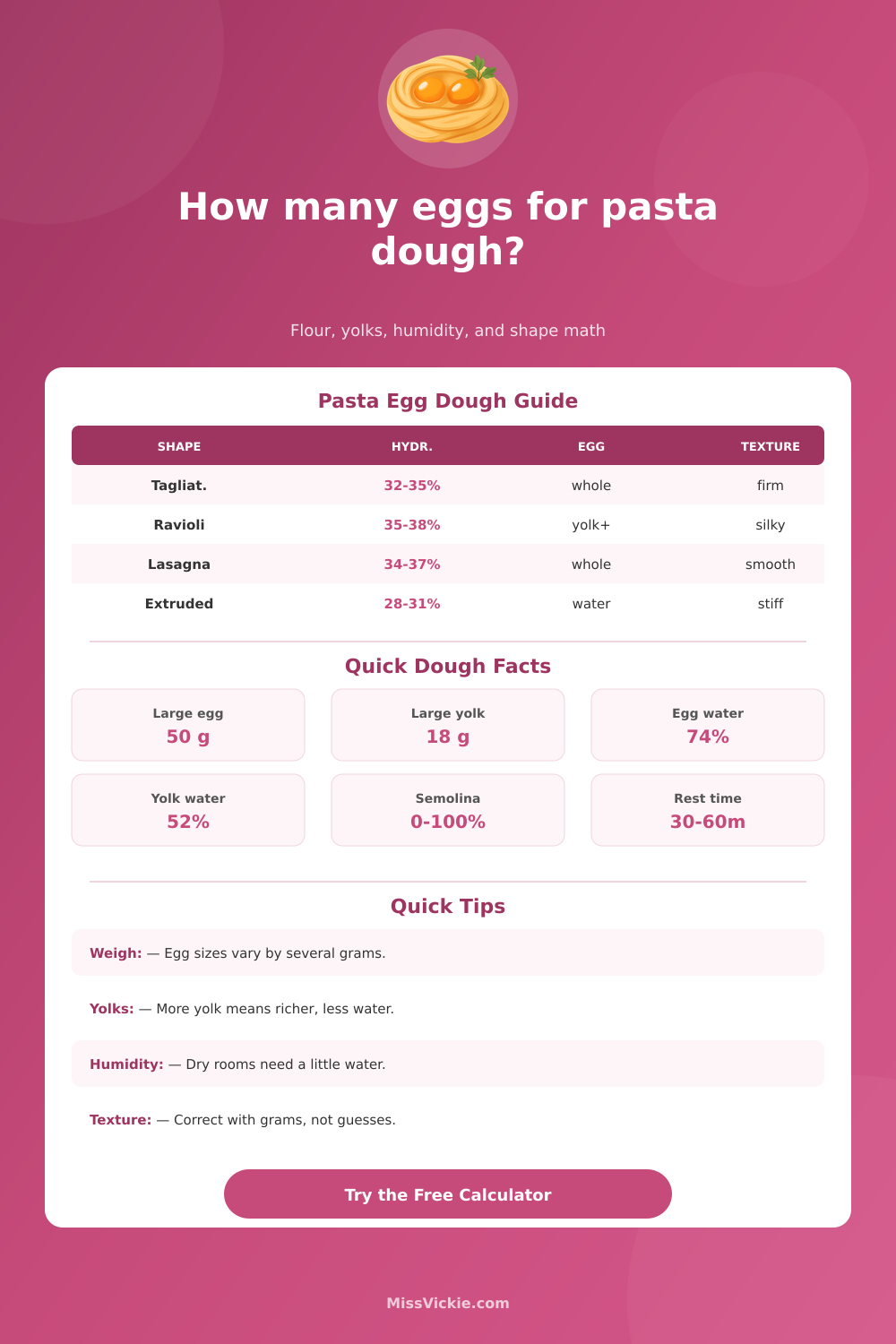
Fresh pasta dough egg math
Eggs in Pasta Dough Calculator
Calculate whole eggs, added yolks, egg-water contribution, flour correction, semolina blend, humidity adjustment, hydration target, and pasta-shape texture from one dough formula.
🍝Choose a pasta dough preset
Each preset loads a realistic dough profile, then you can change flour weight, egg size, yolk enrichment, pasta shape, humidity, and texture correction.
⚖Units
🥚Flour, eggs, shape, and texture
📊Dough formula snapshot
Effective hydration counts water in eggs and yolks. Total egg mass also brings protein, fat, emulsifiers, and color, so it is not the same as water hydration.
📘Pasta shape hydration guide
| Pasta use | Typical effective hydration | Egg style | Texture goal | Rolling note |
|---|---|---|---|---|
| Tagliatelle or fettuccine | 32% to 35% | Whole eggs, optional yolk | Firm and smooth | Should laminate through rollers without tearing. |
| Hand-cut spaghetti | 31% to 34% | Whole eggs | Firm bite | Slightly firmer dough cuts cleaner into narrow strands. |
| Ravioli or filled pasta | 35% to 38% | Whole eggs plus yolks | Silky and sealable | Needs enough suppleness to fold without cracking. |
| Lasagna sheets | 34% to 37% | Whole eggs | Smooth sheets | Moderate hydration keeps large sheets from tearing. |
| Tortellini or cappelletti | 36% to 39% | Yolk-enriched | Pliable | Small folded shapes benefit from a softer sheet. |
| Extruded semolina pasta | 28% to 31% | Water or light egg | Crumbly but pressable | Extruders need stiff dough granules, not a soft ball. |
🥚Egg and yolk reference
| Egg component | Typical edible weight | Water estimate | Fat estimate | Pasta effect |
|---|---|---|---|---|
| Medium whole egg | 44 g | About 33 g water | About 4.4 g fat | Useful when scaling small home batches. |
| Large whole egg | 50 g | About 37 g water | About 5.0 g fat | Classic rule-of-thumb egg for 100 g flour is close but not exact. |
| Extra-large whole egg | 56 g | About 41 g water | About 5.6 g fat | Can make small batches wetter than expected. |
| Large yolk only | 18 g | About 9 g water | About 5 g fat | Adds tenderness, color, and richness with less water than whole egg. |
| Large egg white | 32 g | About 28 g water | Trace fat | Raises water and protein without yolk richness. |
🌾Flour and semolina behavior
| Blend | Absorption behavior | Best pasta use | Rest target | Correction cue |
|---|---|---|---|---|
| 100% soft 00 flour | Moderate, smooth hydration | Sheets, noodles, filled pasta | 30 to 45 minutes | Add water in 2 g steps if cracking persists. |
| All-purpose flour | Slightly stronger and thirstier | Home rolled noodles | 35 to 50 minutes | Rest before adding too much liquid. |
| 20% to 40% semolina | Slow absorption, sandy at first | Fettuccine, lasagna, rustic sheets | 45 to 60 minutes | Let it hydrate before judging dryness. |
| 80% to 100% semolina | Firm, granular, low hydration | Extruded pasta | 20 to 40 minutes | Looks crumbly but should squeeze together. |
| Whole wheat blend | Bran drinks water slowly | Rustic noodles | 45 to 70 minutes | Use a little extra water and longer rest. |
🛠Dough texture correction table
| Dough feel | Likely cause | Calculator correction | How to add it |
|---|---|---|---|
| Crumbly and will not form a ball | Too little water from eggs or dry flour | Add water based on flour weight | Mist or knead in a few grams at a time. |
| Dry and cracking after kneading | Low hydration or strong flour | Add slightly more water | Wrap and rest 10 minutes, then reassess. |
| Very stiff but cohesive | Good for some cutters, hard for ravioli | Small water bump if needed | Use only if the target shape needs pliability. |
| Tacky or sticky | Too much egg water or humid flour | Dust in calculated flour | Knead in flour gradually before resting. |
| Soft and slumping | High hydration or too many large eggs | Add more flour than tacky dough | Use bench flour, then rest until firm. |
✨Practical pasta dough notes
When you make fresh pasta by hand, you must determine the correct number of egg to include in the pasta dough. The number of eggs to use in your pasta dough will have a significant impact upon the texture of the pasta sheet and how easy it is to roll the pasta dough evenly. If you use too few egg in your pasta dough, the pasta sheets will tear or crack before they reach your desired thickness.
If you use too many eggs in your pasta dough, the pasta sheets will be more soft and sticky to roll with ease. It is, therefore, important to find the correct number of eggs that will produce pasta dough that is easy to roll. Eggs serves a variety of functions within the pasta dough, they provide moisture to the pasta dough, they provide protein to the pasta dough, and they provide fat to the pasta dough.
How many eggs to use in pasta dough
The protein contained within the eggs helps to strengthen the pasta sheets, while the fat content in the eggs helps to ensure that the texture of the pasta sheets remains tenderly. Additionally, the eggs add natural color to the pasta sheets. An egg contains approximately three-quarters water by weight, but an egg yolk contains just over half water by weight.
Because egg yolks contains less water than whole eggs, adding extra yolks will lower the amount of water within the pasta dough. Lowering the amount of water in the pasta dough will require an adjustment to the amount of flour that is use. Kitchen conditions can also impact the interaction between the flour and the eggs, which can impact the characteristics of the pasta dough.
For example, flour can behave different than dry winter kitchens relative to kitchens in the summer that tend to be more humid. Additionally, the strength of the flour changes over time; stronger flours and flours with more semolina content absorbs more water over time. A pasta calculator accounts for these variable by asking you to input the weight of the flour that you will use, the size of the eggs that you will use, the number of yolks that you will use, the humidity of the kitchen, and the shape of the pasta that will be made.
Based off these inputs, the calculator can determine if adjustment to the water or the flour will be required, and for how long the pasta dough should rest before it is rolled. Finally, the shape of the pasta that will be made will impact the texture of the pasta dough that is required. For instance, pasta shapes like spaghetti require pasta dough that is of a firm texture.
Wide pasta ribbon require enough strength in the pasta dough to ensure that the pasta sheets do not stretch too much when rolled out. For pasta shapes that include fillings, such as ravioli, the pasta sheets should be of a supple texture to allow them to fold upon themselves without tearing. Finally, semolina pasta extruded by machines requires a texture that is crumbly enough for the machine to extrude the pasta, but strong enough to hold the pasta together.
The pasta calculator accounts for these variables by adjusting the target range for the hydration levels of the pasta dough according to the pasta shape that is to be made. The type of flour to be used in the pasta dough can also impact the amount of moisture that will be absorbed by the dough. For instance, soft 00 flour will roll smooth and may require fewer adjustment to flour or water content than all-purpose or bread flour.
Additionally, the addition of whole wheat flour or high-semolina flours will cause the dough to initially feel dry when rolled; however, after resting the dough for ten minutes it will become more cohesive. The calculator accounts for this behavior by shifting the target hydration level according to the type of flour that is to be used. Finally, the humidity in the kitchen and the texture of the pasta dough are two variables that are often overlook in the preparation of pasta dough.
For instance, using flour in a dry kitchen may result in the dough becoming crumbly, even if you use the correct amount of egg in the pasta dough. Conversely, kitchens that are humid may exhibit different result. The texture selector for the pasta calculator allows you to indicate how the dough feels after you have kneaded it; the calculator will use that input to suggest an adjustment in the amount of water or flour that should be used in the pasta dough.
Overall, your goal in making pasta dough is to produce pasta sheets that roll evenly, remain restful and moisture-retaining after being rolled, yet cut clean. You dont need to worry about the exact percentage of hydration that your pasta sheets will reach. After determining the appropriate amount of eggs to use in your pasta dough, and after the pasta calculator recommends any adjustment to the amount of water and flour, you will have to test the dough yourself.
If it feels incorrect even after resting for the amount of time that is recommended, you may need to add a small amount of water or flour to the pasta dough. Small adjustments may be all that is require to even out the texture of your pasta dough.