Ham weight, surface area, sugar type, basting, and glaze loss math
Brown Sugar for Ham Glaze Calculator
Estimate brown sugar, syrup, honey, mustard, and total glaze volume from ham weight, exposed surface area, glaze thickness, basting count, oven temperature, sweetness target, and expected oven loss.
Choose a common ham plan, then adjust the surface area, glaze thickness, brown sugar type, wet ratio, basting count, and oven heat.
Glaze Breakdown
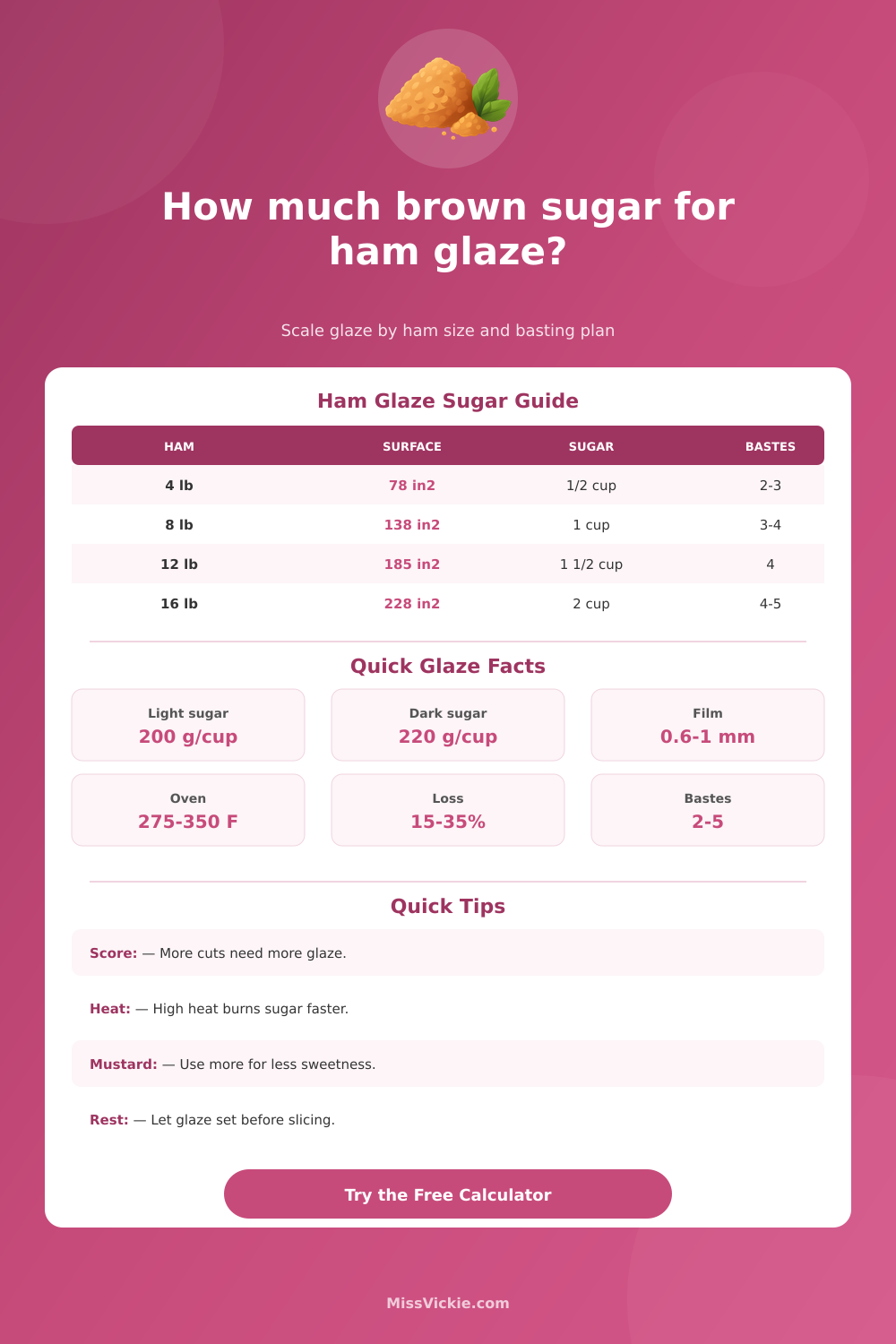
| Ham Plan | Typical Surface | Glaze Thickness | Brown Sugar Starting Point |
|---|---|---|---|
| Small 4 lb half ham | 70 to 90 square inches | 0.5 to 0.7 mm | About 1/2 cup for a light glaze. |
| 8 lb spiral ham | 125 to 155 square inches | 0.7 to 0.9 mm | About 1 cup for a sticky holiday glaze. |
| 12 lb bone-in ham | 170 to 205 square inches | 0.7 to 1 mm | About 1 1/2 cups when basting 4 times. |
| 16 lb whole ham | 215 to 250 square inches | 0.8 to 1.1 mm | About 2 cups, more if deeply scored. |
| Brown Sugar Type | Approx Cup Weight | Glaze Character | Adjustment |
|---|---|---|---|
| Light brown sugar | 200 g packed cup | Classic sweet glaze with moderate molasses. | Use as the neutral baseline. |
| Dark brown sugar | 220 g packed cup | Deeper molasses flavor and darker color. | Use slightly less for the same sweetness. |
| Muscovado | 230 g packed cup | Very dark, moist, and strongly flavored. | Add extra mustard or citrus for balance. |
| Turbinado blend | 190 g per cup | Grainier sparkle, slower melting. | Warm the glaze until fully dissolved. |
| Loose spooned brown sugar | 150 g per cup | Lighter by volume than packed sugar. | Measure by weight for repeatable results. |
| Wet Ratio Style | Syrup | Honey | Mustard |
|---|---|---|---|
| Classic ham glaze | 45% | 25% | 30% |
| Sweeter honey finish | 25% | 55% | 20% |
| Maple-forward glaze | 65% | 20% | 15% |
| Tangy mustard glaze | 25% | 15% | 60% |
| Lower-drip slice glaze | 35% | 25% | 40% |
Lower evaporation and slower browning. Good for early basting and reheating.
Balanced setting for most ham glazes, especially with 3 or 4 bastes.
Glaze sets quickly. Watch dark brown sugar and honey near the end.
Use only for a short final tacky finish, not long unattended glazing.
To achieve a succesful glaze on your ham, you must consider a few factor that will ensure your glaze achieves it’s desired result. One of the main factors to consider is the size of the ham that you are glazing. Small ham have a different amount of surface area than large hams, and different amounts of surface area require a different amount of glaze to be successful.
The amount of brown sugar that you should use in the glaze can vary depending upon the thickness of the glaze, the number of times that you baste the glaze onto the ham, and the temperature of the oven in which you are cooking the ham. By utilizing the calculator, you can determine the amount of glaze that is required for the ham that you are preparing, which will ensure that the oven heat neither burns the glaze nor makes it too thin. Brown sugar provide the sweetness and the color to the glaze.
How to Make a Good Glaze for Your Ham
The type of brown sugar that you use, however, can alter the composition of the glaze that is created. Light brown sugar has a balance of sweetness and color to the glaze, but dark brown sugar contains more molasses than the light variety. Because of the additional molasses content in the dark brown sugar, it will darken more quickly when exposed to heat.
Should you opt for a much darker brown sugar than the type that the calculator recommends, you will need to alter the amount of brown sugar to accommodate the strong flavor of the dark sugar. The type of liquid ingredient (syrup, honey, mustard) will influence the way that the glaze adheres to the ham. Using more mustard in place of other liquids will create a glaze that is less sweet and thinner than if mustard were avoided.
Using more honey or syrup will create more sticking to the ham, but will also cause the glaze to bubble more. The calculator allows for adjustments to the percentages of each of these liquid in order to achieve the desired result for your glaze. The size of the ham will also influence the amount of glaze that you need.
A ham that feature spiral cuts will have more surface area than a standard ham, and the glaze will need to be designed accordingly. If you enter the actual surface area in the calculator, the calculator will adjust the glaze to provide the correct amount of glaze for each of those groove on the ham. The thicker the glaze, the more sugar that you need to balance the glaze to the ham.
To achieve a thick glaze, you will need to add more glaze altogether and perform an extra baste on the ham. Another factor to consider is the temperature of the oven. Higher temperatures will cause the glaze to brown more quickly.
However, higher temperatures will also cause more glaze to be lost due to evaporation and dripping. To compensate for this loss, you will need to prepare more glaze than if using a low oven temperature. The percentage of glaze loss can be adjusted for drippings and glaze that does not reach the ham.
If high temperatures or many cut are used, you will need to increase the percentage of glaze loss. People often make a few mistake when glazing hams. For instance, some individuals use volume measurement of brown sugar instead of weight measurements, which can introduce error in the amount of sugar.
Others use the same basting schedule for all temperatures of the oven. Others omit mustard from the glaze. You can overcome each of these mistakes by utilizing the calculator.
Based off your desired outcome for the ham, the calculator will show you the adjustments needed for each ingredient. In order to achieve a succesful glaze, the glaze must remain on the ham when it is carved. The amount of sugar to the area of the ham will determine if the glaze will remain on the ham.
The ratio of the liquids will determine whether the glaze will have the correct texture. Additionally, you must account for the temperature of the oven and the loss of glaze during cooking in the preparation of the glaze. By performing these steps and making each of these adjustments, the glaze will remain supple and have a consistent sheen from the first slice of ham to the last slice of ham.