Roux, soup body, color, and simmer adjustment
How Much Roux To Thicken Soup Calculator
Calculate flour and fat for thickening soup by pot volume, desired body, roux color, soup base, simmer reduction, flour-to-fat ratio, dairy handling, and gluten-free roux options.
Pick a real pot style, then fine-tune the volume, base, roux color, and body before cooking.
Full Roux Breakdown
Lightly coats the spoon while keeping a broth-first feel.
Classic creamy soup body for chicken, mushroom, or vegetable soup.
Noticeably thicker, good with corn, potato, seafood, or cream.
Spoonable finish for loaded soups that need strong body.
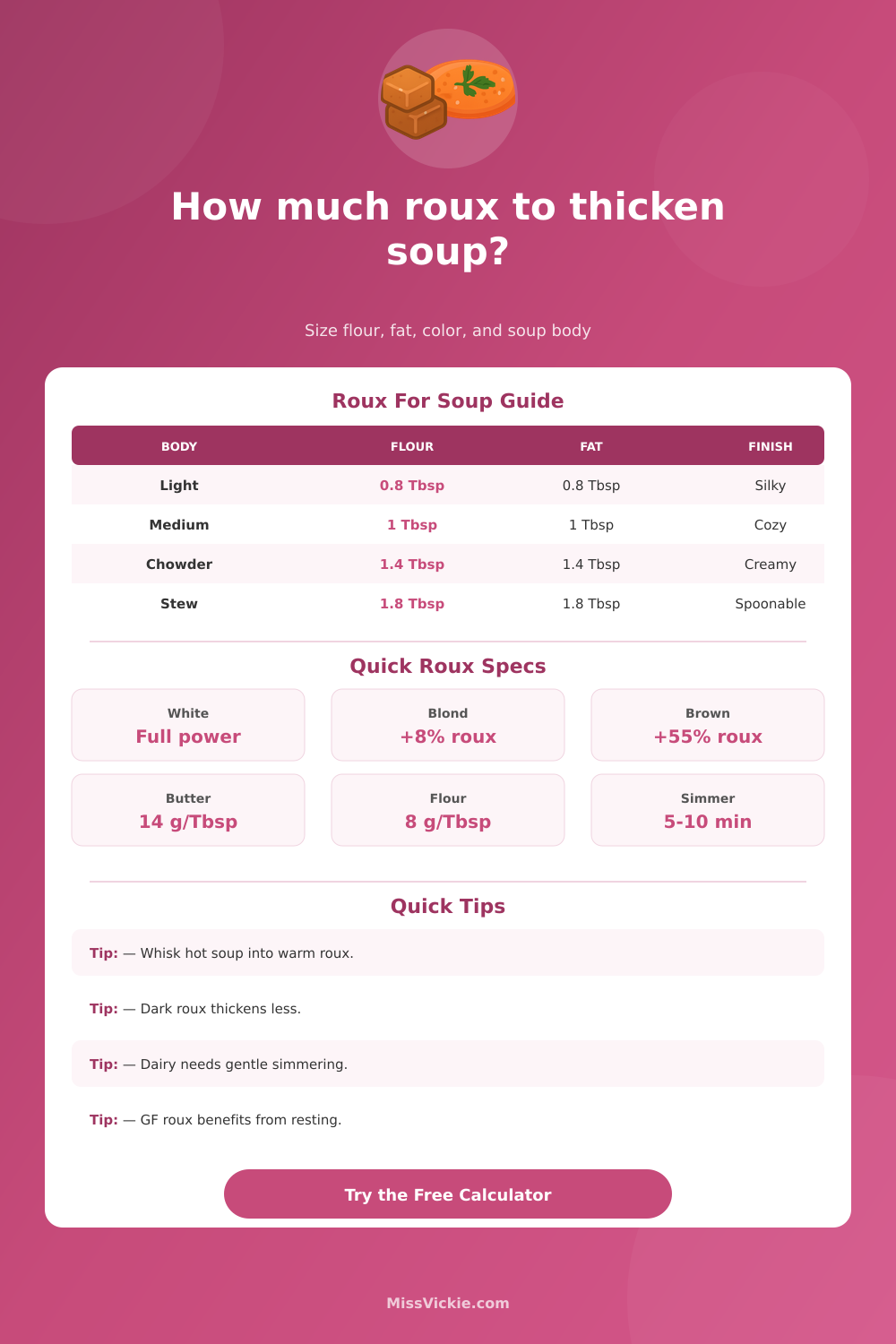
| Desired Body | Flour Per Cup | Fat Per Cup | Best Soup Examples |
|---|---|---|---|
| Velvety broth | 0.70 Tbsp | 0.70 Tbsp | Chicken, turkey, vegetable, light mushroom |
| Medium creamy | 1.05 Tbsp | 1.05 Tbsp | Cream of chicken, broccoli, potato leek |
| Chowder body | 1.40 Tbsp | 1.40 Tbsp | Corn chowder, clam chowder, loaded potato |
| Stewy spoonable | 1.80 Tbsp | 1.80 Tbsp | Chicken pot pie soup, thick vegetable stew |
| Gumbo-style | 1.15 Tbsp | 1.15 Tbsp | Dark roux gumbo, sausage soup, seafood pot |
| Roux Color | Cook Time | Thickening Change | Flavor Use |
|---|---|---|---|
| White | 2 to 3 min | Fullest thickening power | Milk soups, cream soups, delicate broth |
| Blond | 4 to 6 min | Use about 8 percent more | Chicken, turkey, mushroom, vegetable soups |
| Peanut | 8 to 12 min | Use about 22 percent more | Seafood, sausage, squash, roasted vegetable |
| Brown | 15 to 25 min | Use about 55 percent more | Gumbo, beef soup, dark poultry stock |
| Dark | 25 to 40 min | Use mostly for flavor | Gumbo or stew with separate thickener backup |
| Soup Base | Adjustment | Why It Changes | Cooking Note |
|---|---|---|---|
| Clear broth or stock | 1.00x | No extra starch or dairy thickness | Simmer steadily after whisking in roux |
| Milk or cream | 0.90x | Dairy already adds body and mouthfeel | Keep below a hard boil after thickening |
| Tomato base | 1.10x | Acidity can make the finish feel thinner | Cook flour taste out before adding cream |
| Pureed vegetables | 0.78x | Vegetable pulp supplies natural thickness | Blend first, then judge the roux need |
| Bean or lentil soup | 0.72x | Legumes thicken as they break down | Add roux sparingly and rest before serving |
| Gumbo base | 1.18x | Darker roux brings flavor more than gel | Use okra or file only if wanted |
| Flour Option | Gram Estimate | Adjustment | Best Practice |
|---|---|---|---|
| All-purpose flour | 7.8 g per Tbsp | 1.00x | Classic roux with butter or drippings |
| Whole wheat pastry | 7.4 g per Tbsp | 1.08x | Use for rustic soups; cook gently |
| GF all-purpose blend | 8.2 g per Tbsp | 1.05x | Rest 3 minutes after simmering |
| Fine rice flour | 8.0 g per Tbsp | 1.12x | Whisk carefully to avoid grit |
| Sorghum flour | 7.6 g per Tbsp | 1.10x | Best with darker savory soups |
| Cornstarch slurry | 8.0 g per Tbsp | 0.45x starch | Skip fat; add at the end |
Roux is a mixture of cooked flour and fat that is used to thicken liquids. People use roux to add body to a soup. Additionally, roux help soups to contain more substance.
People can use roux to thicken soups that contain too much liquid. To thicken a soup, the amount of roux that a person need to add depends on the volume of the liquid and the thickness of the soup that is desired. For example, a light broth only require a small amount of roux to thicken the liquid.
How to Use Roux to Thicken Soup
However, a heavy chowder will require more roux to thicken the broth. The color of the roux can affect the amount of roux that a person needs to add to a soup. For example, a dark roux has less thickening power then a white roux.
This is due to the fact that the starches in a roux break down when it are exposed to heat. Therefore, a person must use more roux if the roux is darker in color. Additionally, the base of the broth can impact the amount of roux that is required for thickening.
For example, if the base of the broth is based off dairy or pureed vegetable, there will be less roux needed to thicken the broth. Another factor that can influence the outcome of a roux is the type of fat that a person use in the roux. Butter is one of the most common fats that people use in roux because of the way that the butter thickens the broth and the flavor that butter add to the soup.
Oil is another common fat because it do not alter the flavor of the soup and is an appealing choice for those who is dairy-free. Bacon drippings are another fat that could be used in a roux as they will add additional seasoning to the broth. The ratio of the flour to the fat that is used in a roux can also influence the outcome of the roux.
The most common ratio for a roux is a combination of equal parts of flour and fat. Using more flour than fat will create a roux that will thicken the soup more rapid. Using more fat than flour will create a roux that will be easier to incorporate into a pot with hot broth.
Another way that a person can add roux to a soup can influence the outcome of the soup in terms of it’s texture. For instance, if a person stirs the hot soup into the roux, the roux will be less likely to form lump. However, adding roux to a simmering pot will require the person to stir the soup with the roux constant to prevent the formation of lumps in the pot.
Additionally, after adding roux to a simmering pot, the soup should be simmered for five to ten minutes to allow the flour to lose its raw flavor to the broth, and the soup to reach the thickness that is desired. Another consideration that can influence a roux is if the roux is gluten free. Gluten free roux can be made with flours like rice flour or sorghum flour.
However, these gluten free flours can sometimes feel gritty in a hot soup if the roux is not cooked for long enough. Additionally, another alternative to roux that can be used in a soup is a cornstarch slurry. A cornstarch slurry is not the same as a roux in that it do not contain fat.
Additionally, the cornstarch slurry thickens the liquid at the end of the cooking process of a soup. Using a cornstarch slurry will create a thickened broth that does not break or become cloudy if added to hot or acidic soups. One last factor that a person should consider when using roux in a soup is the temperature of the soup and the roux.
A person should ensure that the temperature of the roux is warm. If the roux is too cold, the roux may form lumps when mix with the hot soup. Additionally, a person should avoid boiling the soup once the roux has been added.
Simmering the soup gently will allow the roux to thicken the broth without breaking the emulsion that the roux create. Additionally, simmering the soup gently will prevent the bottom of the pot from scorching while the soup simmers. The texture of a soup can be adjusted by adjusting the amount of roux that is used.
For instance, using a small amount of roux will create a light broth. Using medium amount of roux will allow a person to create a medium body broth. Larger amounts of roux will thicken the broth to the body of a chowder or stew.
The amount of roux can be adjusted according to the ingredients of the soup. For instance, using a soup that contain potatoes or pasta will require less roux because these ingredients will thicken the broth in the same manner that roux does. Therefore, before adding roux to a simmering pot, a person should of consider each of these variable to ensure that the roux will provide the thickness that is needed for the pot.